
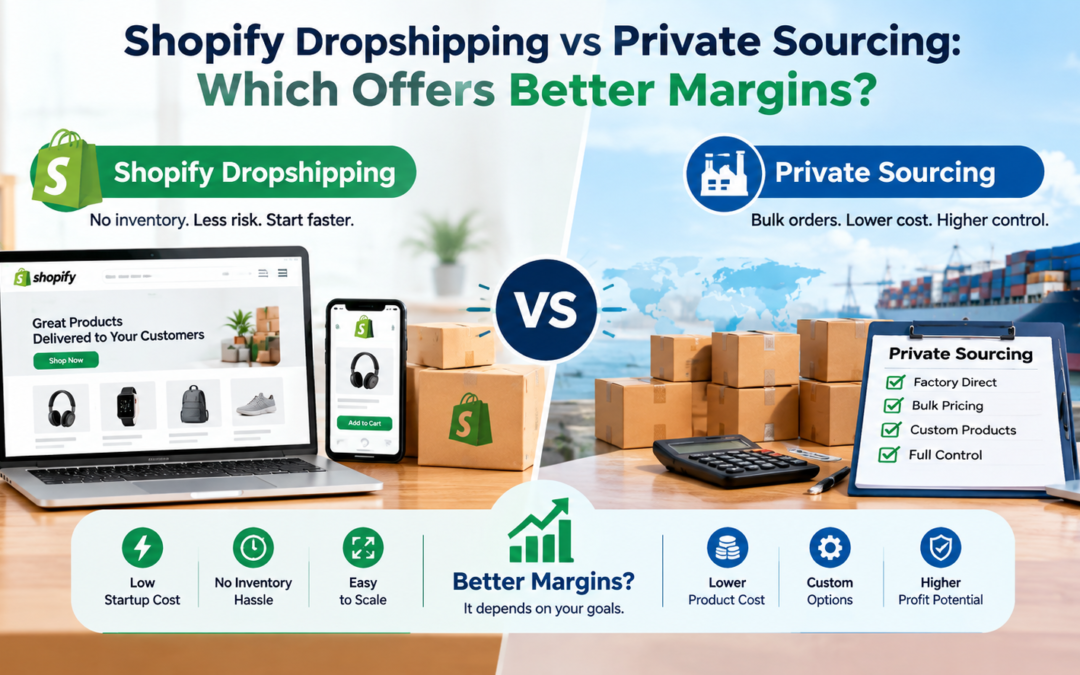
Shopify Dropshipping vs Private Sourcing: Which Offers Better Margins?
Margins are usually the real question hiding underneath every sourcing decision, and this comparison goes straight at it. Dropshipping keeps things simple and low-risk, but every order carries a supplier's markup baked in. Private sourcing, working directly with a manufacturer to produce your own branded version of a product, can widen that margin considerably. It just asks for more money and more risk before a single sale happens.
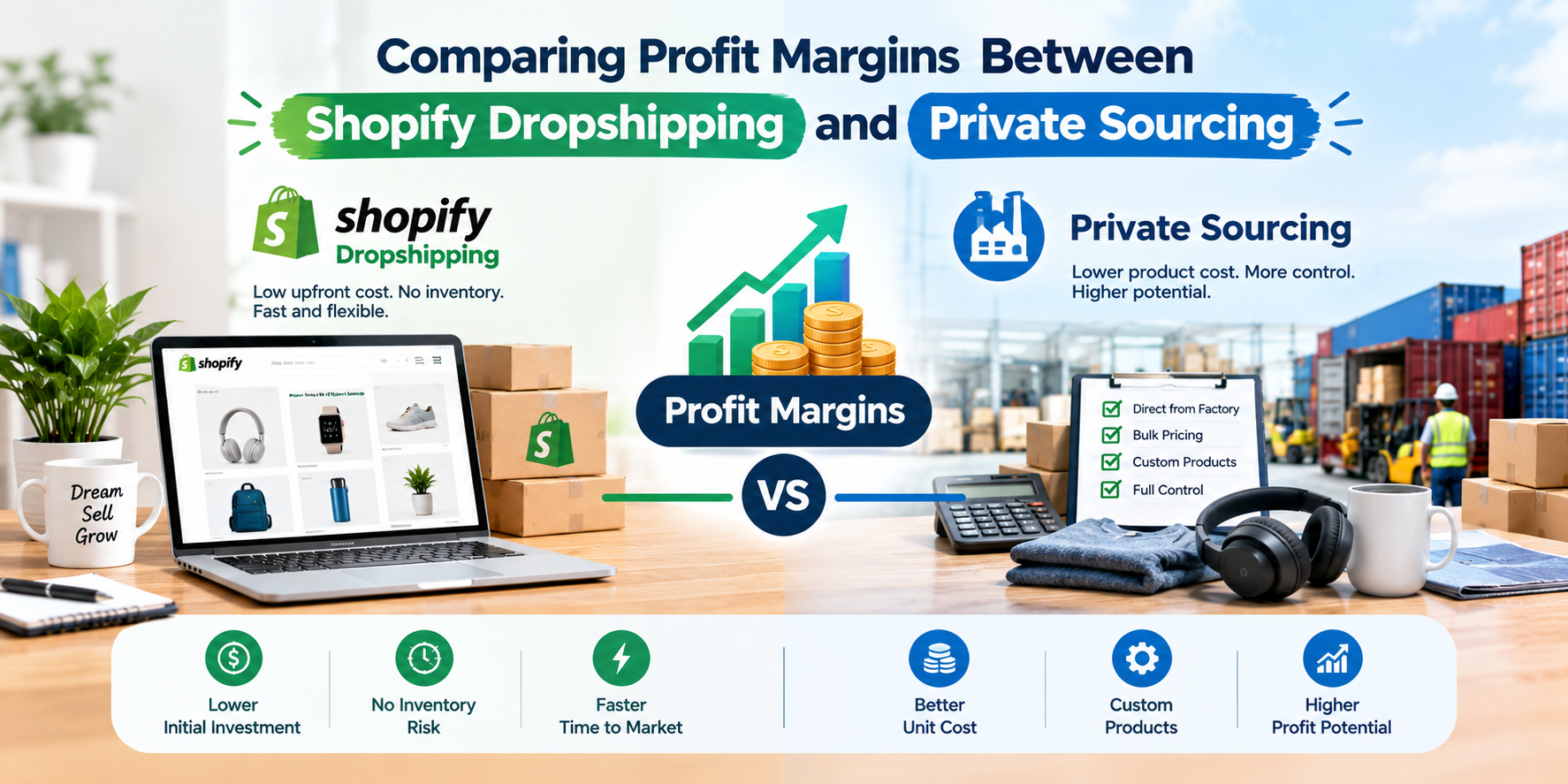
Margins are the number every seller eventually obsesses over, and it's often what pushes a store owner to start asking whether dropshipping is actually costing them money in the long run. Dropshipping's convenience comes at a price, literally, since the supplier's markup is baked into every single unit you sell. Private sourcing removes that markup by going straight to a manufacturer, but it swaps convenience for upfront cost, custom production runs, and real inventory risk.
The honest answer to "which offers better margins" is that private sourcing usually wins on paper, but only once volume is high enough to make the trade worth it.
📋 Table of Contents
Two Different Ways to Source, Not Two Platforms
Shopify runs the storefront no matter which sourcing model sits behind it, so this comparison isn't really about the platform at all, it's about where your product cost comes from. Dropshipping sources a ready-made product from a shared supplier catalog, with that supplier's markup included in what you pay per order. Private sourcing means working directly with a manufacturer to produce a product under your own branding, cutting out that markup but requiring bulk purchase upfront.
How Margins Actually Break Down
In dropshipping, the supplier's price already includes their own margin on top of the manufacturing cost, so what you're paying reflects two markups stacked before your own. In private sourcing, you're paying closer to the true manufacturing cost directly, which means more room between what you paid and what you sell for. The catch is that this wider margin only materializes at scale, since custom production runs, tooling, and packaging costs get spread across however many units you actually sell.
What Private Sourcing Adds Beyond Better Margins
- No per-order supplier markup — paying closer to true manufacturing cost widens the gap between cost and sale price
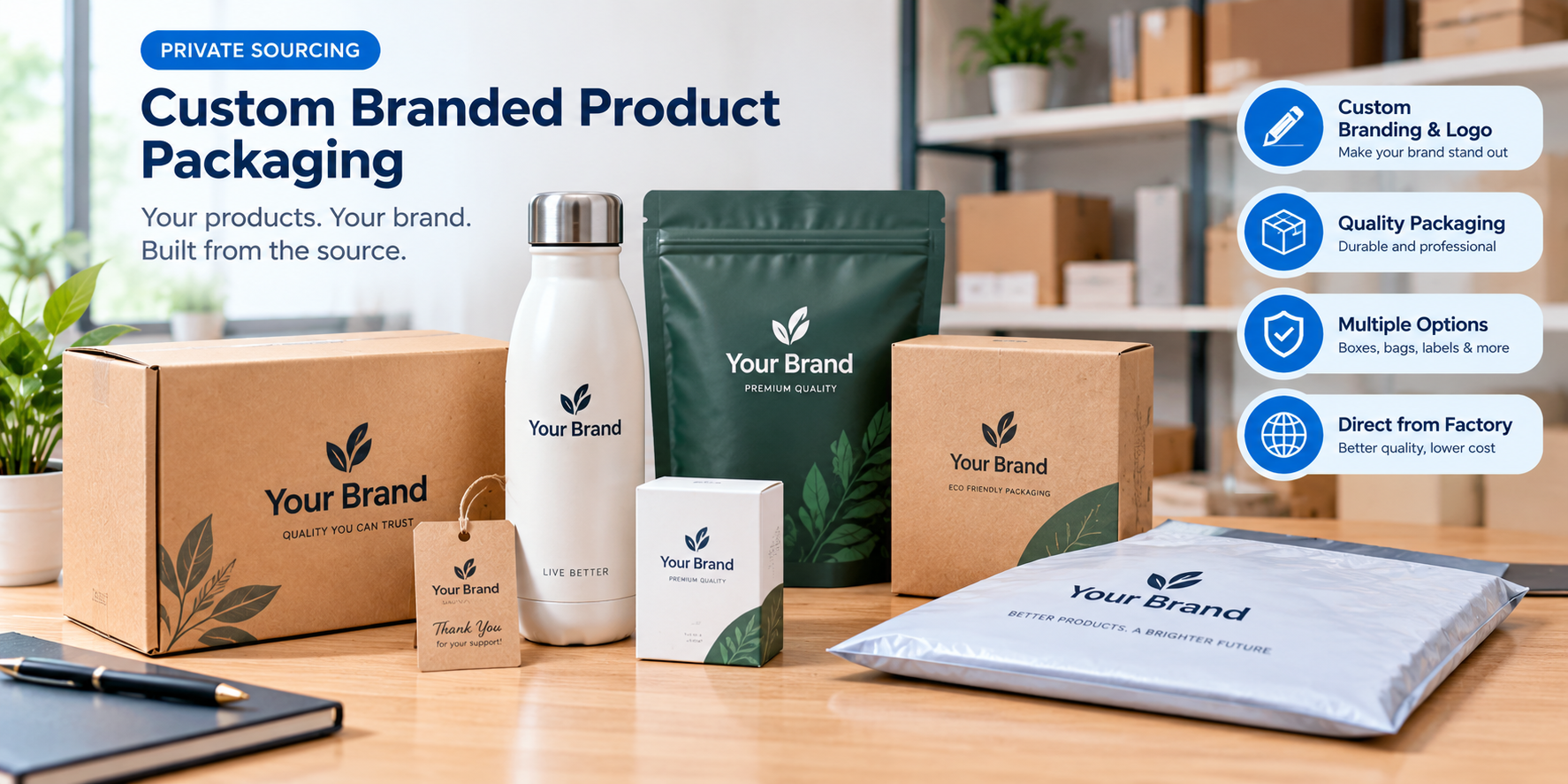
- Full brand ownership — custom packaging, labeling, and product specifications build a brand customers can't buy from a competitor
- Pricing control at scale — as order volume grows, per-unit costs keep dropping in a way dropshipping's flatter pricing can't match
- Product differentiation — a privately sourced product isn't sitting in ten other stores' catalogs at the same base cost
Where It Falls Short
The margin advantage doesn't show up immediately, and it doesn't show up at all if volume stays low. Custom molds, minimum order quantities, and bulk inventory all require real cash before you've sold a single unit, and that money is at risk if the product doesn't perform. Compare that to dropshipping, where a slow-selling product just gets delisted with no sunk cost. Private sourcing rewards confidence in a product, it punishes guessing.
Side by Side
| Factor | Dropshipping | Private Sourcing |
|---|---|---|
| Per-unit margin | Lower, includes supplier markup | Higher, closer to true manufacturing cost |
| Upfront cost | Low, no inventory needed | High, custom runs and bulk stock |
| Brand ownership | Limited, shared product | Full, custom branding and packaging |
| Risk if product underperforms | Minimal | Significant, capital already spent |
| Best for | Testing new products | Proven, high-volume sellers |
Deciding Which Fits Your Margins
-
Validate the Product Through Dropshipping
Confirm real, consistent demand on Shopify before committing money to custom production or bulk inventory.
-
Calculate the Break-Even Point
Compare private sourcing's upfront costs against the per-unit margin gain to see how many units you'd need to sell before it pays off.
-
Move Proven Products to Private Sourcing
Once a product clears that break-even point, transition it to custom, privately sourced production while newer items stay on dropshipping.
Ready to Improve Your Margins with Private Sourcing?
OneShipPros helps Shopify sellers move proven products from dropshipping into custom, privately sourced production.
Get Started with OneShipPros →