
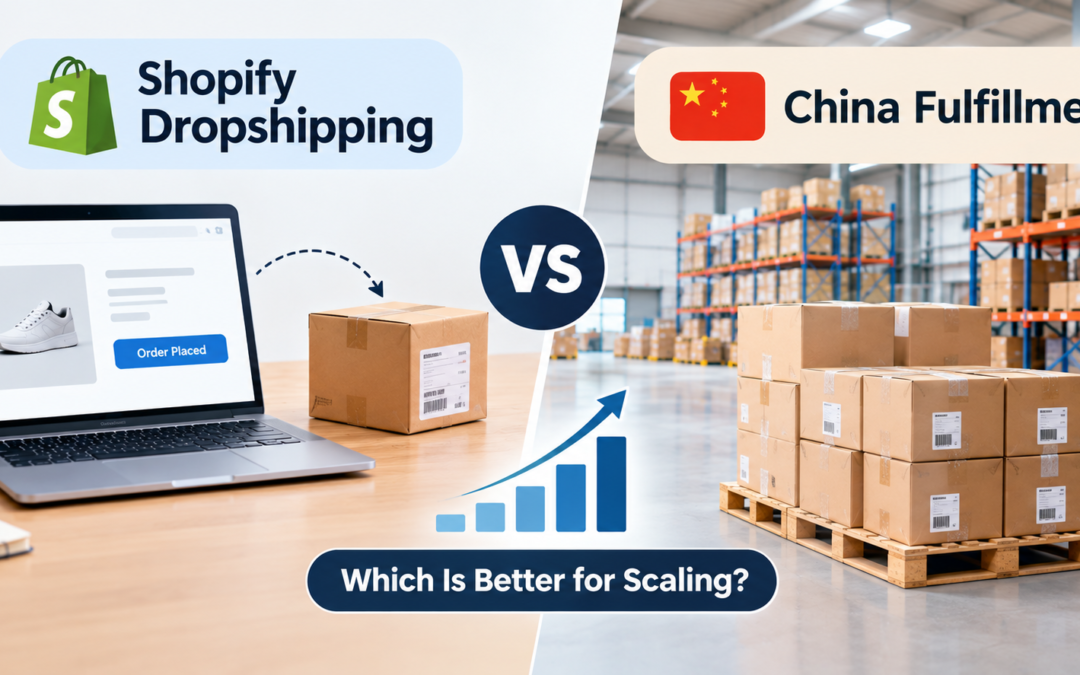
Shopify Dropshipping vs China Fulfillment: Which Is Better for Scaling?
This is a different kind of comparison than picking one app over another. It's about two entire fulfillment models, dropshipping order by order versus stocking your own inventory in a China warehouse, and which one actually holds up once a store stops being small. The honest answer is that the "better" one depends almost entirely on where your order volume sits right now.
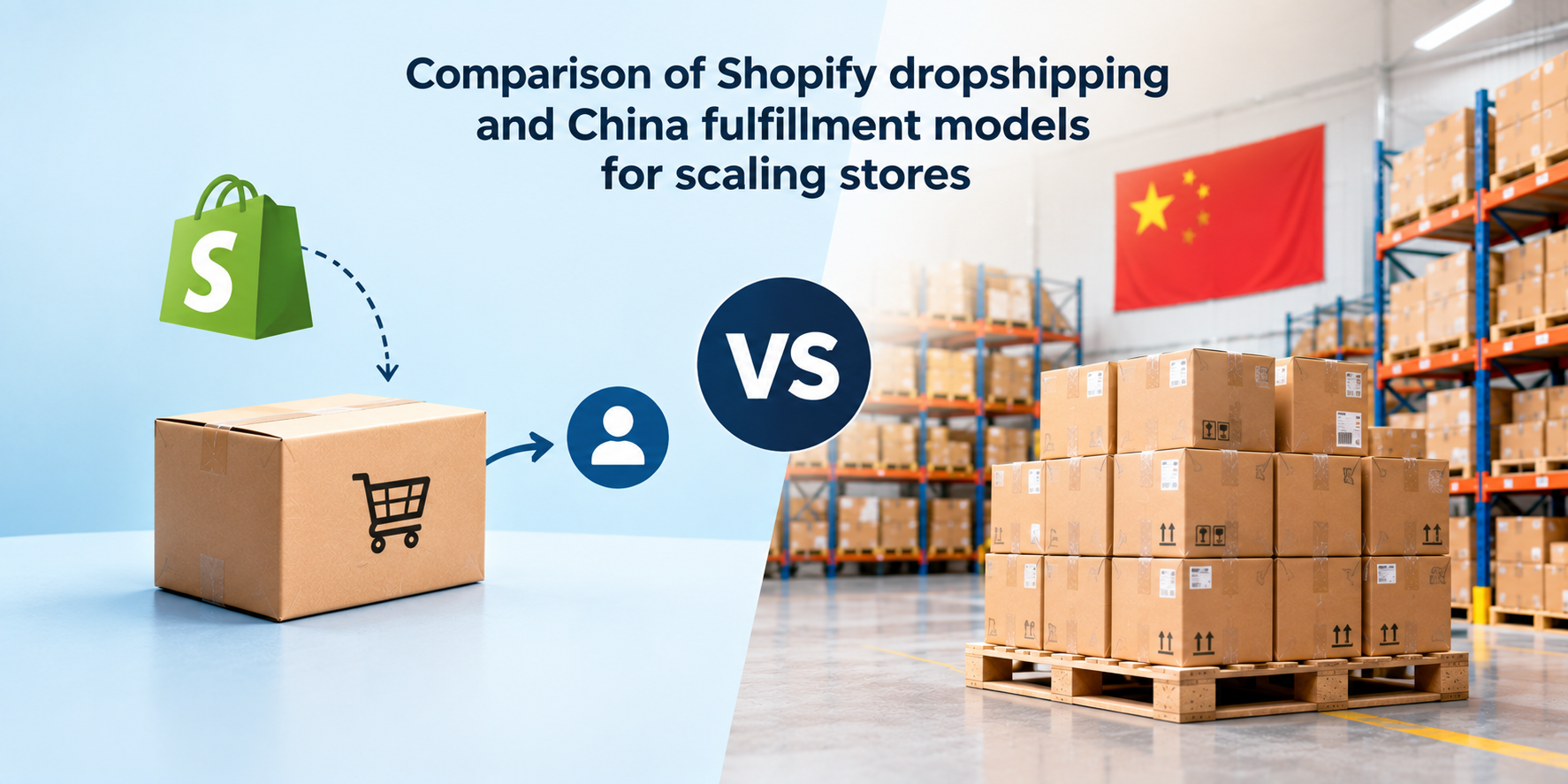
Every store starts somewhere, and for most Shopify sellers that somewhere is dropshipping. No upfront inventory, low risk, an easy way to test whether a product actually sells before committing real money. That's exactly why it works so well early on. But the same model that made the first few sales easy tends to get expensive fast once volume climbs, and that's usually the point where China fulfillment starts looking a lot more attractive.
This isn't really a question of which model is objectively better. It's a question of which one fits where your store actually is right now, and what changes once it grows past that stage.
📋 Table of Contents
Two Different Models, Not Two Platforms
Dropshipping means every order gets sourced and shipped individually, usually through an app connected to Shopify, with no inventory sitting in your name. China fulfillment means you've already bought stock in bulk and it's sitting in a warehouse, ready to ship the moment an order comes in. Both can run through the exact same Shopify store. The difference isn't the platform, it's whether you own the inventory before or after it sells.
How Scaling Changes the Math
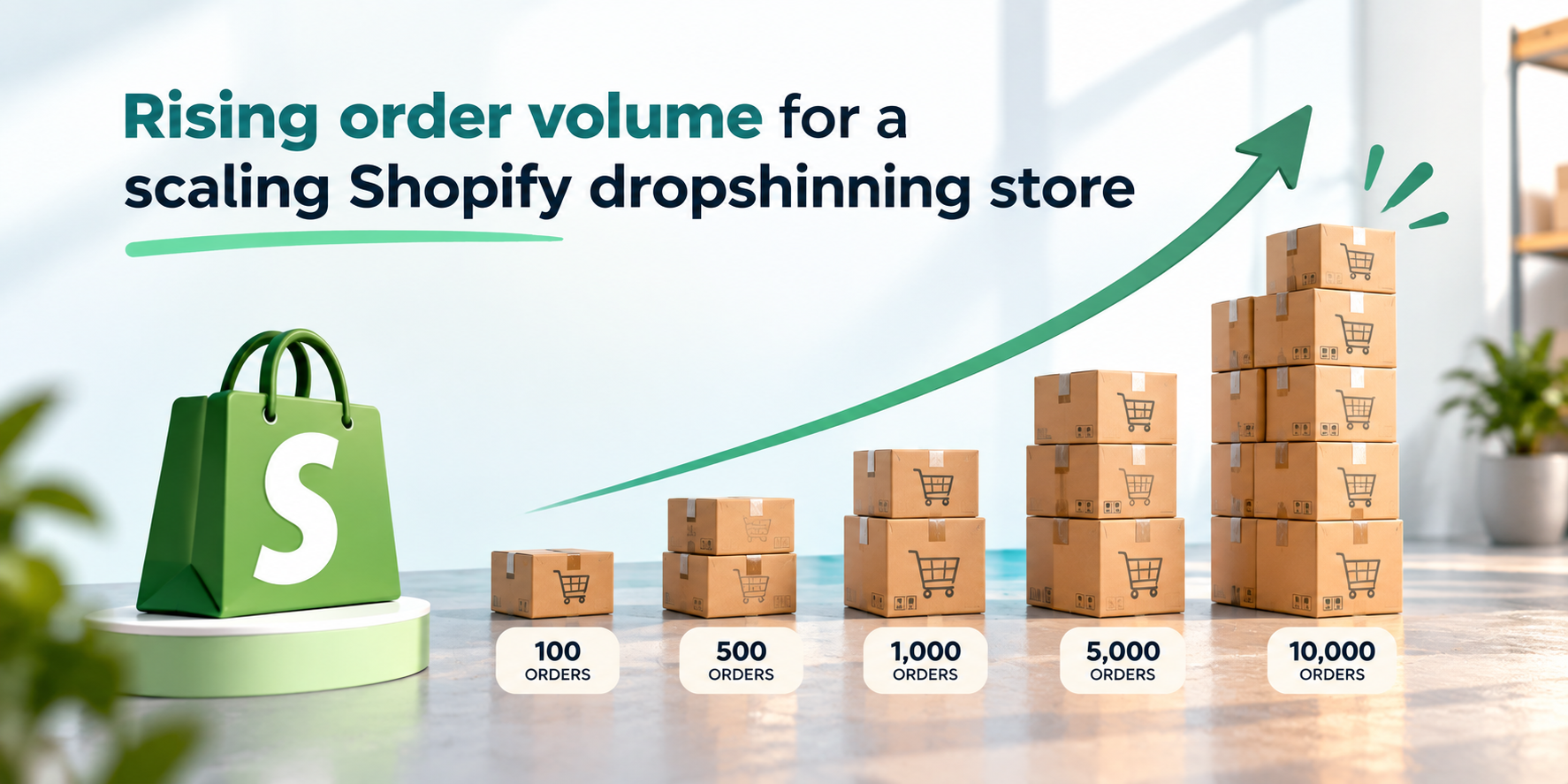
At low volume, dropshipping wins easily. There's no cash tied up in stock, no storage fees, and no risk of betting on the wrong product. But per-order shipping costs in dropshipping stay roughly flat no matter how many units you move, there's rarely a bulk discount when every order ships individually. China fulfillment flips that. The upfront cost of buying inventory is real, but per-unit shipping and product costs drop as volume rises, since you're moving stock in bulk rather than one item at a time.
What China Fulfillment Adds as You Grow
- Lower cost per order at scale — bulk inventory and bulk shipping bring per-unit costs down in a way dropshipping generally can't match
- Faster, more predictable shipping — orders ship from stock already on hand instead of waiting on a supplier to source and pack each one
- Full control over packaging and branding — since the inventory is yours, custom boxes, inserts, and labeling are all on the table
- Consistent quality control — bulk stock can be inspected before it ever reaches a customer, rather than trusting each dropshipped order individually
Where It Falls Short
The catch is risk, and it's a real one. Fulfillment means paying for inventory before you know for certain it'll keep selling, plus ongoing storage fees whether it moves fast or sits. That's a bet dropshipping never asks you to make. Switching a product line also isn't as simple as delisting an item, unsold stock has to be cleared out first. It's generally not the right move for products still being tested, only for ones that have already proven they sell.
Side by Side
| Factor | Dropshipping | China Fulfillment |
|---|---|---|
| Upfront cost | Low, no inventory needed | Higher, requires bulk purchase |
| Per-unit cost at scale | Stays roughly flat | Drops as volume grows |
| Shipping speed | Varies by supplier | Faster, ships from stock on hand |
| Inventory risk | None | You own the stock |
| Best for | Testing new products | Proven, consistent sellers |
Making the Switch the Right Way
-
Start with Dropshipping to Validate Demand
Test products on Shopify through a dropshipping app before committing money to bulk inventory you can't easily undo.
-
Track Order Volume and Margins Closely
Watch which products sell consistently enough that per-unit fulfillment costs would actually drop in bulk.
-
Move Proven Winners to China Fulfillment
Buy inventory for products with a track record and hand them off to a fulfillment warehouse, while newer, untested items stay on the dropshipping model.
Ready to Move Your Bestsellers to China Fulfillment?
OneShipPros helps Shopify sellers transition proven products from dropshipping to scalable, cost-efficient fulfillment.
Get Started with OneShipPros →