
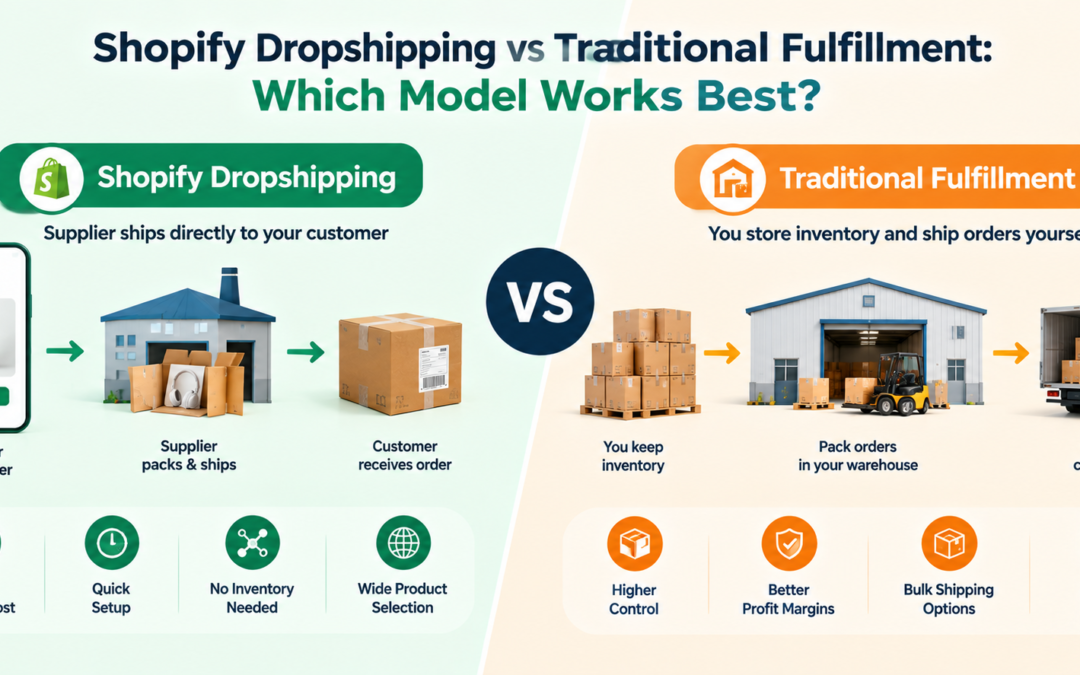
Shopify Dropshipping vs Traditional Fulfillment: Which Model Works Best?
"Traditional fulfillment" isn't one specific company or app, it's the older, more established way of running an ecommerce business, buy stock, store it somewhere, ship it out as orders come in. Dropshipping came along later as a lower-risk alternative. Neither one is outdated or automatically better, they just fit different stages of a store's life. Here's how the two actually stack up.
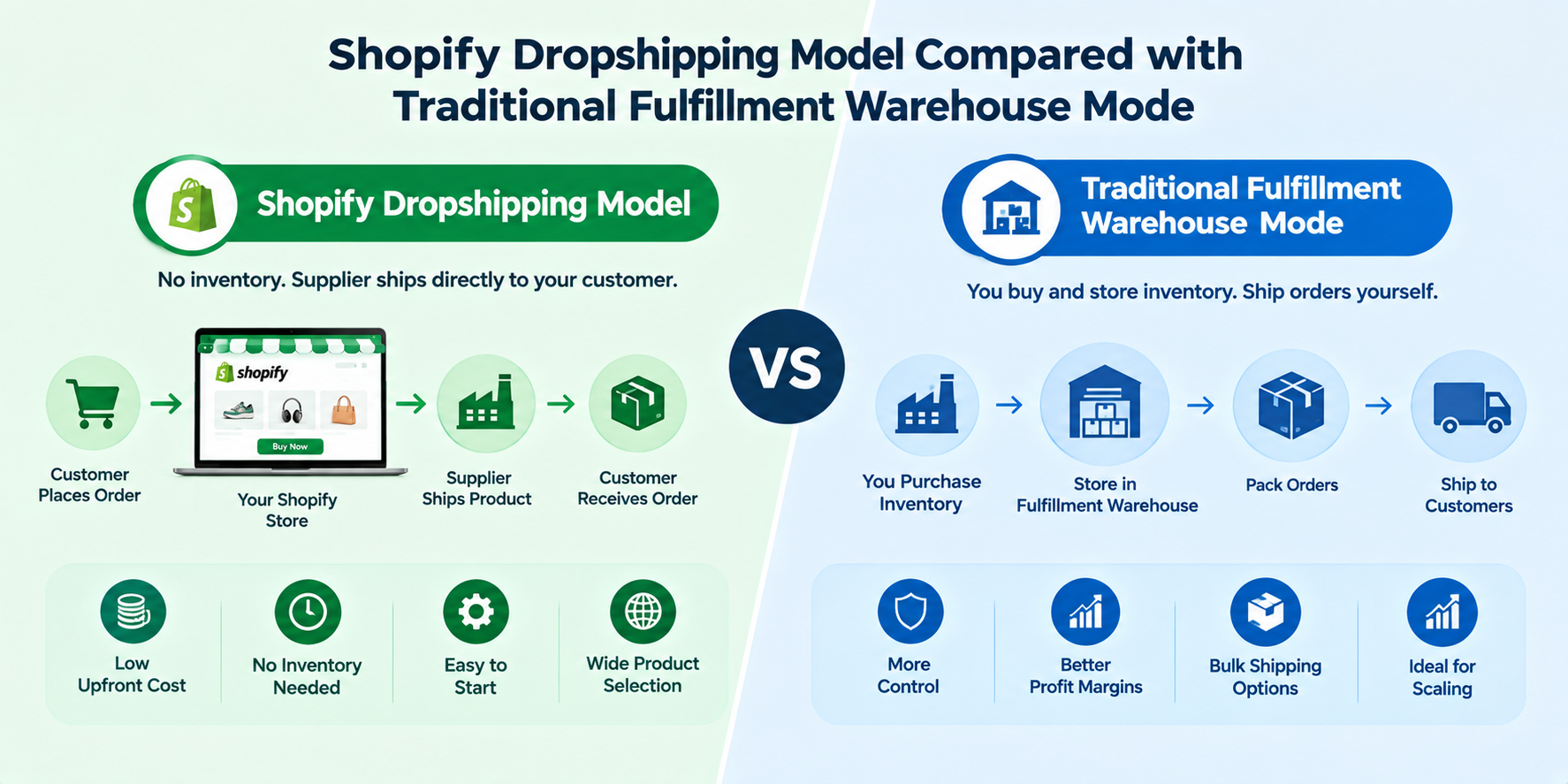
It's easy to assume dropshipping is simply the newer, better version of running an online store, and that traditional fulfillment, buying and storing your own inventory, is something only bigger, more established businesses still bother with. That's not really accurate. Traditional fulfillment isn't outdated, it's just a different set of trade-offs, more control and lower per-unit costs in exchange for upfront risk and real logistics work. Dropshipping trades that risk away, at the cost of thinner margins and less control.
The real comparison isn't which model is better in general, it's which trade-offs make sense for where your store is right now.
📋 Table of Contents
Two Fulfillment Models, Not Two Platforms
Both models can run on the exact same Shopify store, the difference is entirely on the supply side. Dropshipping sources and ships each order individually as it comes in, usually with no inventory sitting in your name. Traditional fulfillment means you've already bought stock in bulk and it sits in a warehouse, whether that's a 3PL, a dedicated fulfillment partner, or your own storage space, ready to ship the moment an order arrives. Shopify doesn't care which model you use, it just needs orders to sync to whichever one you've chosen.
How Each Model Actually Works
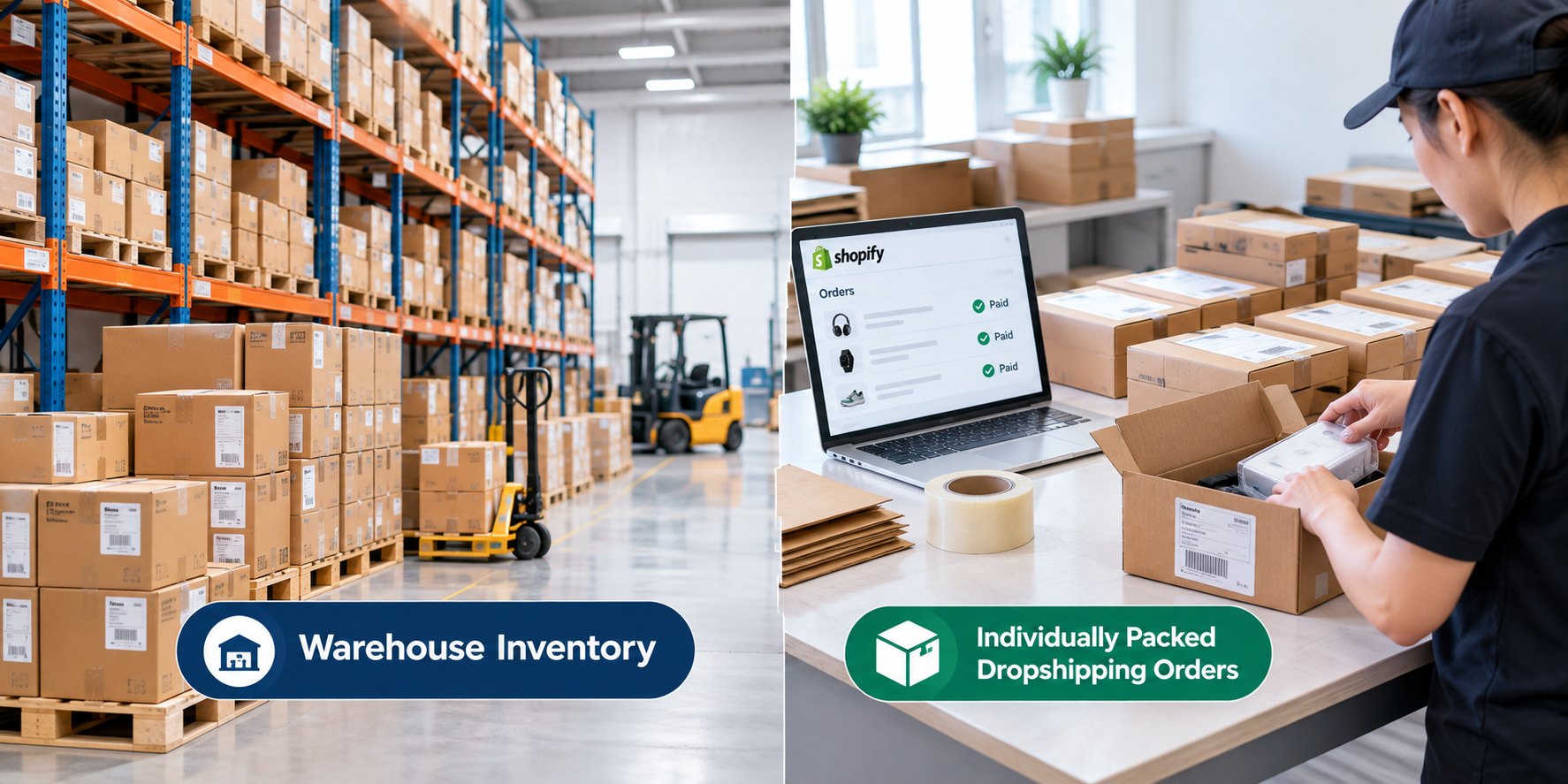
With dropshipping, a customer order on Shopify gets forwarded, usually through an app, to a supplier who packs and ships it directly, often without you ever touching the product. With traditional fulfillment, you've purchased inventory ahead of time, it's stored with a warehouse or fulfillment partner, and that same customer order simply triggers a pick, pack, and ship from stock that's already there. The customer experience looks similar either way, what differs is everything happening behind the scenes before that order ever gets placed.
What Traditional Fulfillment Adds
- Lower cost per unit at scale — buying and shipping in bulk generally costs less per order than sourcing items one at a time
- Faster, more predictable shipping — orders ship from stock on hand instead of waiting on a supplier to source and pack each one
- Full control over quality and branding — inventory can be inspected and packaged exactly how you want since you own it
- More reliable stock availability — no risk of a supplier running out mid-sale, since inventory levels are fully in your hands
Where It Falls Short
The upfront cost is the main hurdle. Buying inventory means committing real money before you know for certain a product will keep selling, plus ongoing storage costs whether it moves quickly or sits. Changing direction is also harder, clearing out unsold stock takes time and often means selling at a discount. It's generally the wrong starting point for a brand-new store still figuring out what actually sells.
Side by Side
| Factor | Dropshipping | Traditional Fulfillment |
|---|---|---|
| Upfront cost | Low, no inventory needed | Higher, requires bulk purchase |
| Per-unit cost at scale | Stays roughly flat | Drops as volume grows |
| Shipping speed | Varies by supplier | Faster, ships from stock on hand |
| Control over branding | Limited | Full control |
| Best for | Testing new products | Proven, consistent sellers |
Choosing the Right Model for Your Stage
-
Test New Products Through Dropshipping
Use a dropshipping app on Shopify to validate demand before risking money on bulk inventory.
-
Track Which Products Sell Consistently
Watch order volume and margins closely to see which items would actually benefit from lower per-unit costs at scale.
-
Move Proven Winners to Traditional Fulfillment
Buy inventory for consistent sellers and hand them off to a warehouse or fulfillment partner, while newer items stay on dropshipping.
Ready to Move Bestsellers to Traditional Fulfillment?
OneShipPros helps Shopify sellers transition proven products from dropshipping to reliable, cost-efficient fulfillment.
Get Started with OneShipPros →