
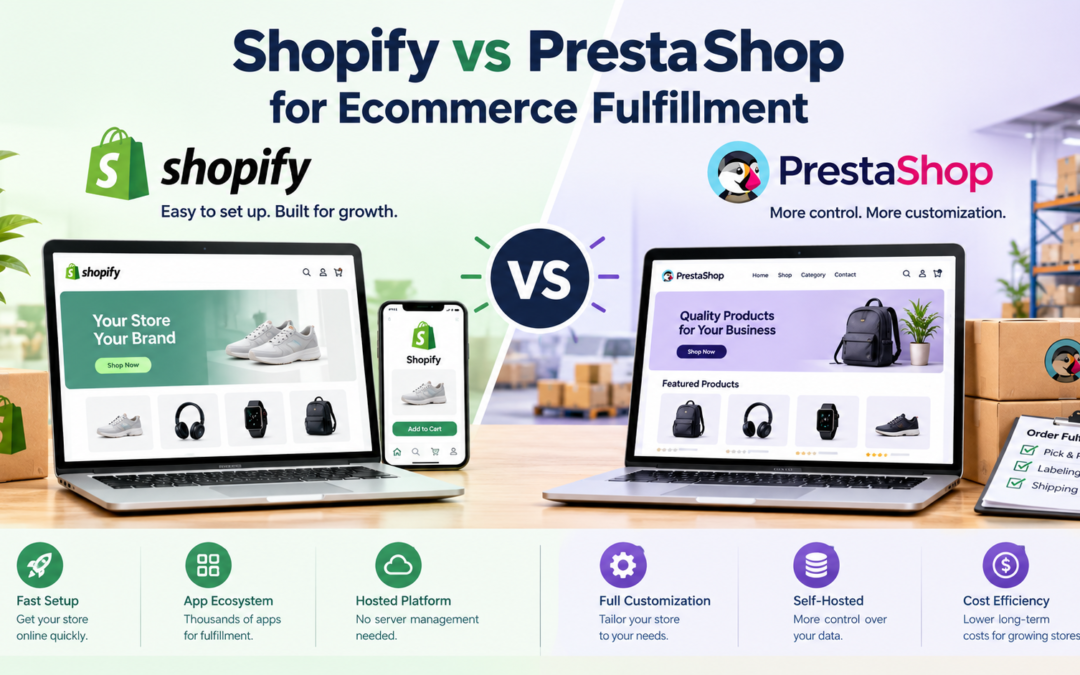
Shopify vs PrestaShop for Ecommerce Fulfillment: Which Fits Better?
PrestaShop doesn't come up as often in dropshipping circles, but it's a genuinely popular platform, especially with sellers in Europe and Latin America, and it's free to install. Like Magento, it's a real platform choice rather than a supplier or app, so this comparison is a proper either-or. The question is whether PrestaShop's lower base cost and openness are worth trading away Shopify's plug-and-play fulfillment setup.

PrestaShop's appeal is straightforward on the surface, the core software is free, open-source, and doesn't lock you into a monthly platform fee the way Shopify does. That's led some sellers to assume it must be the cheaper, more flexible option all around. It can be, but fulfillment is where the comparison gets more nuanced, since Shopify's fulfillment app ecosystem is simply more mature and standardized than what PrestaShop's Addons marketplace currently offers.
Worth digging into is what actually changes about running fulfillment day to day on each platform, not just the sticker price of getting started.
📋 Table of Contents
The Core Difference Between the Two
Shopify is fully hosted, sign up and start selling, with servers, security, and platform updates handled entirely by Shopify. PrestaShop is open-source software you install on your own hosting, or through PrestaShop's own cloud hosting option, giving more control over code and structure but putting more of the technical responsibility on you or a developer. Neither is inherently better, they represent two different philosophies, managed convenience versus open control.

Fulfillment and Shipping App Support
Shopify's App Store has a large, standardized library of fulfillment and shipping apps, from dropshipping suppliers to 3PL integrations, most installable in a few clicks with consistent support and documentation. PrestaShop's Addons marketplace does include fulfillment and shipping modules, and the selection has grown over time, but it's smaller and quality varies more between developers, since it's a more open, less curated ecosystem than Shopify's.
Pros and Cons for Fulfillment
✓ Shopify Strengths
- Large, standardized fulfillment app library
- Fast, consistent setup and support
- Hosting and security fully managed
- Predictable monthly cost
✗ Shopify Limitations
- Monthly platform fee regardless of sales volume
- App costs can add up as you scale
- Less backend flexibility than open-source options
✓ PrestaShop Strengths
- Free core software, no mandatory license fee
- Full code and hosting control
- Strong presence in European and Latin American markets
- Flexible for stores with unusual catalog needs
✗ PrestaShop Limitations
- Smaller, less standardized fulfillment module library
- Requires hosting and technical maintenance
- Module quality and support varies by developer
Cost and Ongoing Maintenance
Shopify's cost is predictable and bundled, a monthly subscription that includes hosting, security, and updates. PrestaShop's software is free, but hosting, module purchases, and any developer time for setup or maintenance are separate costs that can add up, particularly if fulfillment integrations need custom work. For a smaller store, PrestaShop doesn't always end up cheaper once those extra costs are counted.
Side by Side
| Factor | Shopify | PrestaShop |
|---|---|---|
| Base cost | Monthly subscription required | Free core software |
| Fulfillment app support | Large, standardized | Smaller, variable quality |
| Technical maintenance | Handled by Shopify | Your responsibility |
| Customization control | Moderate | Extensive |
| Best for | Sellers wanting fast, managed setup | Sellers comfortable with hosting and code |
Which One to Actually Pick
-
Map Out Your Fulfillment Needs First
Check whether the specific fulfillment or shipping integrations you need are readily available and well-supported on each platform.
-
Factor In the Full Cost, Not Just the License
Add hosting, modules, and any developer time to PrestaShop's total before comparing it against Shopify's flat monthly fee.
-
Choose Based on Technical Comfort
If managing hosting and modules isn't appealing, Shopify's managed environment will likely save more time than PrestaShop's lower sticker price saves money.
Need Reliable Fulfillment Behind Your Store?
OneShipPros helps online sellers set up dependable fulfillment, whatever platform their store runs on.
Get Started with OneShipPros →