

Shopify vs Magento for China Dropshipping: Which Platform Wins?
Unlike most of the comparisons on this blog, this one actually is a straight either-or. Shopify and Magento are both full ecommerce platforms, and for a China dropshipping store, you're genuinely picking one to build on. The honest answer depends less on which platform is "better" overall and more on how much technical setup you're willing to take on to get dropshipping running smoothly.

Most sellers land on Shopify by default, mainly because it's the platform most dropshipping guides talk about. Magento rarely comes up in the same conversation, and when it does, it's usually from someone with a development background who wants more control than a hosted platform gives. Both can absolutely run a China dropshipping business. The difference is how much of the setup you're doing yourself versus how much the platform hands you out of the box.
This is worth thinking through honestly before building anything, since switching platforms later is far more painful than choosing carefully the first time.
📋 Table of Contents
The Core Difference Between the Two
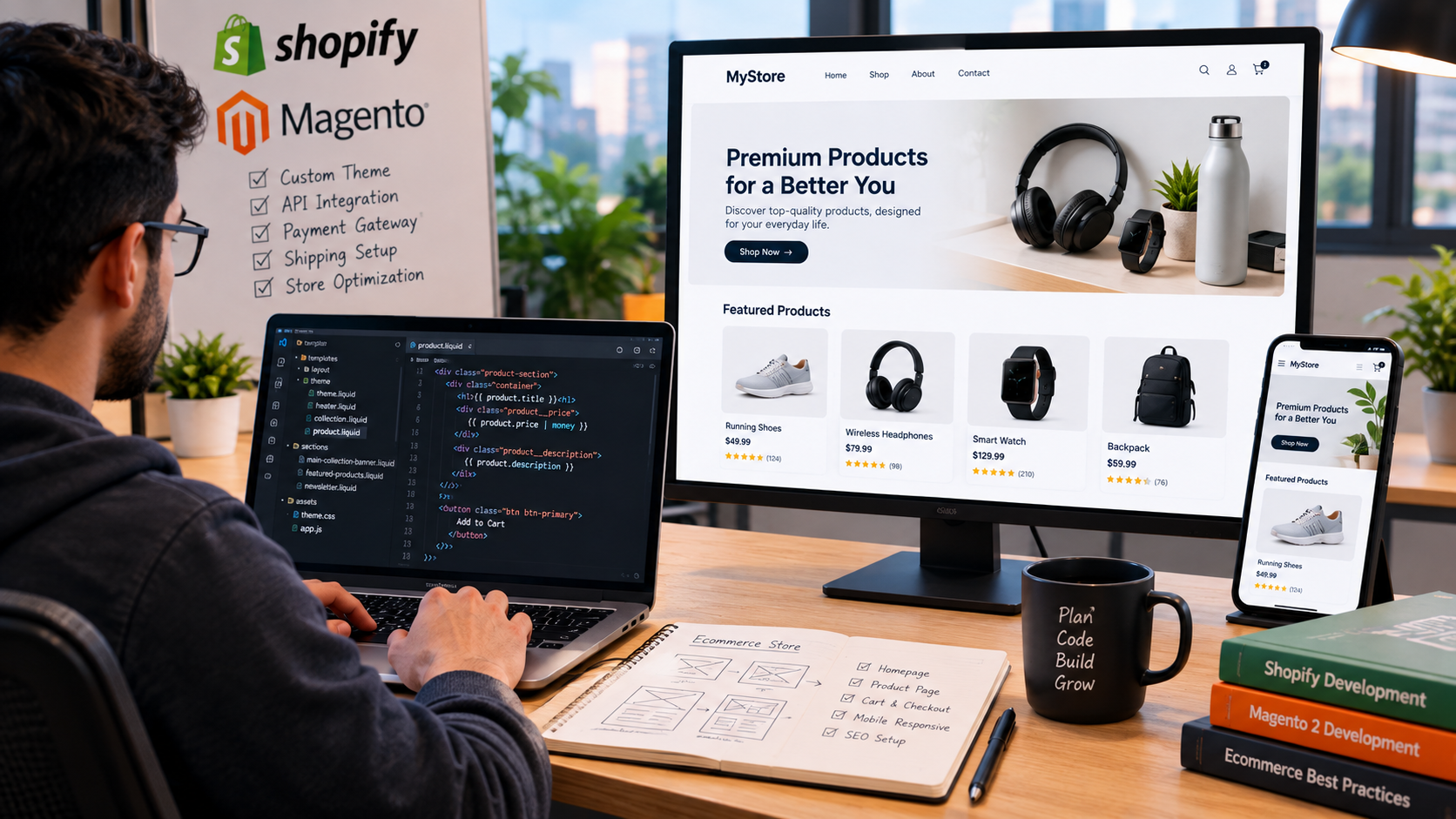
Shopify is a fully hosted platform, sign up, pick a theme, and you're selling within a day, with Shopify handling servers, security, and updates behind the scenes. Magento, particularly the open-source version, is self-hosted software you install and manage yourself, or pay someone to manage for you. That gives Magento far more flexibility to customize, but it also means you're responsible for hosting, performance, and security in a way Shopify sellers simply aren't.
Dropshipping App Support
This is where the gap widens for China dropshipping specifically. Shopify's App Store has one-click integrations for nearly every major China dropshipping supplier, CJdropshipping, Zendrop, Spocket, and others, all built to sync orders and inventory automatically. Magento can connect to many of the same suppliers, but usually through custom extensions, third-party modules of varying quality, or manual API integration work, none of which is as plug-and-play as a Shopify app.
Pros and Cons for China Dropshipping
✓ Shopify Strengths
- Fast setup, live in hours not weeks
- Deep dropshipping app ecosystem
- No server or hosting management needed
- Predictable monthly cost
✗ Shopify Limitations
- Less flexibility for complex custom features
- App fees can add up as you scale
- Limited control over backend architecture
✓ Magento Strengths
- Deep customization and full code control
- Handles large, complex catalogs well
- No mandatory monthly platform fee (open-source)
- Strong fit for multi-store or B2B setups
✗ Magento Limitations
- Requires hosting, security, and dev maintenance
- Steeper learning curve to launch
- Dropshipping integrations often need custom work
Cost and Ongoing Maintenance
Shopify's cost is predictable, a monthly subscription plus app fees, with hosting and security included. Magento's open-source version has no license fee, but hosting, developer time, and security patches add up, often costing more overall for a small store than Shopify's flat monthly rate. Magento only tends to pay off once a business is large enough to justify a dedicated development budget.
Side by Side
| Factor | Shopify | Magento |
|---|---|---|
| Setup time | Hours to days | Weeks, requires developer input |
| Dropshipping app support | Extensive, one-click | Limited, often custom-built |
| Technical maintenance | Handled by Shopify | Your responsibility |
| Customization depth | Moderate | Extensive |
| Best for | Most new China dropshipping stores | Larger, dev-backed operations |
Which One to Actually Pick
-
Check Your Technical Resources Honestly
If there's no developer on hand, Shopify's hosted setup and app ecosystem will get a China dropshipping store running with far less friction.
-
Consider Magento Only With a Development Plan
Magento makes sense once there's a real need for deep customization and the budget to support ongoing developer maintenance.
-
Start Simple, Migrate Later If Needed
Many sellers launch on Shopify to validate the business, then consider Magento later only if they hit genuine platform limitations at scale.
Ready to Set Up China Dropshipping on Shopify?
OneShipPros helps Shopify sellers connect reliable China sourcing and fulfillment from day one.
Get Started with OneShipPros →