
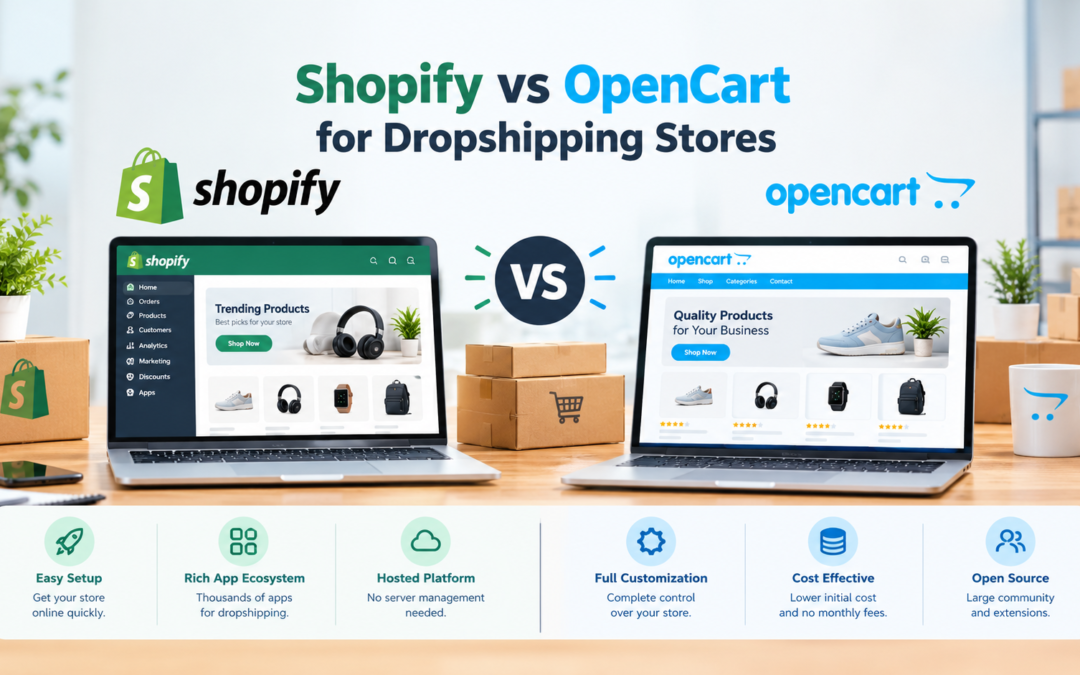
Shopify vs OpenCart: Best Platform for Dropshipping Stores?
OpenCart is the platform budget-conscious sellers tend to find once they start searching for a free alternative to the bigger names. It's lighter than Magento, simpler to get running, and genuinely free to install. Like the other open-source platforms on this blog, this is a real either-or against Shopify, and the deciding factor usually comes down to how much setup work you're willing to trade for a lower price tag.
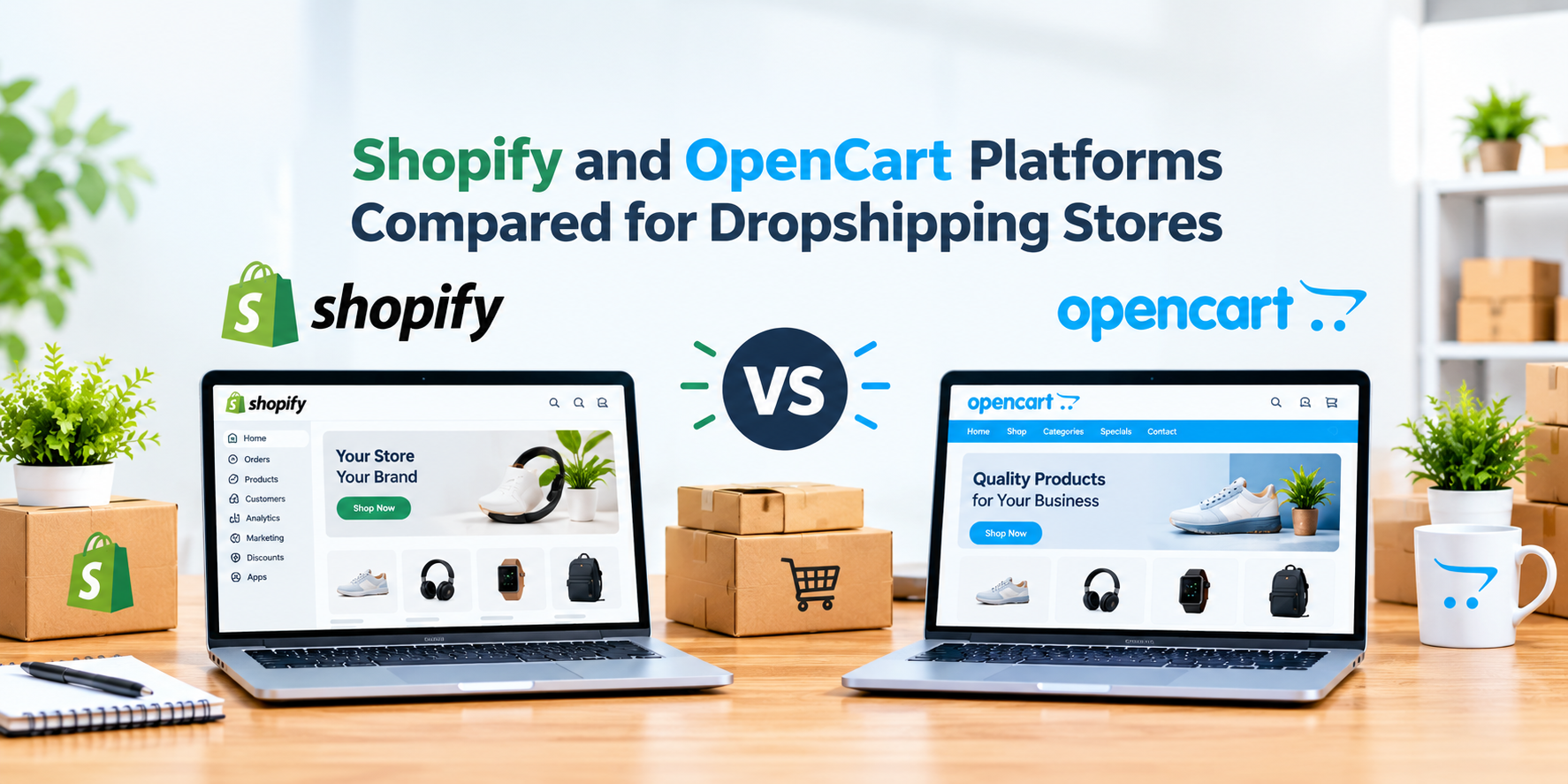
OpenCart tends to attract a specific kind of seller, someone comfortable with a bit of technical setup who wants to avoid Shopify's monthly fee entirely. It's lighter and generally easier to get running than Magento, with a smaller learning curve, which makes it a reasonable option for a simple catalog. Where it struggles in comparison to Shopify is dropshipping specifically, since the extension ecosystem built around it is a fraction of the size of Shopify's App Store.
The real question for a dropshipping store isn't whether OpenCart can technically work, it's whether the time saved on licensing fees gets eaten up by extra setup and integration work instead.
📋 Table of Contents
The Core Difference Between the Two
Shopify is a fully hosted platform, everything from servers to security updates is handled for you behind the scenes. OpenCart is free, open-source software you install on your own hosting, giving you full control over the code but also full responsibility for keeping it running, updated, and secure. OpenCart is generally considered simpler to set up than Magento, but it still requires real technical comfort compared to Shopify's sign-up-and-go approach.
Dropshipping Extension Support
This is the biggest practical gap for dropshipping specifically. Shopify's App Store has mature, one-click integrations for major China dropshipping suppliers, with automatic order syncing and tracking updates built in. OpenCart's extension marketplace does include some supplier integrations, but the options are far fewer, support quality varies widely between developers, and several integrations require manual configuration or custom coding to work reliably.
Pros and Cons for Dropshipping
✓ Shopify Strengths
- Mature dropshipping app ecosystem
- Fast, hosted setup with no server management
- Consistent documentation and support
- Predictable monthly cost
✗ Shopify Limitations
- Monthly fee regardless of sales volume
- App costs add up as the store grows
- Less backend flexibility than open-source options
✓ OpenCart Strengths
- Free core software, no license fee
- Lighter and simpler than Magento
- Full control over hosting and code
- Large community of free extensions for general ecommerce
✗ OpenCart Limitations
- Small, inconsistent dropshipping extension selection
- Requires hosting and technical maintenance
- Less polished support compared to Shopify
Cost and Ongoing Maintenance
OpenCart's software is free to download and install, but hosting, premium extensions, and developer time for setup or fixes are all separate, real costs. Shopify bundles hosting, security, and support into one predictable monthly fee. For a dropshipping store leaning on several third-party integrations, OpenCart's total cost can end up close to or even above Shopify's once setup and maintenance time are counted.
Side by Side
| Factor | Shopify | OpenCart |
|---|---|---|
| Base cost | Monthly subscription required | Free core software |
| Dropshipping extension support | Extensive, standardized | Small, variable quality |
| Technical maintenance | Handled by Shopify | Your responsibility |
| Setup complexity | Low | Moderate to high |
| Best for | Most dropshipping stores | Budget-focused, technically comfortable sellers |
Which One to Actually Pick
-
Check Which Suppliers You Actually Need to Connect
Confirm whether your preferred dropshipping suppliers have reliable, well-supported integrations on OpenCart before committing.
-
Be Honest About Technical Comfort
If hosting, updates, and troubleshooting extensions isn't something you want to manage, Shopify's hosted setup will likely save more time overall.
-
Start on Shopify, Consider OpenCart Later If Costs Matter More Than Convenience
Many sellers launch on Shopify to move fast, only considering a switch to OpenCart once they have the technical resources to manage it properly.
Need Reliable Fulfillment Behind Your Store?
OneShipPros helps online sellers set up dependable sourcing and fulfillment, whatever platform their store runs on.
Get Started with OneShipPros →