
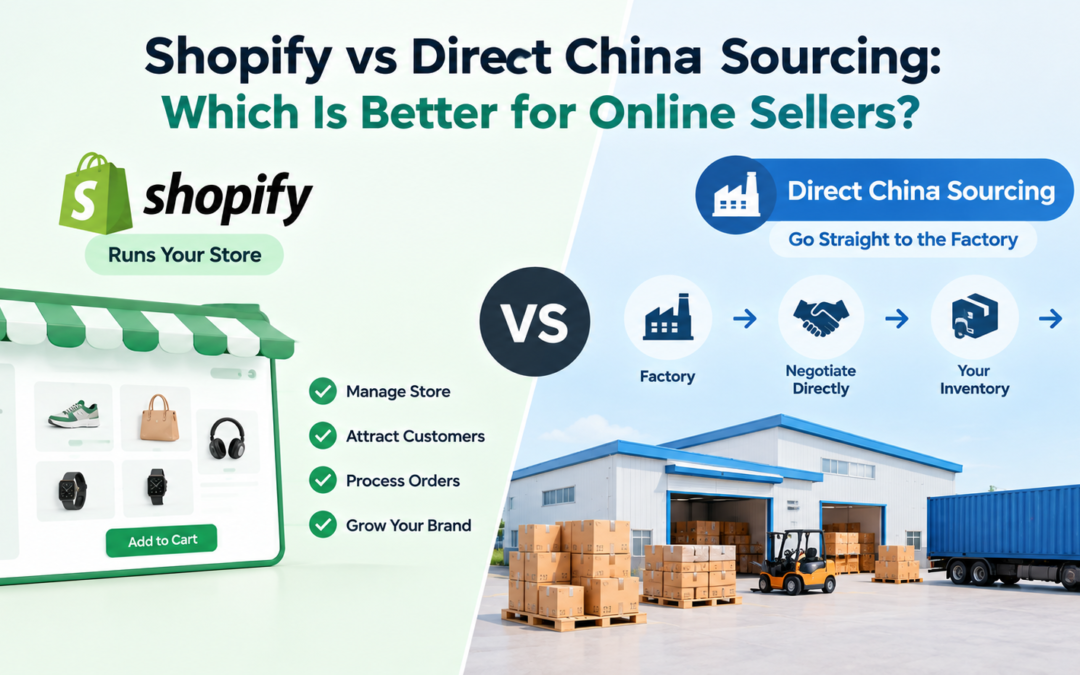
Shopify vs Direct China Sourcing: Which Is Better for Online Sellers?
This comparison sounds like it's about picking a platform, but it's really about how far up the supply chain you're willing to go. Shopify runs your store no matter how you source. Direct China sourcing means skipping agents and dropshipping apps entirely and negotiating straight with a factory. It can be a great move, but only once you're past the stage where that trade-off actually pays off.
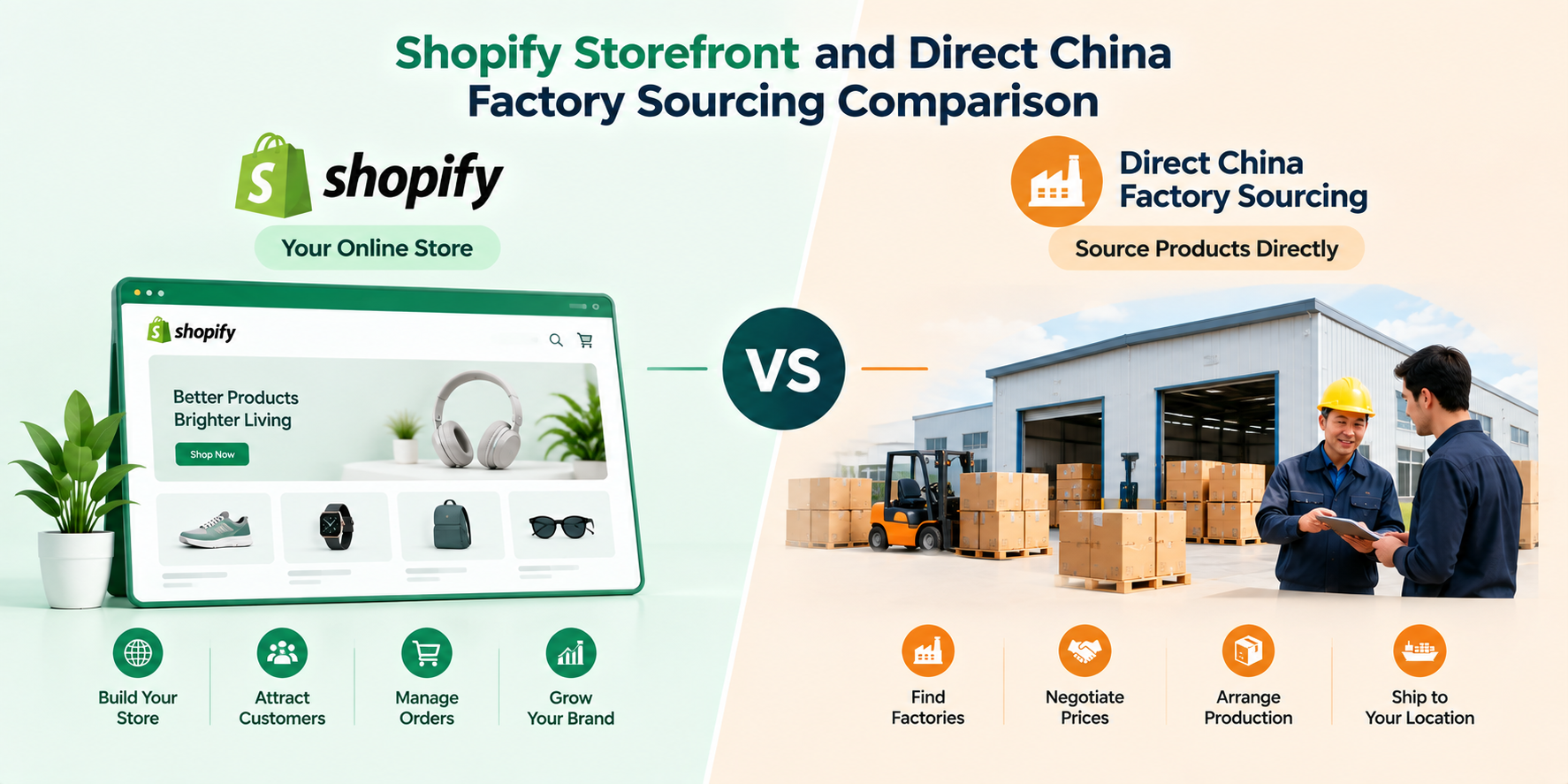
Direct China sourcing gets brought up by sellers who've outgrown dropshipping apps and agents and are wondering if cutting out the middleman entirely is the next logical step. It sounds tempting on paper, no markup, direct pricing straight from the manufacturer. But it's easy to conflate that decision with choosing a different storefront platform, when really it has nothing to do with Shopify at all. Shopify still runs the store either way. What changes is everything happening behind it.
The more useful question is what direct sourcing actually demands of a seller, and whether a given store is really ready to take that on.
📋 Table of Contents
Two Different Layers of the Same Business
Shopify handles the storefront layer, listings, checkout, and everything a customer sees. Direct China sourcing sits several layers back, at the point where a product is manufactured in the first place. It replaces the role an agent, a dropshipping app, or a fulfillment partner would normally play, cutting straight to the factory instead. Comparing the two head to head misses the point, one is the shop window, the other is a decision about how far back in the supply chain you're willing to operate.
How Direct Sourcing Actually Works
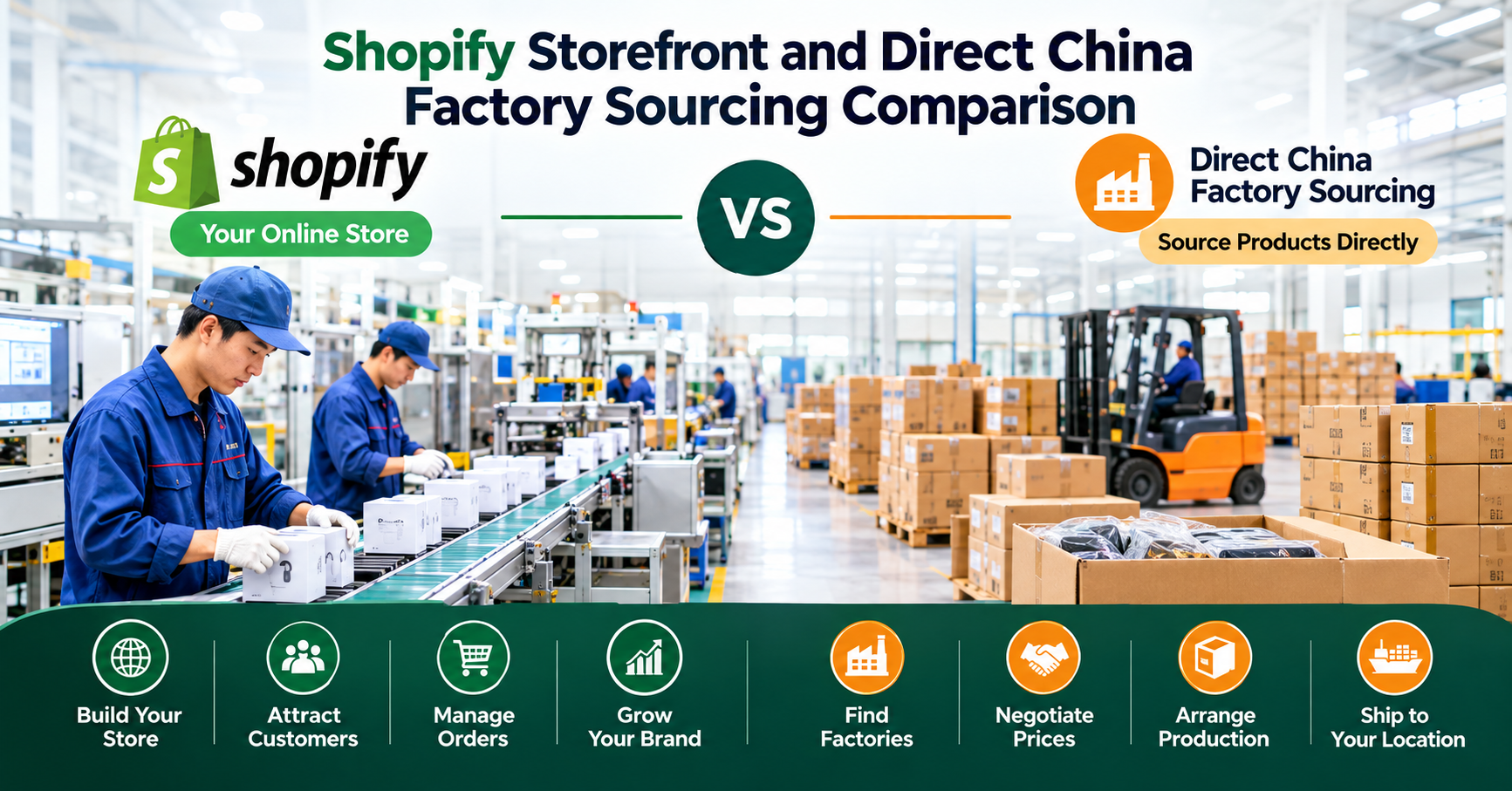
Instead of connecting an app to Shopify, direct sourcing usually means finding manufacturers through trade platforms or in-person sourcing trips, negotiating pricing and minimum order quantities directly, and arranging shipping and customs yourself or through a freight forwarder. None of this plugs into Shopify automatically the way a dropshipping app does. Orders still come through your Shopify store, but everything on the supply side is manual and negotiated, not app-driven.
What Direct Sourcing Adds Over an Agent or App
- Lower per-unit cost — cutting out an agent or app's margin usually means better pricing, especially at higher order volumes
- Full product customization — direct factory relationships make it easier to adjust materials, specs, or packaging exactly how you want
- Stronger long-term supplier relationships — working directly builds a relationship that can lead to priority production slots and better terms over time
- Greater negotiating leverage — no middleman markup means more room to negotiate price, minimum order size, and payment terms
Where It Falls Short
Direct sourcing demands a lot more from a seller. Minimum order quantities from factories are usually far higher than what an agent or dropshipping app requires, so there's real capital at risk upfront. Sellers also take on the work an agent normally handles, vetting factories, managing quality control, arranging shipping and customs, all without a middleman's experience to lean on. It's rarely the right starting point for a store that hasn't already proven a product sells well through an easier sourcing method first.
Side by Side
| Factor | Agent / Dropshipping App | Direct China Sourcing |
|---|---|---|
| Per-unit cost | Higher, includes markup | Lower, no middleman |
| Minimum order size | Low or none | Often high |
| Setup effort | Low, mostly app-based | High, manual negotiation and logistics |
| Customization control | Limited | Extensive |
| Best for | New or untested products | Proven, high-volume sellers |
Deciding If You're Ready
-
Prove the Product Through an Easier Sourcing Method
Use a dropshipping app or agent on Shopify first to confirm real, consistent demand before considering a factory relationship.
-
Check the Numbers Against Minimum Order Requirements
Make sure order volume and cash flow can realistically support a factory's minimum order quantities without straining the business.
-
Start With One Product, Not the Whole Catalog
Move your single best-proven seller to direct sourcing first, keeping everything else on the existing setup while you learn the process.
Not Sure If You're Ready to Go Direct?
OneShipPros helps Shopify sellers weigh sourcing options and manage the transition without the guesswork.
Get Started with OneShipPros →