
Shopify vs China-Based Fulfillment: Comparing Costs, Speed and Control
Shopify isn't really the thing being compared here, it runs your store whichever way you ship. What's worth weighing is what China-based fulfillment does to three numbers every seller cares about: what an order costs you, how fast it reaches the customer, and how much say you have over what's in the box. Those three pull against each other, so it helps to see how.
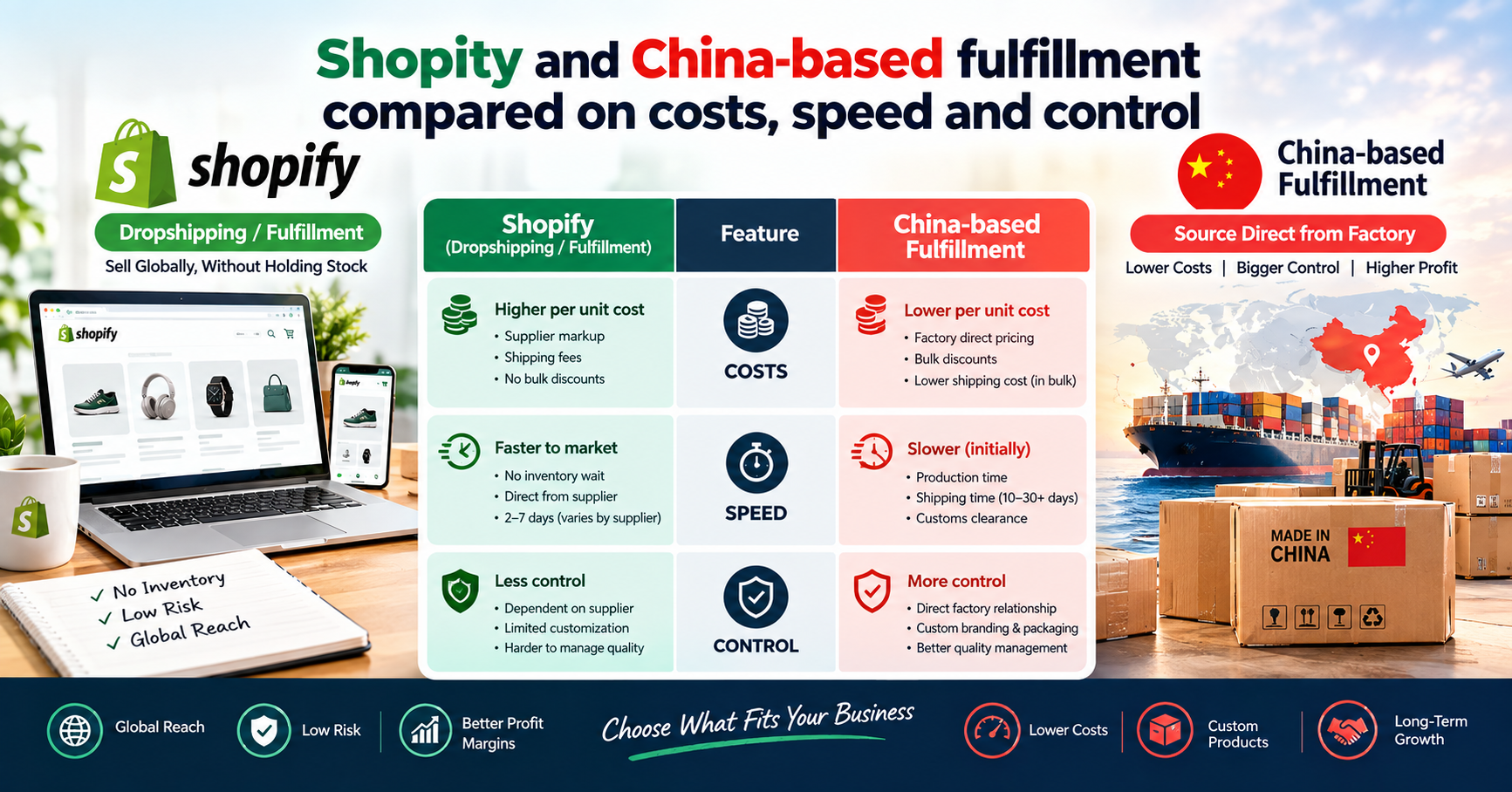
When sellers compare fulfillment options, the conversation almost always circles back to the same three things: cost, speed, and control. It's tempting to hope one option wins all three, but that rarely happens. China-based fulfillment tends to do well on cost and control, since products are made nearby and you can be hands-on with quality. Speed is where it gets more nuanced, because the distance to your customer is the one thing a China warehouse can't shrink.
Understanding where the trade-offs sit makes it a lot easier to decide whether China-based fulfillment fits your store, and which shipping choices to make once you're using it.
📋 Table of Contents
Two Different Jobs, Not Two Competitors
Shopify handles the storefront, listings, checkout, and customer experience. China-based fulfillment handles what happens once an order is placed, picking the product from a warehouse in China, packing it, and shipping it out. Since the two do different jobs, the useful comparison isn't Shopify against fulfillment, it's China-based fulfillment against other ways of getting orders to customers, judged on cost, speed, and control.
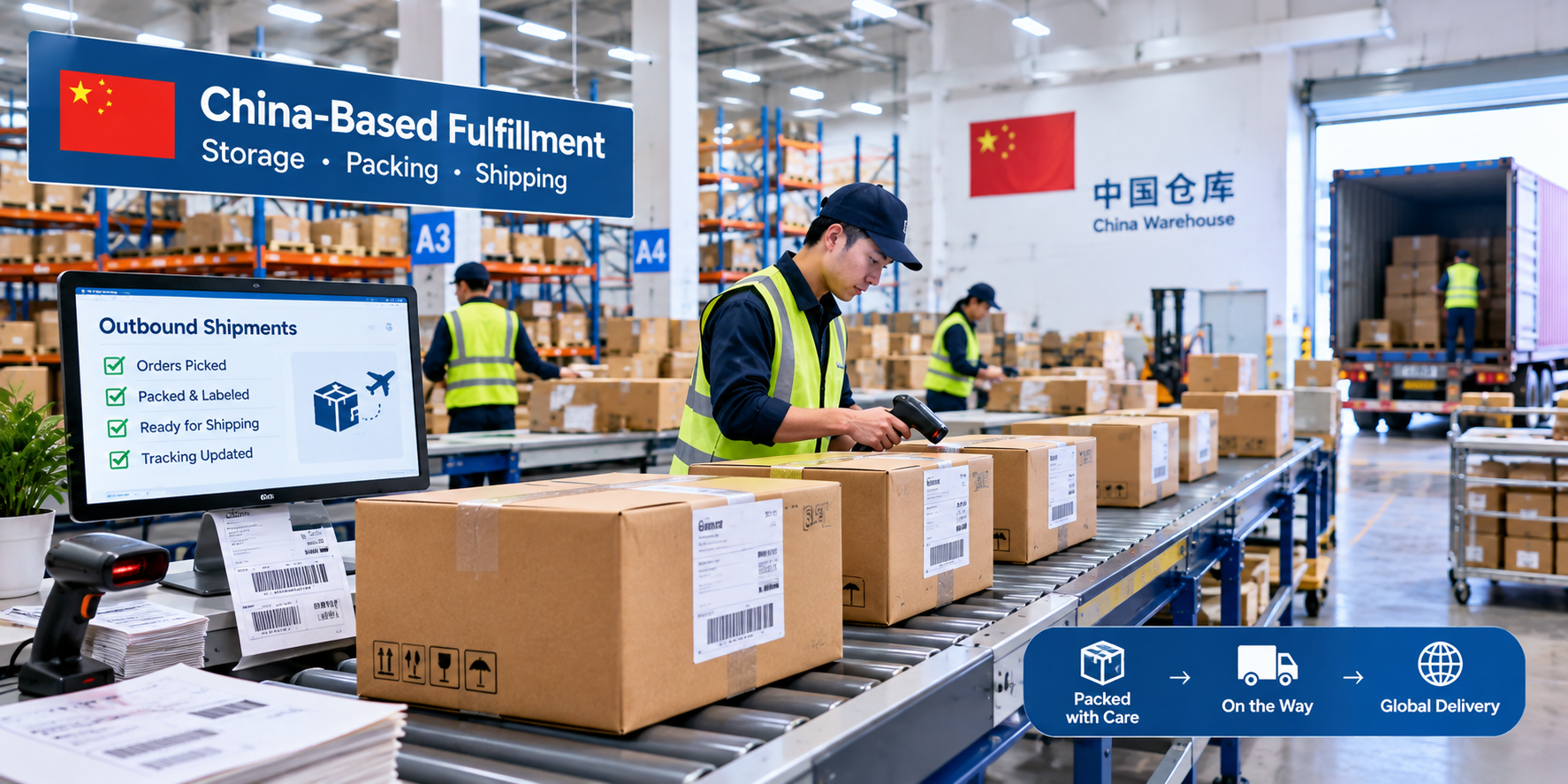
Costs: Where the Savings Come From
China-based fulfillment usually keeps costs down because the warehouse sits close to the factories. There's less distance between manufacturing and storage, labor and handling costs tend to be lower, and buying inventory in bulk brings per-unit prices down. The catch is that your customer is often far away, so international shipping becomes the biggest variable. Whether the total works out cheaper than a local warehouse depends on where most of your buyers live and which shipping methods you choose.
Speed: The Honest Trade-Off
Speed is where China-based fulfillment needs the most careful thinking. Shipping from China to a distant customer will generally take longer than shipping from a warehouse in the customer's own country, no matter how efficient the warehouse is. Faster options exist, express carriers and dedicated shipping lines cut transit time noticeably, but they cost more. Economy options keep costs low and stretch delivery times. The decision is really about which end of that scale suits your customers and your margins.
Control: Quality, Packaging and Branding
- Quality inspection — holding your own inventory lets you check products in bulk before any of it ships to a customer
- Custom packaging — branded boxes, inserts, and labels are far easier to arrange when you control the stock
- Consistent presentation — every order goes out packed the same way, rather than depending on whichever supplier fills it
- Direct communication — a fulfillment partner you work with regularly is easier to reach when something needs fixing than a shared supplier queue
Side by Side
| Factor | Shopify | China-Based Fulfillment |
|---|---|---|
| What it handles | Storefront, checkout, customer experience | Warehousing, packing, shipping |
| Costs | Subscription and transaction fees | Often lower product and handling costs |
| Speed | N/A | Depends on the shipping method chosen |
| Control | Full control of the storefront | Strong control over quality and packaging |
| Replaces the other? | No | No |
Choosing the Right Balance
-
Know Where Your Customers Are
The location of most of your buyers shapes both shipping cost and delivery time more than anything else, so check that first.
-
Match the Shipping Method to the Product
Higher-priced items can absorb faster shipping, while low-cost products may only make sense with slower, cheaper options.
-
Use Control to Protect the Customer Experience
Take advantage of quality checks and custom packaging so slower delivery is offset by a product and unboxing that feels worth the wait.
Want the Right Balance of Cost, Speed and Control?
OneShipPros helps Shopify sellers choose fulfillment and shipping options that fit their customers and margins.
Get Started with OneShipPros →