
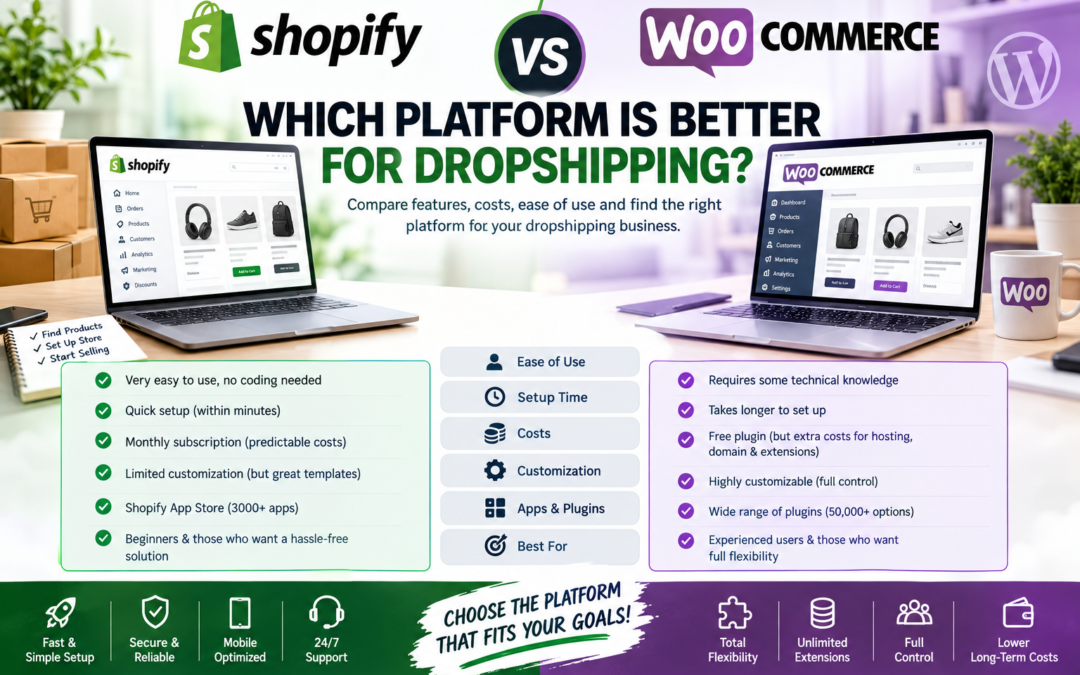
Shopify vs WooCommerce: Which Platform Is Better for Dropshipping?
Shopify and WooCommerce approach ecommerce from fundamentally different angles, one is a fully hosted, all-in-one platform, the other a flexible, self-hosted plugin built on WordPress. For dropshipping specifically, that difference shapes everything from setup time to app support. Here's how they actually compare.
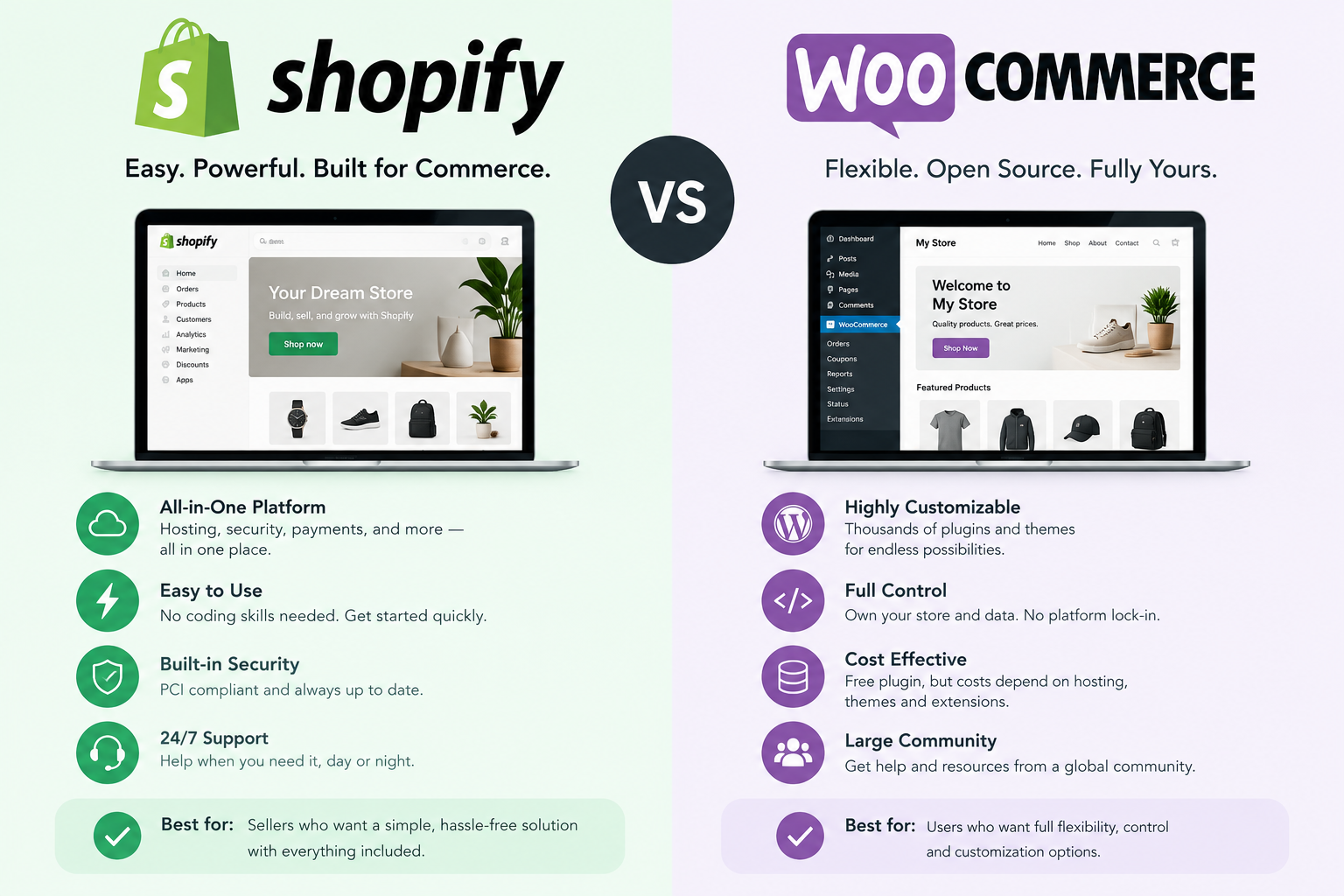
Choosing between Shopify and WooCommerce for a dropshipping store is really a choice between two different philosophies. Shopify is a fully hosted, closed platform, everything runs on Shopify's infrastructure, with a curated app store and predictable monthly pricing. WooCommerce is a free plugin built on top of WordPress, giving significantly more customization control but requiring the seller to manage hosting, security, and more of the technical setup themselves.
Here's how the two actually compare for a dropshipping business specifically, across the factors that matter most.
📋 Table of Contents
Setup and Ease of Use
Shopify is designed to get a store online quickly, hosting, security, and core infrastructure are handled automatically, and the setup process is largely guided through a straightforward dashboard. WooCommerce requires installing WordPress, choosing and configuring hosting, installing the WooCommerce plugin, and typically several additional plugins before the store is fully functional, more setup steps, but also more control over exactly how each piece is configured.
Shopify Setup
- Fully hosted, no separate hosting to manage
- Guided setup process for beginners
- Faster time to a functional store
- Built-in security and updates handled automatically
WooCommerce Setup
- Requires separate WordPress hosting
- More technical configuration required upfront
- Steeper learning curve for non-technical users
- Security and updates are the seller's responsibility
Cost Comparison
Shopify's pricing is a predictable monthly subscription that includes hosting, security, and core functionality, with additional costs mainly coming from apps and transaction fees depending on payment processor choice. WooCommerce itself is free, but total cost adds up through hosting, a domain, a theme, and various plugins, some free, some paid, needed to match Shopify's built-in feature set. Depending on the specific setup, total WooCommerce cost can end up comparable to or occasionally higher than Shopify's subscription.

Dropshipping App and Plugin Support
- Shopify App Store — a large, centralized marketplace with many dropshipping-specific apps built and maintained specifically for Shopify's platform
- WooCommerce plugin ecosystem — draws from the much broader WordPress plugin library, offering flexibility but sometimes less polish for dropshipping-specific use cases
- Integration reliability — Shopify apps tend to have more consistent update cycles since they're built against a single, controlled platform
- Learning curve for configuration — Shopify apps generally have simpler setup flows; WooCommerce plugins can require more manual configuration
Customization and Control
WooCommerce, being open-source and self-hosted, offers significantly more flexibility for sellers wanting deep customization, custom code, unusual store structures, or specific technical integrations that Shopify's more closed ecosystem doesn't easily accommodate. This flexibility comes with more responsibility, though, a self-hosted store means the seller (or a hired developer) is responsible for keeping everything running smoothly, secure, and updated.
Shopify vs WooCommerce at a Glance
| Factor | Shopify | WooCommerce |
|---|---|---|
| Setup Speed | Faster | Slower |
| Ease for Beginners | Easier | Steeper learning curve |
| Customization Flexibility | More limited | Highly flexible |
| Ongoing Maintenance | Handled by Shopify | Seller's responsibility |
| Dropshipping App Polish | Generally stronger | Broader but more variable |
Which Platform Fits Your Situation
-
Choose Shopify for Speed and Simplicity
If getting a dropshipping store running quickly, with minimal technical overhead, is the priority, Shopify's fully hosted approach is generally the more straightforward path.
-
Choose WooCommerce for Deep Customization
If the business needs highly specific customization or already has WordPress experience or developer support, WooCommerce's flexibility can be a genuine advantage.
-
Weigh Total Cost Honestly for Your Setup
Calculate the realistic total cost for each platform based on your specific needs, rather than assuming WooCommerce's "free" starting point makes it automatically cheaper.
Building a Dropshipping Store on Shopify?
OneShipPros helps Shopify sellers source and fulfill orders reliably from China.
Get Started with OneShipPros →