
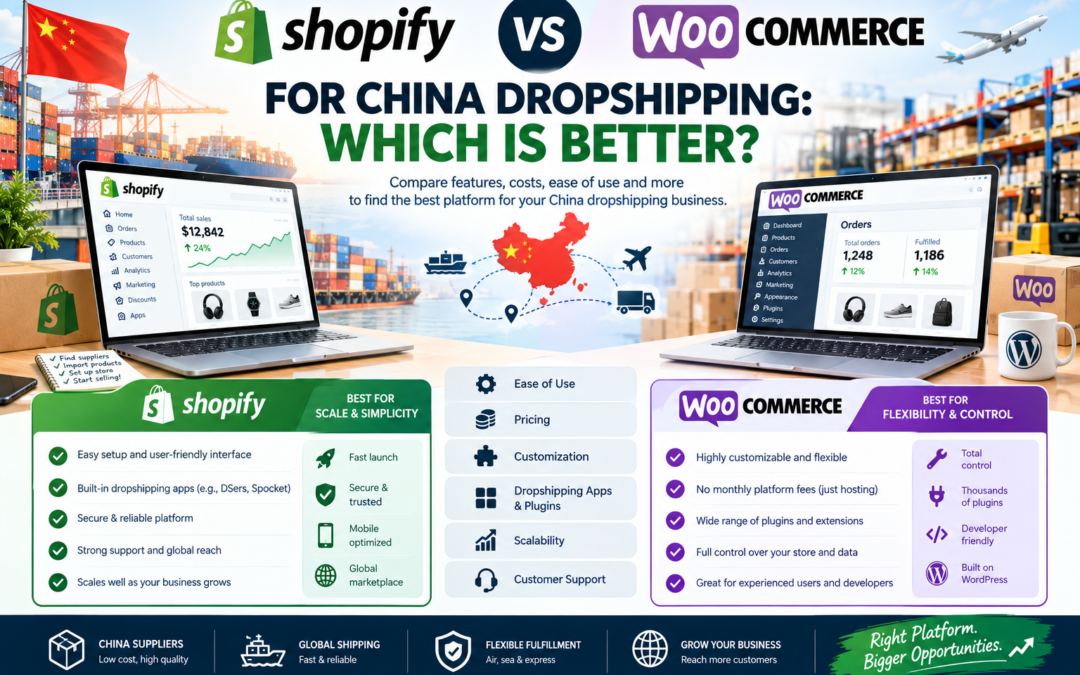
Shopify vs WooCommerce for China Dropshipping: Which Is Better?
General platform comparisons often miss what actually matters for a China-sourced dropshipping business specifically, supplier connectivity, fulfillment app depth, and how smoothly the platform handles that particular sourcing model. Here's how Shopify and WooCommerce compare with China dropshipping specifically in mind.
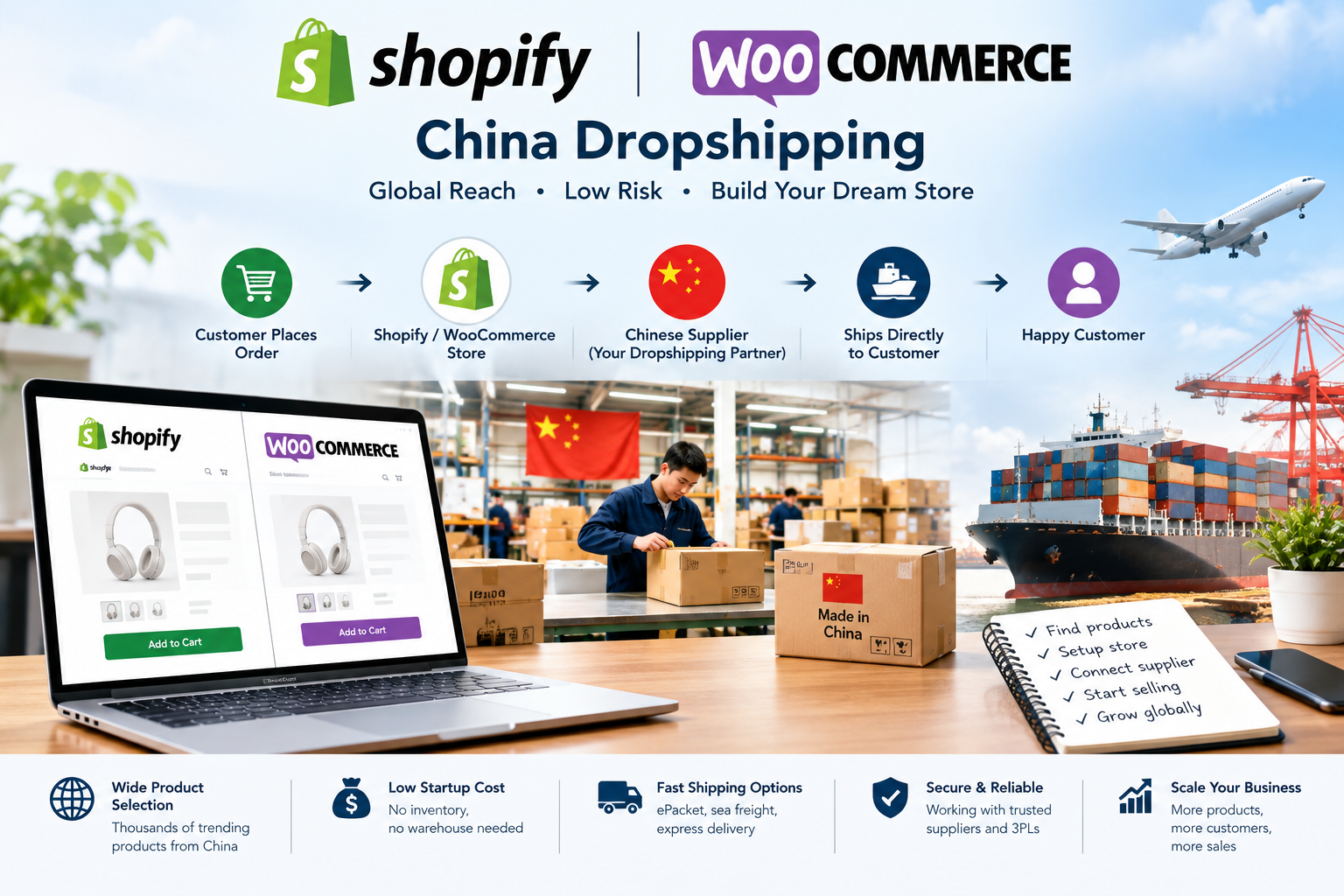
China dropshipping has specific operational demands, syncing with China-based suppliers, integrating with fulfillment warehouses, handling international shipping data, that a general platform comparison doesn't always address directly. Shopify and WooCommerce both support this model, but the depth and maturity of that support differ meaningfully between the two.
Here's how Shopify and WooCommerce actually compare specifically for a China dropshipping business, beyond the general platform differences.
📋 Table of Contents
China Supplier Integration
Shopify's app store includes a substantial number of apps built specifically for connecting to China-based suppliers, syncing product listings, pricing, and order routing automatically. This ecosystem has developed over years specifically around the dropshipping-from-China model. WooCommerce achieves similar functionality through the broader WordPress plugin library, which works but generally involves more configuration and less dropshipping-specific polish out of the box.
Shopify for China Sourcing
- Large ecosystem of China-supplier-specific apps
- Mature automated order routing tools
- Well-tested product and pricing sync
- Strong track record with this exact business model
WooCommerce for China Sourcing
- Relies on the broader WordPress plugin ecosystem
- More configuration typically required
- Less dropshipping-specific out-of-the-box polish
- Still functional, but requires more hands-on setup
Fulfillment Warehouse App Support
Most established China fulfillment warehouses build integrations for both platforms, since both represent meaningful market share among dropshipping and ecommerce sellers. That said, Shopify integrations tend to be more mature and widely used given the platform's larger overall presence in the dropshipping space specifically, which can mean smoother setup and fewer edge-case issues.
Technical Maintenance as You Scale
- Shopify's managed infrastructure — hosting, security, and platform updates are handled automatically, freeing up attention for sourcing and marketing
- WooCommerce's self-hosted responsibility — as order volume grows, hosting performance, plugin compatibility, and security all become more demanding to manage
- Scaling complexity difference — Shopify's managed model tends to scale more predictably for a China dropshipping business focused on sourcing and sales rather than technical infrastructure
- Developer resources needed — WooCommerce at scale often benefits from dedicated technical support, an added cost Shopify sellers don't typically need to budget for
Cost Structure for China Dropshipping
Shopify's predictable monthly subscription simplifies budgeting for a China dropshipping business, with additional costs coming mainly from apps needed for specific supplier or fulfillment integrations. WooCommerce's costs are more variable, hosting, a theme, and the plugins needed to replicate dropshipping-specific functionality can add up to a comparable or occasionally higher total, depending on the specific plugin stack chosen.
Shopify vs WooCommerce at a Glance
| Factor | Shopify | WooCommerce |
|---|---|---|
| China Supplier App Depth | Stronger, more mature | Broader but less specialized |
| Fulfillment Integration Maturity | Generally more established | Available, less widely tested |
| Technical Maintenance | Handled by Shopify | Seller's responsibility |
| Scaling Predictability | More predictable | More variable with volume |
Which Platform Fits Your China Dropshipping Business
-
Prioritize Supplier and Fulfillment App Availability
Check whether the specific China supplier and fulfillment integrations you need are well-supported and mature on each platform before deciding.
-
Consider Your Appetite for Technical Management
If you'd rather focus on sourcing and sales than site maintenance, Shopify's managed infrastructure removes a meaningful layer of ongoing responsibility.
-
Factor in Realistic Scaling Plans
If significant growth is likely, weigh WooCommerce's added technical demands at scale against Shopify's more predictable managed approach.
Running a China Dropshipping Business?
OneShipPros helps Shopify and WooCommerce sellers source and fulfill orders reliably from China.
Get Started with OneShipPros →