
Shopify vs Wix: Which Platform Is Better for Online Stores?
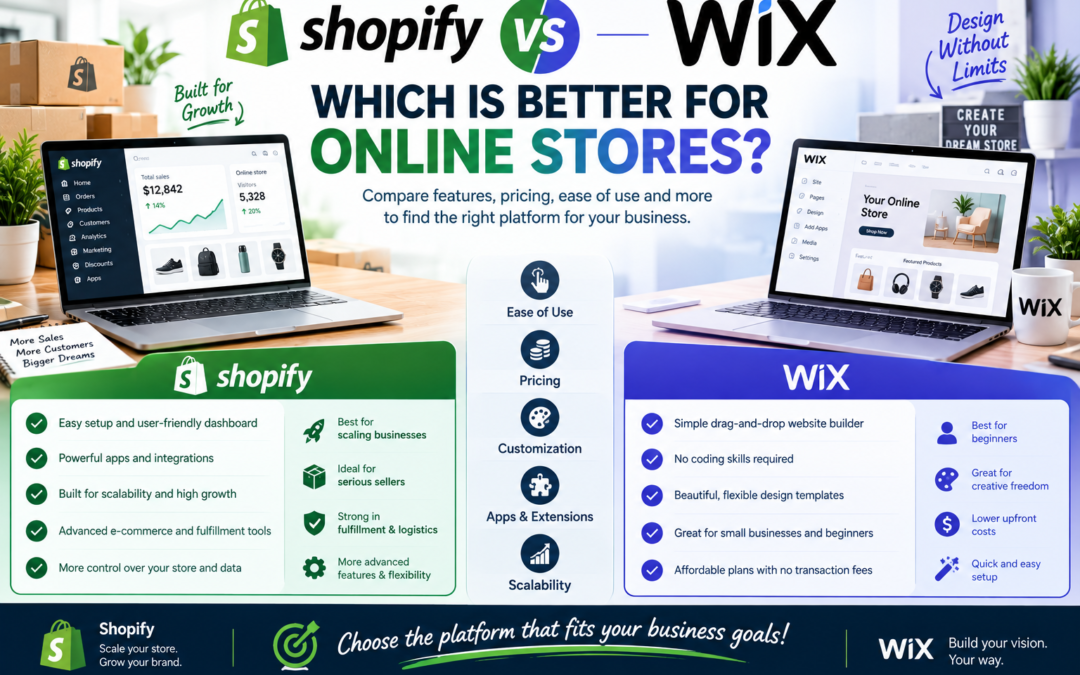
Wix started as a general website builder and added ecommerce along the way, Shopify was built for ecommerce from day one. That origin story still shapes what each platform does well today. Here's how they actually compare for someone specifically building an online store.
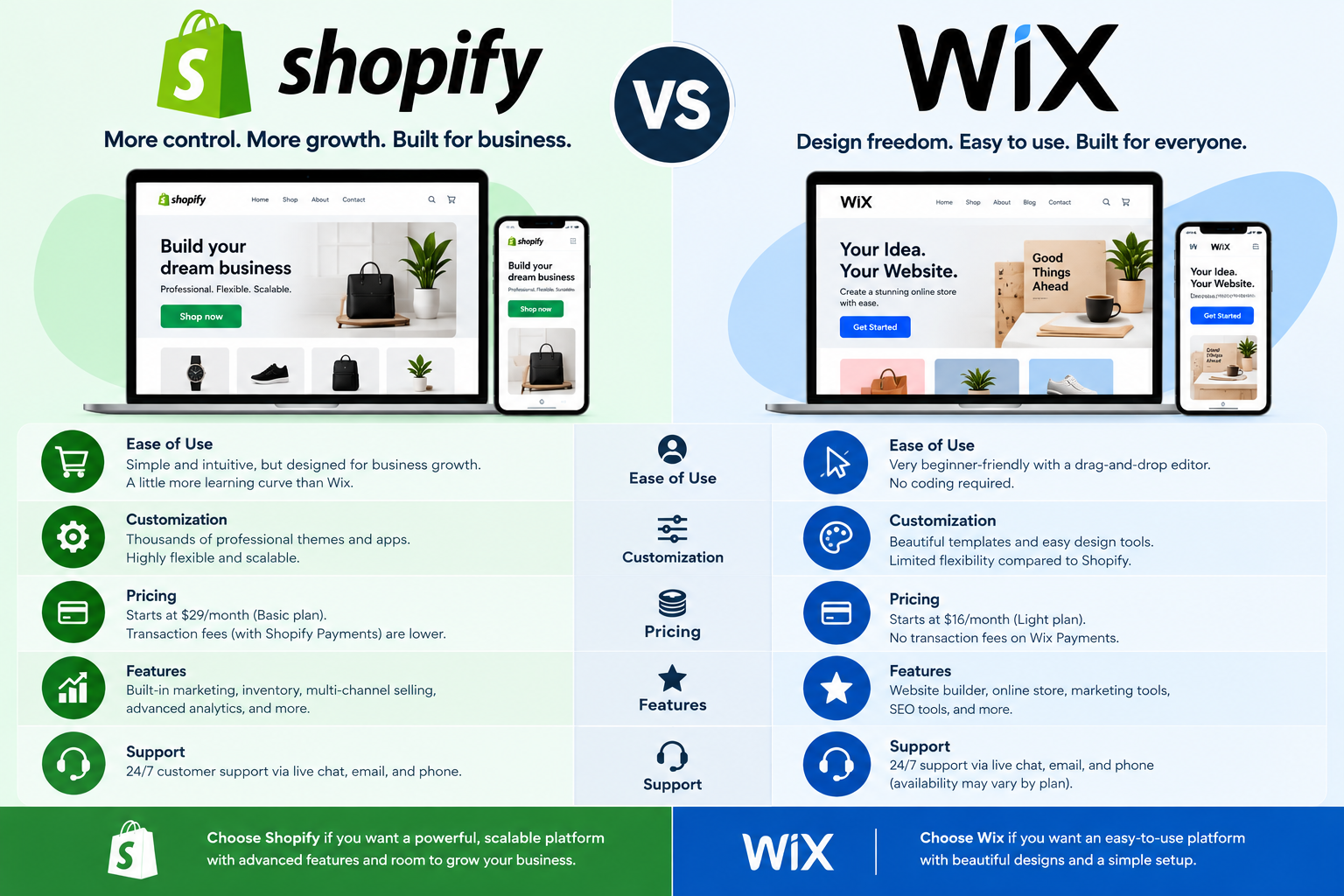
Shopify and Wix approach the same goal, getting an online store up and selling, from different starting points. Shopify was built specifically as an ecommerce platform, and everything about its structure reflects that focus. Wix began as a general website builder with a strong visual editor, and added ecommerce capability on top of that foundation over time. Both work, but they suit somewhat different priorities.
Here's how Shopify and Wix actually compare for someone deciding where to build their online store.
📋 Table of Contents
Ease of Use and Store Building
Wix's drag-and-drop editor is widely regarded as one of the more intuitive website builders available, giving a lot of visual control without needing technical skill. Shopify's setup process is also designed to be approachable, but it's structured specifically around ecommerce workflows, product listings, checkout configuration, shipping setup, rather than general page design. Both are genuinely beginner-friendly, just optimized for slightly different priorities.
Wix Strengths
- Highly intuitive drag-and-drop visual editor
- Strong general website design flexibility
- Good fit for simpler, smaller-catalog stores
- Quick to get a visually polished site live
Wix Limitations for Ecommerce
- Ecommerce features feel more added-on than native
- Smaller app ecosystem for fulfillment and dropshipping
- Less proven at higher order volumes
- Fewer advanced ecommerce-specific tools
Scalability as a Store Grows
Shopify is generally considered the stronger choice for a store expecting meaningful growth, higher order volumes, larger catalogs, and more complex fulfillment needs are all things Shopify was architected to handle at scale. Wix has improved its ecommerce capabilities considerably, but its foundation as a general website builder means some sellers find it starts to feel constrained once a store's complexity grows significantly.

App and Integration Ecosystem
- Shopify's larger app store — a substantially bigger marketplace with more fulfillment, dropshipping, and marketing apps built specifically for ecommerce
- Wix's growing but smaller app market — improving over time, but still comparatively limited for specialized ecommerce and fulfillment needs
- Fulfillment integration maturity — Shopify's fulfillment app integrations tend to be more established and widely tested given the platform's ecommerce focus
- Consider your specific integration needs — for a simple store with basic needs, Wix's smaller app set may still be sufficient
Design Flexibility
Wix's visual editor generally offers more granular, freeform design control for sellers who want precise, pixel-level customization without touching code. Shopify's theme-based system is more structured, themes provide a strong starting point and are generally easier to keep consistent and professional, but offer somewhat less freeform visual flexibility unless custom development is involved.
Shopify vs Wix at a Glance
| Factor | Shopify | Wix |
|---|---|---|
| Ecommerce Focus | Purpose-built | Added onto a general builder |
| Scalability | Stronger for growth | Better suited to smaller stores |
| App Ecosystem | Larger, more specialized | Smaller, more general |
| Visual Design Flexibility | More structured | More freeform |
Which Platform Fits Your Situation
-
Consider Your Growth Plans
If meaningful order volume growth or catalog expansion is likely, Shopify's ecommerce-focused architecture is generally the safer long-term bet.
-
Weigh Design Control Against Ecommerce Depth
If highly custom visual design matters more than deep ecommerce tooling, Wix's editor may be the better fit; if the reverse is true, lean toward Shopify.
-
Check Fulfillment App Availability for Your Needs
Confirm whether the specific fulfillment or dropshipping apps you need actually exist and are well-supported on your platform of choice before committing.
Building or Scaling a Shopify Store?
OneShipPros helps Shopify sellers source and fulfill orders reliably from China.
Get Started with OneShipPros →