One Ship Pros
  • Home
  • Services
  • How it works
  • FAQ’s
  • About
  • Blog
  • Get Free Quote
Select Page

Shopify vs Squarespace Commerce for Fulfillment Costs

by Martin Tsang | Oct 10, 2026 | Uncategorized | 0 comments
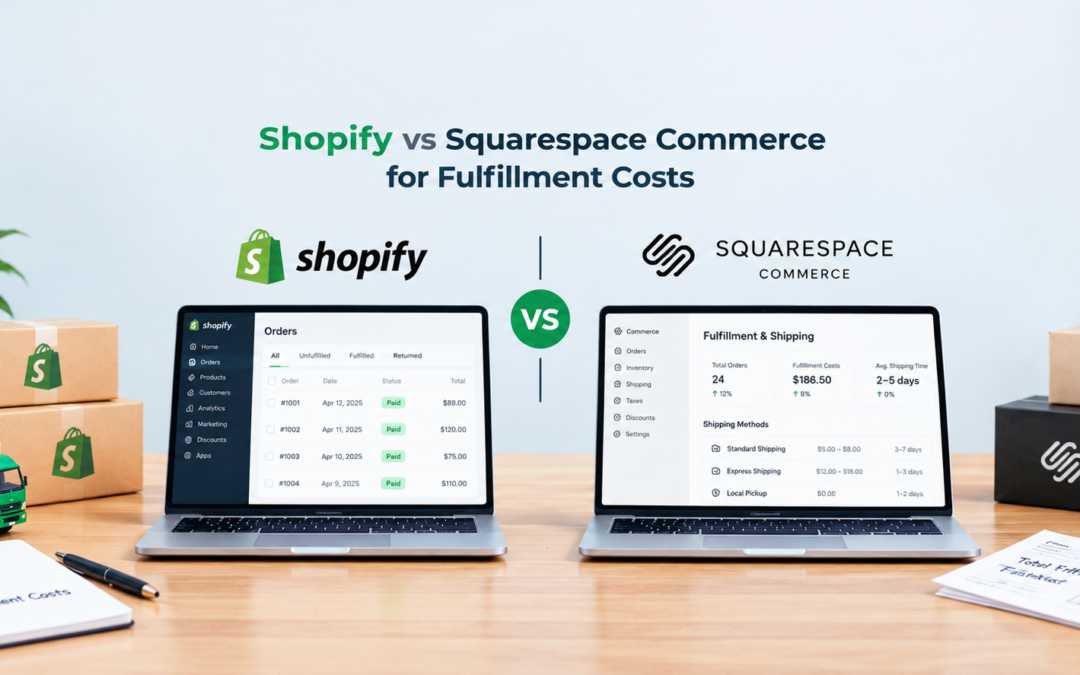
shopify-vs-squarespace-commerce-for-fulfillment-costs

Our Logistics Partners

Shopify vs Squarespace Commerce for Fulfillment Costs
Platform Comparison Fulfillment Costs Shopify vs Squarespace

Shopify vs Squarespace Commerce for Fulfillment Costs

Fulfillment costs are more than shipping labels. Platform fees, transaction fees, shipping discounts, app subscriptions, and warehouse partners all add up. Shopify and Squarespace Commerce handle these costs very differently, and the cheaper choice depends on your order volume and how you fulfill orders.

OneShipPros Editorial Team 📅 October 2026 ⏱ 8 min read
Shopify and Squarespace Commerce compared for fulfillment costs
📦 Shopify vs Squarespace Commerce, Explained
L
OneShipPros Editorial Team

Ecommerce fulfillment specialists helping online sellers source and ship profitably since 2018.

Squarespace is popular with sellers who care about polished design and want a simple all-in-one setup. Shopify is built around commerce first and extends through a large app ecosystem. When it comes to fulfillment costs, the sticker price of a plan rarely tells the whole story.

What matters is what you pay per order once you factor in shipping rates, payment and transaction fees, the tools you need to print labels or sync with a warehouse, and any fees from fulfillment partners. This guide breaks down where each platform tends to cost more or less.

💡 In One Sentence Squarespace Commerce can be the leaner choice for small, simple shipping setups, while Shopify often costs less per order as you grow, thanks to discounted shipping tools and a wider range of competing fulfillment partners.

📋 Table of Contents

  1. The Core Difference Between the Two
  2. Where Fulfillment Costs Come From
  3. Shipping Rates and Labels
  4. Pros and Cons for Fulfillment Costs
  5. Fulfillment Partners and Apps
  6. Side by Side
  7. Which One to Actually Pick
  8. Frequently Asked Questions

The Core Difference Between the Two

Both are hosted platforms, so neither requires you to manage servers. The difference is focus. Squarespace started as a website builder and added commerce features, so its shipping and fulfillment tools are straightforward and built in. Shopify was designed for selling from the start, and its shipping, inventory, and fulfillment options go deeper, especially once you add apps.

For fulfillment costs, that means Squarespace is simpler to budget for at a small scale, while Shopify gives you more ways to bring your cost per order down as volume grows.

Packages being packed and labeled at an ecommerce fulfillment warehouse
Fulfillment cost per order includes shipping, packing, storage, and the tools used to manage them.

Where Fulfillment Costs Come From

It helps to separate fulfillment costs into a few buckets before comparing platforms, because each platform affects them differently.

💳

Platform Plan

Monthly or annual subscription for your store

🧾

Transaction Fees

Fees on sales, depending on plan and payment method

🏷️

Shipping Labels

Carrier rates and any label or tool fees

🏭

Warehouse and 3PL

Storage, pick, pack, and handling fees

Squarespace tends to bundle more of these into its plans, so there are fewer separate line items. Shopify unbundles them, which can mean more line items but also more control over each one.

Shipping Rates and Labels

Shipping is usually the biggest per-order cost. Shopify offers discounted carrier rates through its shipping tools in supported countries, and the savings can be meaningful once you ship regularly. Squarespace supports shipping label purchases and carrier-calculated rates, but availability often depends on your plan and region, and the discounts you get may differ from Shopify's.

If most of your orders ship domestically through a major carrier, compare the label rates you would actually pay on each platform for your typical package size and weight. Small differences per package add up quickly over thousands of orders.

Pros and Cons for Fulfillment Costs

✓ Shopify Strengths

  • Discounted shipping rates in supported countries
  • Wide choice of 3PL and dropshipping apps to compare on price
  • Detailed inventory and order management tools
  • Costs can drop per order as volume grows

✗ Shopify Limitations

  • App subscriptions can stack up over time
  • Extra fees can apply if you use a third-party payment gateway
  • More options means more to compare and set up

✓ Squarespace Strengths

  • Simple, built-in shipping tools with fewer add-ons
  • Easier to predict monthly costs
  • Clean setup for small catalogs and light shipping
  • Design and store management in one place

✗ Squarespace Limitations

  • Smaller selection of fulfillment and 3PL integrations
  • Some shipping features depend on plan and region
  • Transaction fees can apply on certain plans

Fulfillment Partners and Apps

The biggest long-term cost lever is who actually packs and ships your orders. Shopify's App Store connects to many 3PL warehouses, print-on-demand services, and dropshipping suppliers, so you can get quotes from several and pick the cheapest fit. Squarespace connects to some shipping and fulfillment tools through its extensions and integrations, but the list is shorter.

A smaller list is not a problem if your needs are simple, for example shipping from your own space with labels printed in the platform. But if you plan to outsource fulfillment or work with overseas suppliers, a wider marketplace usually gives you more negotiating power on price.

⚠️ Check Current Pricing First Plan prices, transaction fees, and shipping features on both platforms change over time and vary by country. Confirm current details on each official site before you commit.

Side by Side

FactorShopifySquarespace Commerce
ApproachCommerce-first, extend with appsWebsite-first, built-in commerce
Cost predictabilityMore line itemsSimpler, fewer add-ons
Discounted shipping ratesAvailable in supported countriesVaries by plan and region
3PL and dropshipping optionsExtensiveSmaller selection
Cost at high volumeUsually easier to optimizeFewer levers to lower it
Best forGrowing stores and outsourced fulfillmentSmall stores with simple shipping

Which One to Actually Pick

📊
Work out your expected cost per order on each platform, not just the monthly plan price. That number decides which one is truly cheaper for you.
  1. Estimate Your Monthly Order Volume

    Low volume often favors simpler, bundled pricing. Higher volume usually rewards discounted shipping and competitive 3PL quotes.

  2. Price a Typical Order End to End

    Add the platform plan, transaction fees, shipping label cost, packaging, and any app or warehouse fees for one average order on each platform.

  3. Check Fulfillment Partner Availability

    Confirm that the 3PL, supplier, or shipping tool you want has a reliable integration on the platform you are considering.

  4. Test Before Committing

    Use a free trial to run test orders through your real shipping setup so you catch hidden costs before building out your full catalog.

🏆 The Practical Takeaway If you ship a small number of orders yourself and want predictable costs, Squarespace Commerce is a reasonable and simple choice. If you expect to scale, outsource fulfillment, or want the most room to lower your cost per order, Shopify usually gives you more ways to do it.

Want to Lower Your Fulfillment Costs?

OneShipPros helps online sellers set up dependable sourcing and fulfillment, whatever platform their store runs on.

Get Started with OneShipPros →

Frequently Asked Questions

It depends on your order volume and setup. Squarespace Commerce can look cheaper when you only need its built-in shipping tools, while Shopify often saves more at higher volumes through discounted shipping rates and a wider choice of fulfillment partners that compete on price.
Shopify offers discounted carrier rates through its shipping tools in supported countries. Squarespace supports shipping label purchases and carrier-calculated rates on some plans and in some regions, so availability and savings vary by plan and location.
Yes, but the choice is narrower. Squarespace connects to some fulfillment and shipping tools through extensions and integrations, while Shopify's App Store offers many more 3PL and dropshipping connections.
Yes. Plan prices, transaction fees, and shipping features on both platforms change over time and differ by country, so confirm current details on each official site before committing.

Related Articles

🚚
Guide

Shopify vs Shift4Shop: Best for Ecommerce Logistics?

🎧
Guide

Shopify vs Sellfy: Best for Product Fulfillment?

🎨
Guide

Shopify vs Big Cartel: Best for Dropshipping Operations?

📱
Guide

Best Shopify Apps for China Fulfillment & Dropshipping in 2026

Brand Logo
Brand Logo
Brand Logo
Brand Logo
Brand Logo
Brand Logo
Brand Logo
Brand Logo
Brand Logo
Brand Logo
Brand Logo
Brand Logo
Brand Logo
Brand Logo
Brand Logo
Brand Logo
Brand Logo
Brand Logo
Brand Logo
Brand Logo
Brand Logo
Brand Logo
Brand Logo
Brand Logo

Ship More. Stress Less. Grow Faster.

OneShipPros Your trusted China fulfillment agent & dropshipping partner. We handle product sourcing, quality control inspection, private labeling & global shipping to 200+ countries from our Shenzhen warehouse. Shopify, WooCommerce & Amazon sellers you sell, we ship.

Quick Links

Home

Services

About

Blogs

Website Policy

How it works

FAQ's

Privacy Policy

Contact US

Email: [email protected]
WhatsApp:
+86 18926446843
Phone:
+86-0755-28911874

  • Follow
  • Follow

Copyright © 2026 All Rights Reserved.