

Shopify vs Sellfy: Best for Product Fulfillment?
Sellfy starts from an entirely different place than most platforms on this blog. It was built for creators selling digital products first, ebooks, courses, music, software, with physical products handled almost as an afterthought, through built-in print-on-demand partners rather than general supplier sourcing. If physical product fulfillment is the actual priority, this comparison has a pretty clear answer, but it's worth understanding why before dismissing Sellfy entirely.
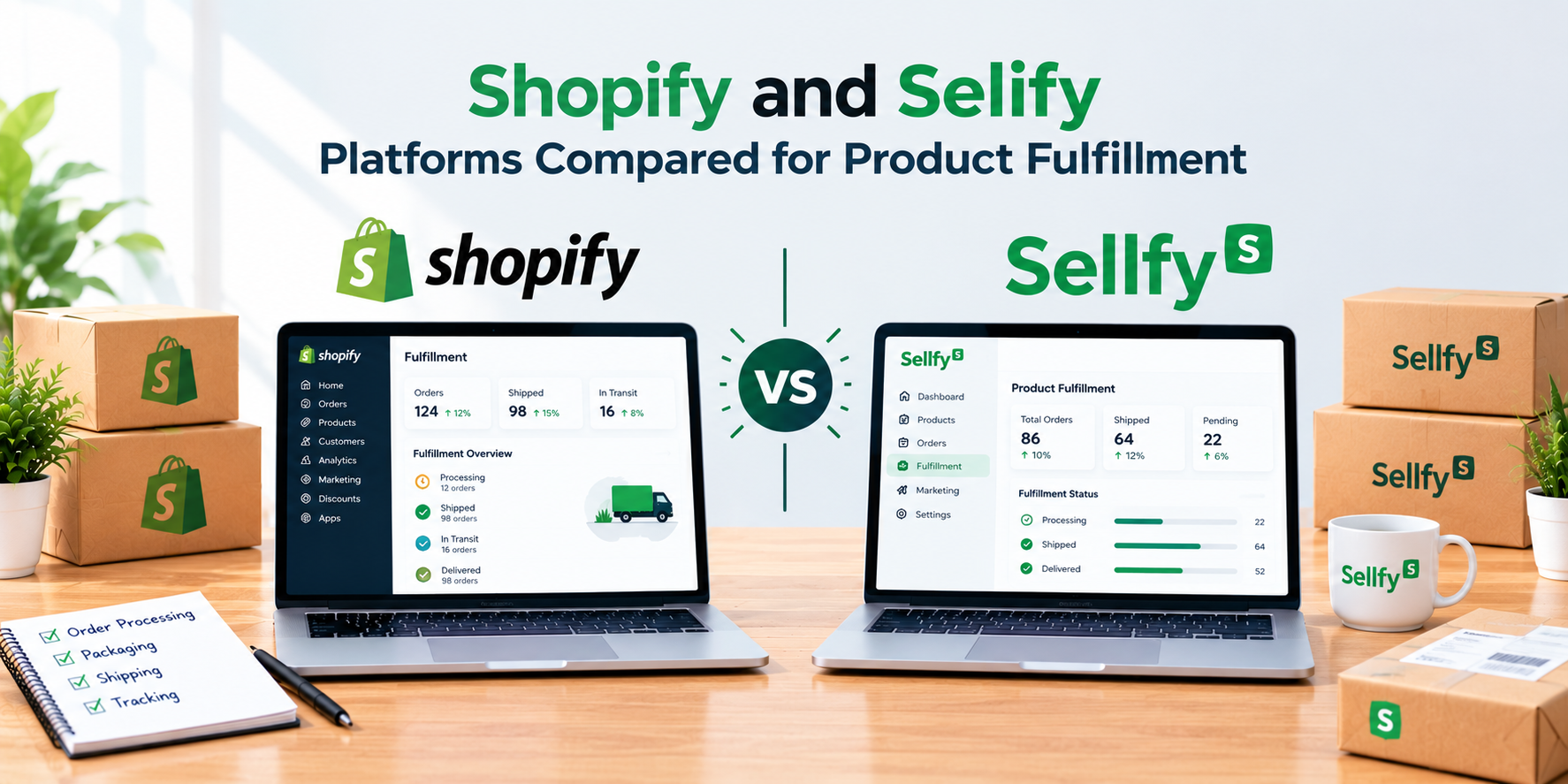
Sellfy gets built around a simple idea, make it easy for a creator to sell digital downloads, instant delivery, no shipping, no inventory. Print-on-demand merchandise was added later as a convenient extra, letting creators sell branded t-shirts or mugs without touching inventory themselves. That's genuinely useful for a specific kind of seller. But it means Sellfy's physical fulfillment is narrow by design, built around a handful of print-on-demand partners rather than the open-ended sourcing and shipping options Shopify offers.
Understanding that distinction upfront saves a lot of wasted research for anyone comparing the two specifically on fulfillment.
📋 Table of Contents
The Core Difference Between the Two
Shopify was built as a general-purpose ecommerce platform, equally capable of selling physical products sourced from suppliers, digital downloads, or subscriptions, with deep app support across all of them. Sellfy was built specifically around digital product delivery, instant downloads, licensing, and streaming, with ecommerce basics layered around that core use case. Physical fulfillment on Sellfy exists, but it's scoped narrowly to print-on-demand rather than general product sourcing.

How Each Handles Physical Fulfillment
Shopify's App Store connects to a wide range of fulfillment options, China dropshipping suppliers, 3PL warehouses, print-on-demand services, and more, giving sellers flexibility to source physical products however fits their business. Sellfy's physical fulfillment runs through a small number of built-in print-on-demand integrations, meaning you can sell branded merchandise printed on demand, but there's no path to general dropshipping or sourcing products from a wider supplier network the way Shopify supports.
Pros and Cons for Each Use Case
✓ Shopify Strengths
- Deep physical product fulfillment options
- Strong China dropshipping and 3PL support
- Scales from one product to a full catalog
- Works equally well for digital and physical sales
✗ Shopify Limitations
- Digital product delivery requires an added app
- More setup than a creator selling only downloads needs
- Monthly fee plus app costs
✓ Sellfy Strengths
- Built-in digital product delivery and licensing
- Simple print-on-demand merch with no inventory
- Low cost, straightforward for solo creators
- Native subscription and membership support
✗ Sellfy Limitations
- No general dropshipping supplier integrations
- Physical fulfillment limited to print-on-demand
- Not built for scaling a physical product catalog
Who Sellfy Actually Fits
Sellfy makes real sense for a musician selling tracks and merch, a course creator selling lessons and branded gear, or a designer selling digital templates alongside a few print-on-demand products. In those cases, the digital product is the main business and physical merchandise is a simple add-on, exactly what Sellfy was built to support. The moment physical products become the main focus, the comparison tips firmly toward Shopify.
Side by Side
| Factor | Shopify | Sellfy |
|---|---|---|
| Digital product delivery | Via apps | Built in |
| Physical fulfillment depth | Extensive | Print-on-demand only |
| Dropshipping supplier support | Strong | None |
| Best for | Physical product businesses | Digital-first creators with light merch |
| Cost for a small creator | Moderate, scales up | Low, simple tiers |
Which One to Actually Pick
-
Identify Your Primary Product Type
A business centered on digital downloads, courses, or subscriptions fits Sellfy's built-in delivery tools well, while a physical product business needs Shopify's broader fulfillment options.
-
Check If Print-on-Demand Alone Covers Your Merch Needs
If branded merchandise is a small side offering, Sellfy's built-in print-on-demand partners may be all you need without adding complexity.
-
Choose Shopify If Physical Sourcing Is the Core Business
Once dropshipping or supplier-sourced physical products become the main focus, Shopify's deeper fulfillment ecosystem is the better long-term foundation.
Ready to Scale a Real Physical Product Business?
OneShipPros helps Shopify sellers connect reliable China sourcing and fulfillment to grow beyond print-on-demand.
Get Started with OneShipPros →