Shopify vs DSers: What Do Dropshipping Sellers Actually Need?
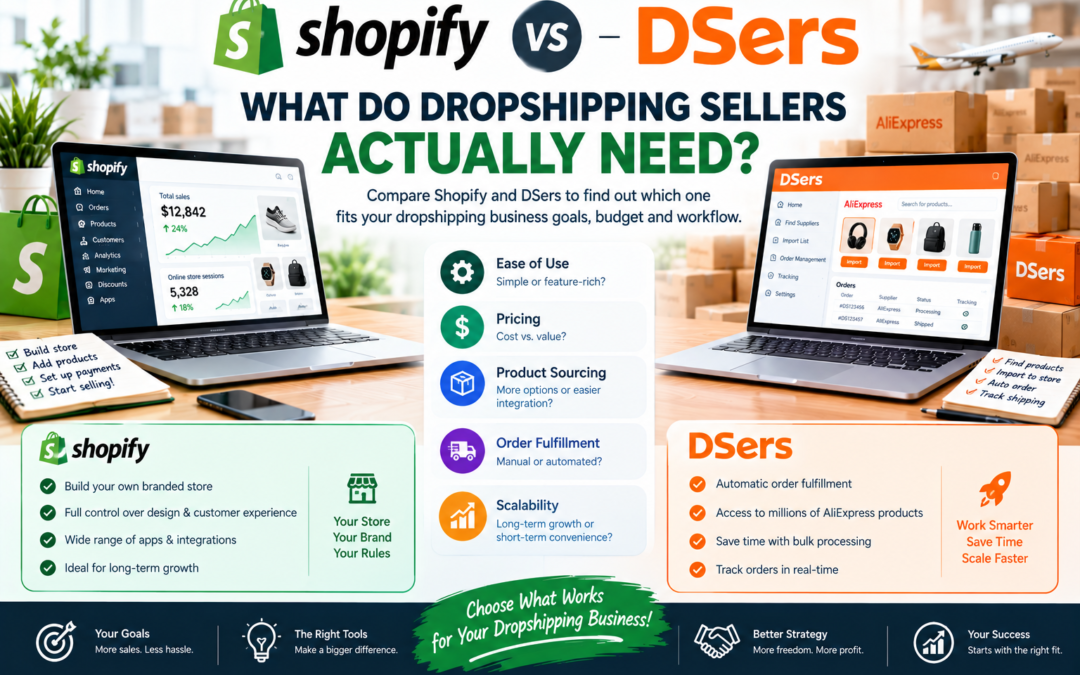
This one trips people up constantly, and it's an easy mix-up. Shopify is the store. DSers is the thing quietly handling order forwarding to your AliExpress suppliers in the background. Neither replaces the other, they just sit at different points in the same workflow.
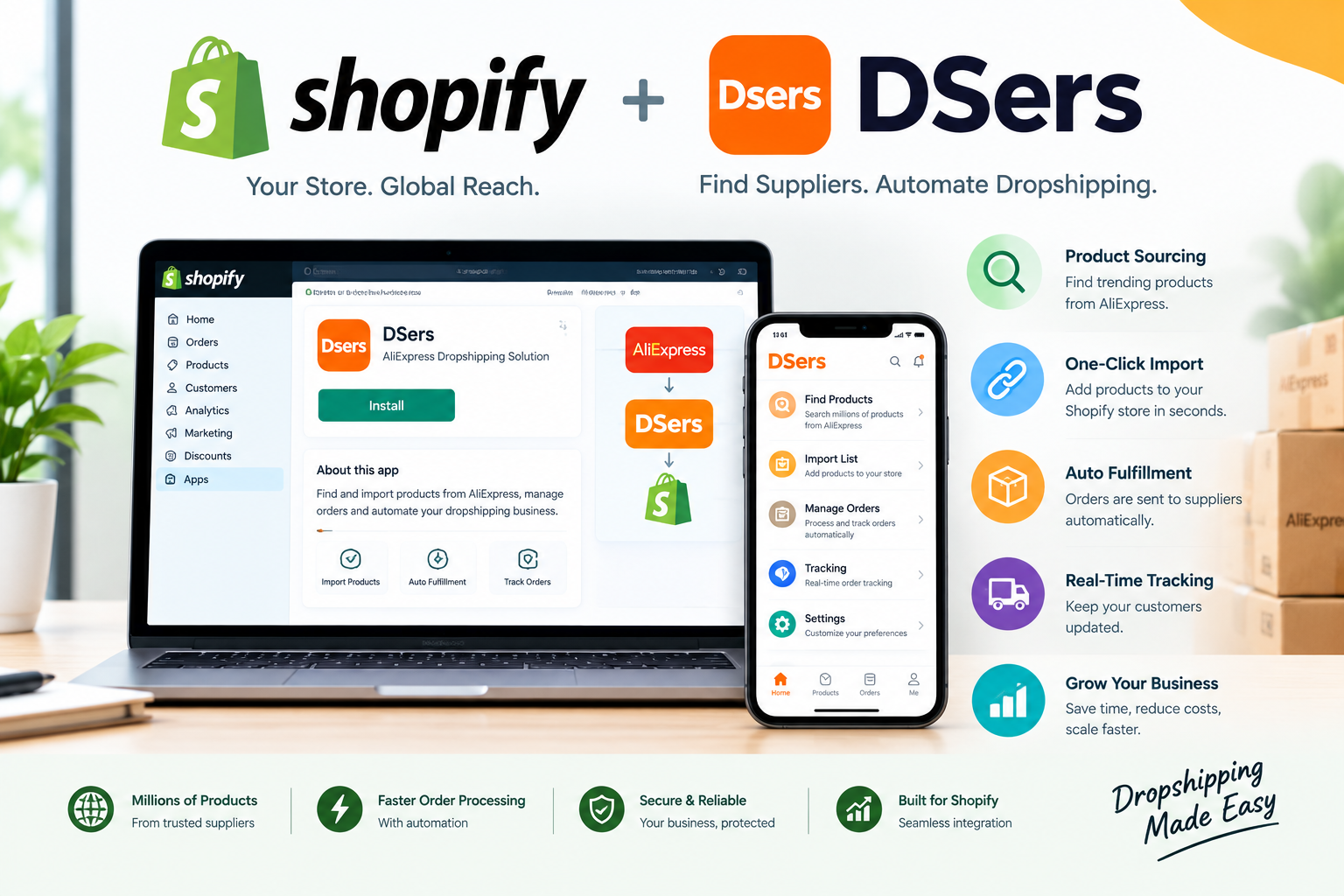
New sellers ask this a lot, usually somewhere in the middle of researching how dropshipping actually works. Fair question, but it comes from comparing two things that aren't really in the same category. Shopify builds your store, the part a customer sees and clicks through. DSers is an app, one that sits between your Shopify store and AliExpress, automatically sending orders to suppliers so you don't have to place them one by one.
So it's less "which one do I pick" and more "how do these two actually work together, and is DSers even the right fit for what I'm doing."
📋 Table of Contents
What Each One Is Actually For
Shopify is the storefront, plain and simple, product pages, cart, checkout, payment processing. DSers doesn't touch any of that. It lives on the fulfillment side, taking orders that come through your store and pushing them out to AliExpress suppliers automatically instead of you copying and pasting order details by hand every single time. One builds the shop, the other keeps the back office running.
How DSers Fits Into a Shopify Store
You install DSers as a Shopify app, connect it to your AliExpress account, and import the products you want to sell. From there, every order placed on your store can get forwarded automatically to the matching supplier, no manual order entry required. It's the piece of automation that makes dropshipping realistic at any meaningful scale, doing this by hand past a handful of daily orders gets old fast.
What DSers Handles Day to Day
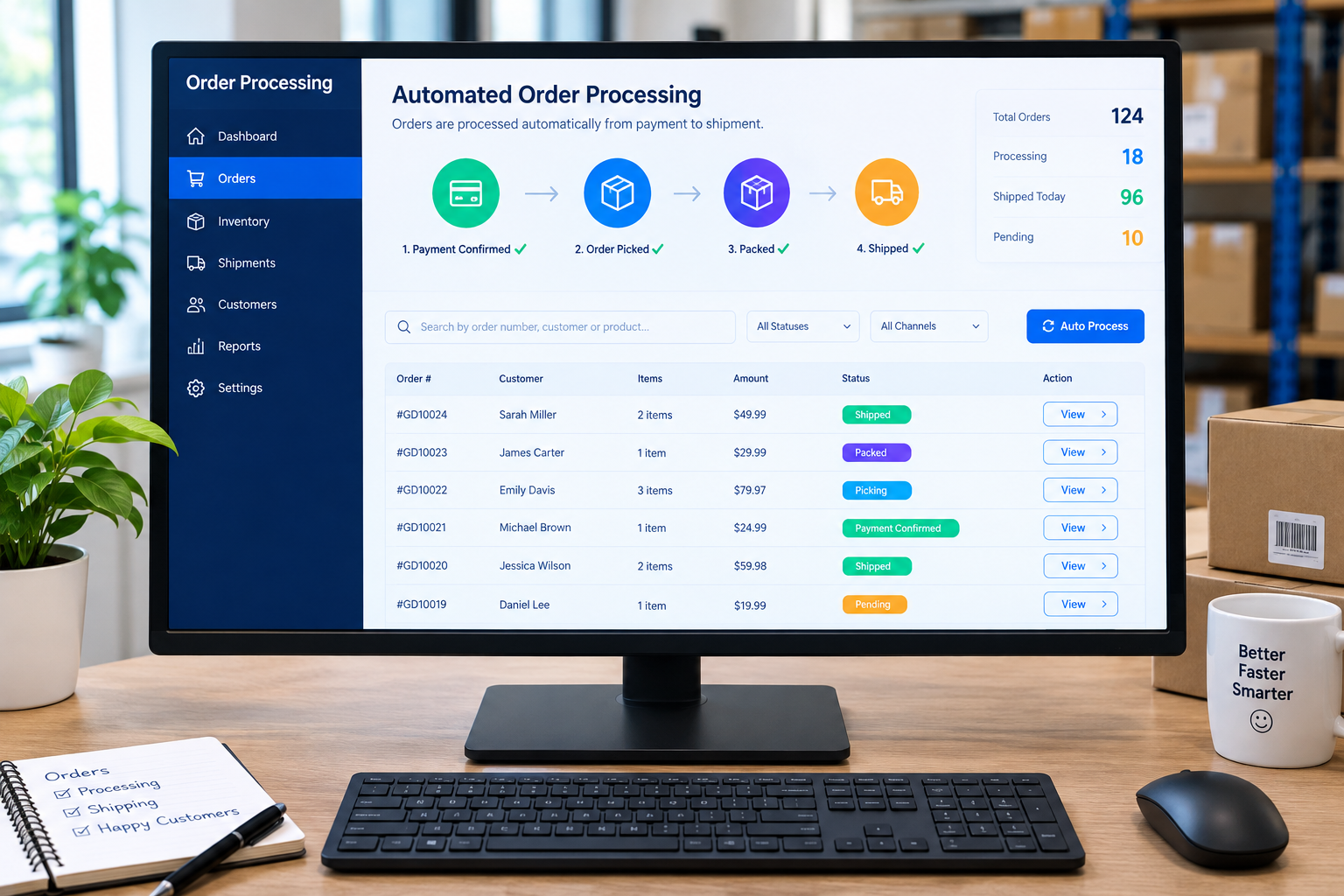
- Bulk order processing — send multiple orders to suppliers in one batch instead of one at a time
- Product mapping — link a single Shopify listing to several supplier options, useful if one runs out or has better pricing
- Automated tracking updates — tracking numbers sync back to Shopify so customers can actually follow their orders
- Pricing rules — set markup rules once so product prices update automatically as supplier costs shift
Where It Runs Into Limits
DSers is genuinely useful, but it inherits the same limitations that come with AliExpress sourcing in general. Shipping times are still tied to whatever the supplier offers, quality control is largely out of your hands, and custom branding or packaging isn't really on the table. It's a great automation layer for a specific sourcing model, not a fix for the trade-offs baked into that model itself.
Side by Side
| Factor | Shopify | DSers |
|---|---|---|
| What it handles | Storefront, checkout, customer experience | Order automation to AliExpress suppliers |
| Who needs it | Anyone selling online | Sellers dropshipping via AliExpress |
| Cost | Monthly subscription | Free tier, paid plans for more volume |
| Replaces the other? | No | No |
Putting It Together
-
Get Your Shopify Store Running
Focus on listings, branding, and checkout before layering in fulfillment automation, that comes second.
-
Install DSers and Connect AliExpress
Link the two so orders start flowing automatically, saving hours once volume picks up even a little.
-
Watch for the Point Where You Outgrow It
Once a product's a proven seller, weigh whether a dedicated fulfillment warehouse might serve it better than continued AliExpress sourcing through DSers.
Ready to Move Beyond AliExpress Automation?
OneShipPros helps Shopify sellers transition to faster, more consistent China fulfillment.
Get Started with OneShipPros →