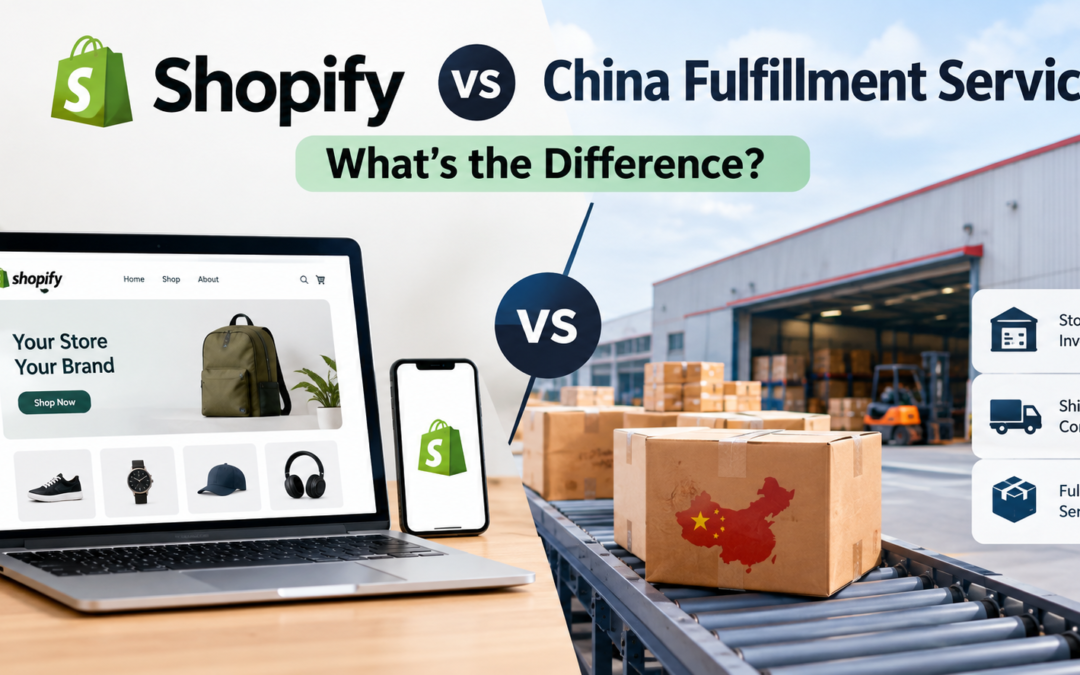
Shopify vs China Fulfillment Services: What's the Difference?
This comparison is a little different from the app-vs-app ones. A China fulfillment service isn't a single product with a login screen, it's a category, warehouses that store your own inventory in China and ship it out as orders come in. Shopify still runs the store. The fulfillment service just works very differently from a dropshipping app, and that difference matters once you're actually holding stock.
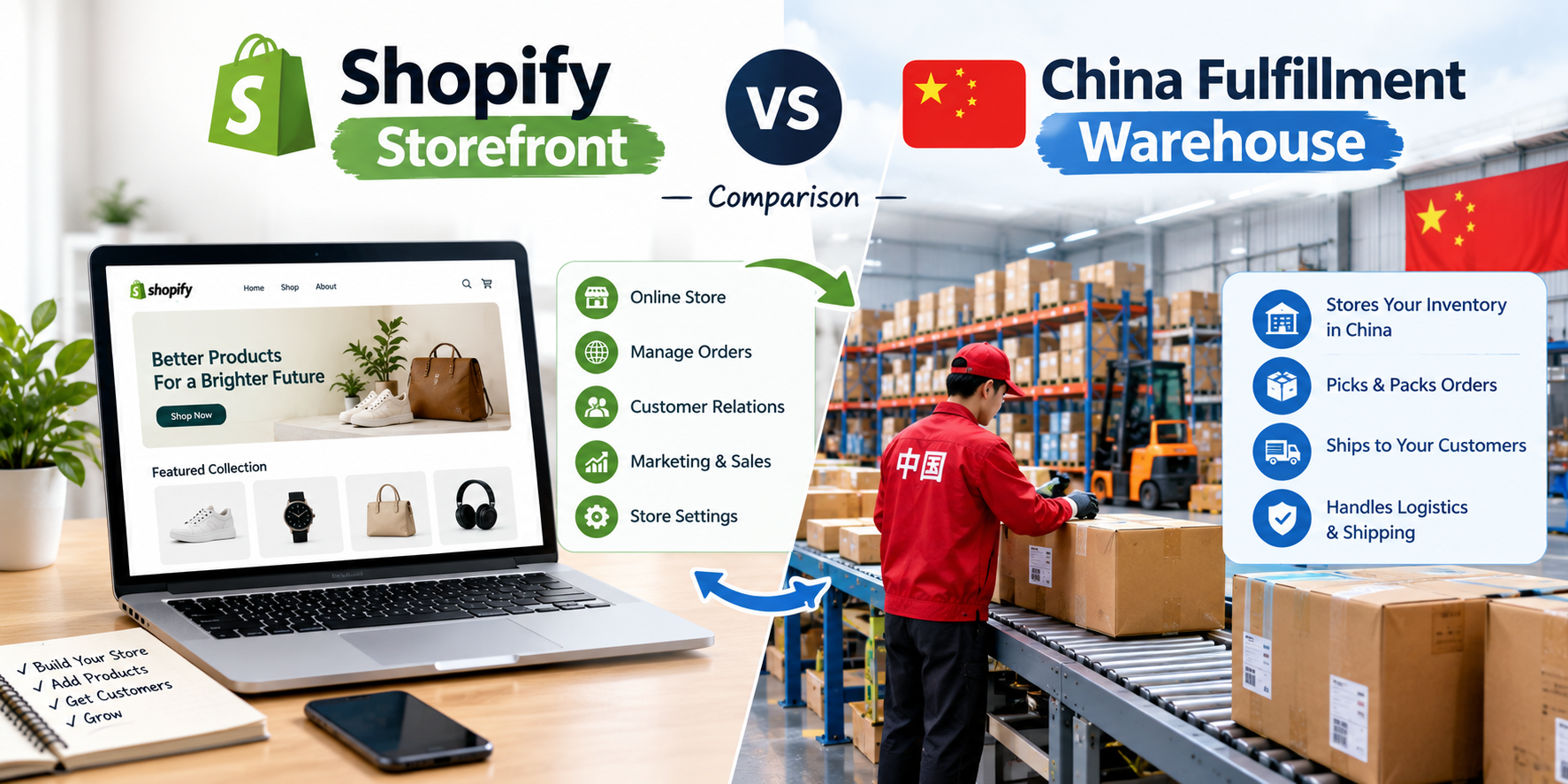
Sellers usually reach this comparison after they've already tried a dropshipping app and started wondering why terms like "China fulfillment service" or "3PL warehouse" keep coming up as the next step. It sounds like it might compete with Shopify, mostly because both get described as places "where your business runs." They're not doing the same job though. Shopify is still the storefront. A China fulfillment service is a warehouse operation, one that stores inventory you already own and ships it out per order, instead of sourcing single items on demand the way a dropshipping app does.
The real question worth answering here is what changes once you move from order-by-order dropshipping to holding your own stock in a fulfillment warehouse, and whether that shift makes sense yet.
📋 Table of Contents
Two Different Jobs, Not Two Competitors
Shopify handles the storefront, listings, cart, and checkout, everything a customer sees and clicks through. A China fulfillment service handles what happens after checkout, receiving your bulk inventory, storing it in a warehouse, packing individual orders, and shipping them out. It's not sourcing new products the way a dropshipping app does, it's managing stock you've already bought. Comparing the two directly is like comparing a storefront to the warehouse stocked with the products it sells.
How the Two Actually Connect
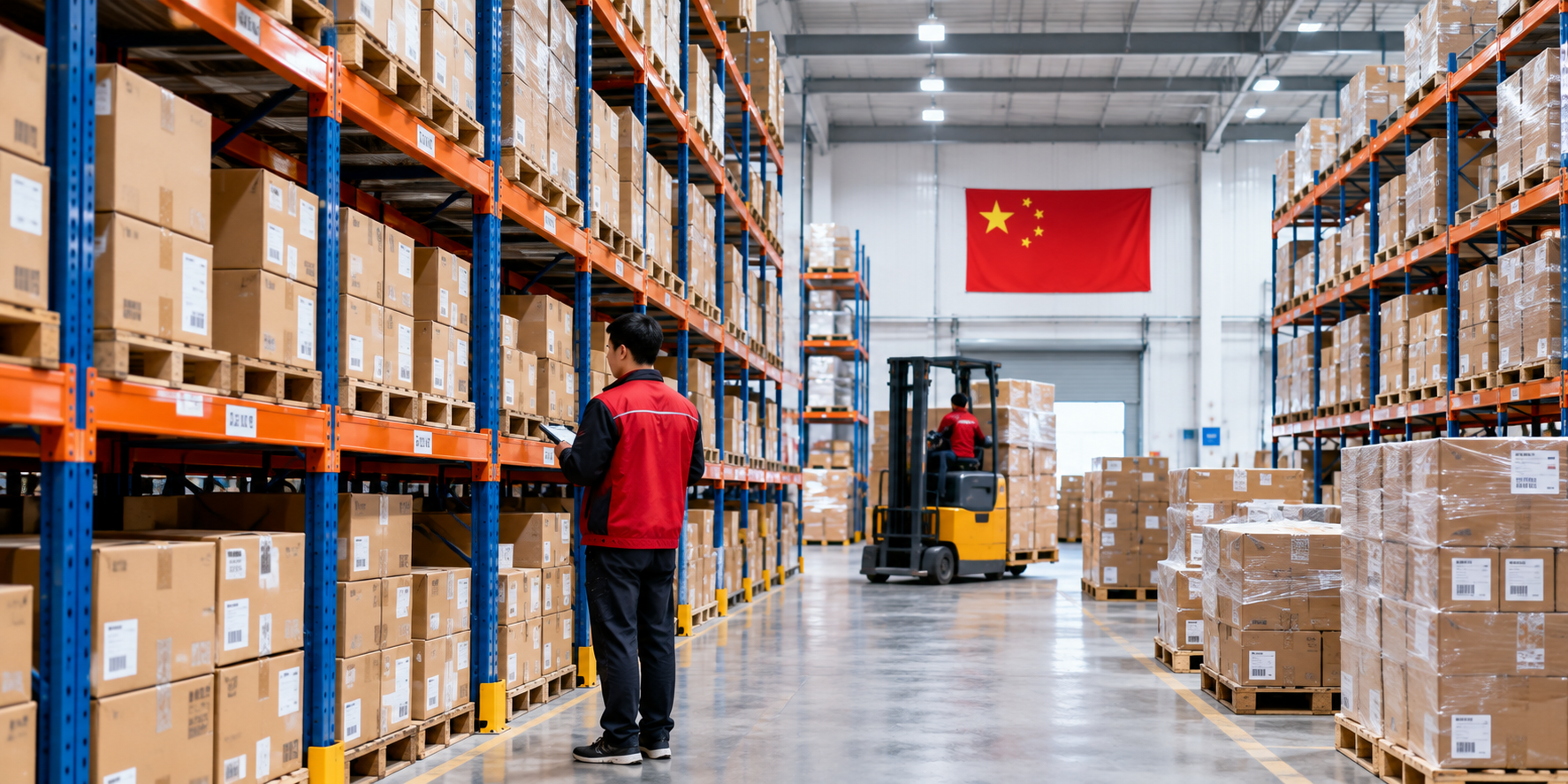
Most China fulfillment services connect to Shopify through an app or API integration, syncing orders automatically so the warehouse knows what to pack and ship the moment a sale comes through. Some sellers set this up through a dedicated Shopify app the fulfillment provider offers, others work with an account manager who sets up the integration directly. Either way, the goal is the same: an order placed on Shopify should reach the warehouse without anyone manually re-entering it.
What a Fulfillment Service Adds Beyond Dropshipping
- Lower per-unit shipping costs — buying inventory in bulk and storing it locally usually costs less per order than sourcing and shipping items one at a time
- Full control over packaging and branding — since you own the stock, boxes, inserts, and labeling can be fully customized without relying on a supplier's defaults
- Consistent quality control — inventory can be inspected in bulk before it ever reaches a customer, rather than trusting each individual order to go out clean
- Faster fulfillment at scale — orders ship from stock already on hand instead of waiting on a supplier to source and pack each one
Where It Falls Short
The trade-off is upfront risk. Holding your own inventory means paying for stock before you know for certain it'll sell, which is exactly the risk dropshipping apps are built to avoid. Storage fees apply even on inventory that sits unsold, and switching products means clearing out old stock rather than simply delisting an item. It's generally not the right move for a brand-new store still testing which products actually sell.
Side by Side
| Factor | Shopify | China Fulfillment Service |
|---|---|---|
| What it handles | Storefront, checkout, customer experience | Warehousing, packing, shipping owned inventory |
| Who it's for | Anyone selling online | Sellers with proven, consistent-selling products |
| Inventory risk | N/A | You buy and hold stock upfront |
| Per-unit cost at scale | N/A | Usually lower than order-by-order dropshipping |
| Replaces the other? | No | No |
Setting Things Up the Right Way
-
Validate the Product First on Shopify
Use a dropshipping app to test demand before buying inventory in bulk, so you're not guessing with real money on the line.
-
Move Proven Products to a Fulfillment Service
Once a product sells consistently, buy in bulk and hand it off to a China fulfillment warehouse for storage and shipping.
-
Connect the Integration and Monitor Stock
Sync orders automatically and keep an eye on inventory levels so you're reordering before stock runs out.
Ready to Move Beyond Dropshipping?
OneShipPros helps Shopify sellers set up reliable China fulfillment once their products are ready to scale.
Get Started with OneShipPros →