
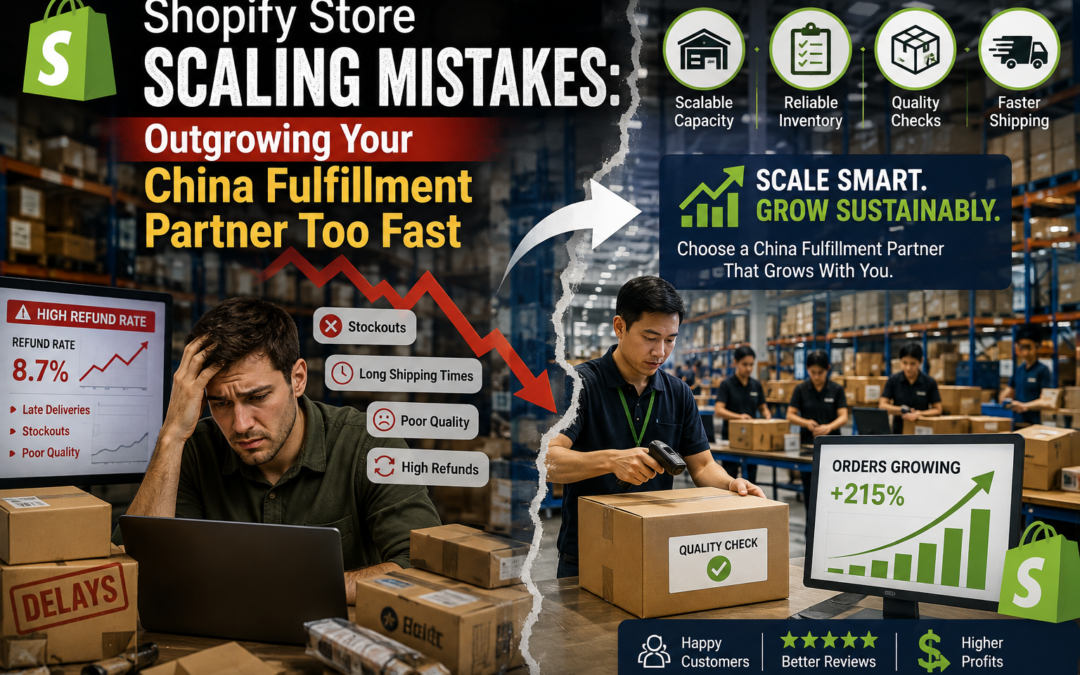
Shopify Store Scaling Mistakes: Outgrowing Your China Fulfillment Partner Too Fast
Fast growth is the goal, until the fulfillment partner that worked fine at a lower volume starts quietly buckling under a higher one. Here's how Shopify sellers end up outgrowing a China fulfillment partner faster than expected, the warning signs to watch for, and how to plan ahead of it.
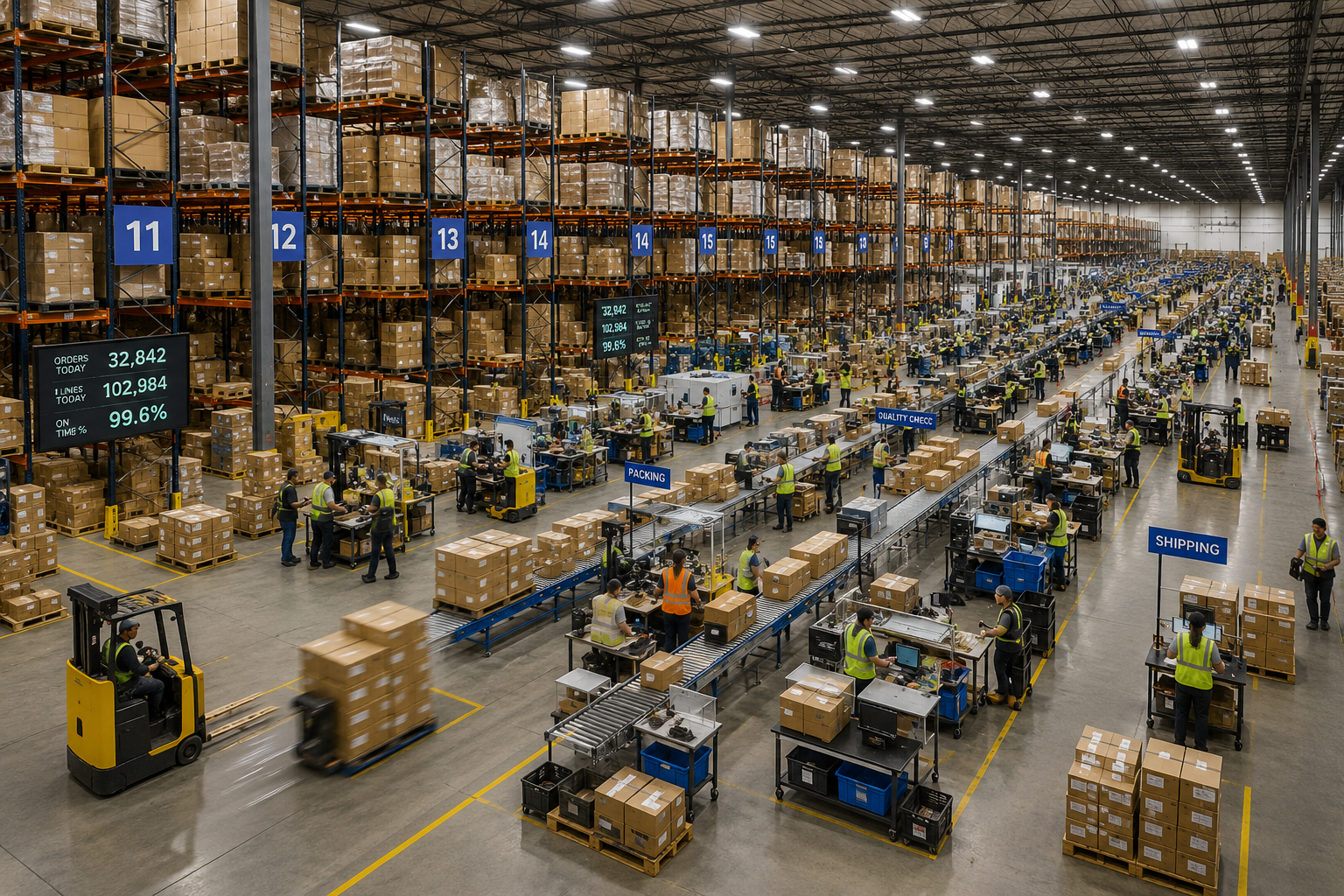
Every fulfillment partner has a comfortable operating range. A warehouse that handles a few hundred orders a day smoothly isn't necessarily equipped to handle a few thousand, even if the relationship has worked well up to that point. Shopify sellers scaling quickly, through paid ads, viral moments, or steady compounding growth, can hit that ceiling faster than expected, and the symptoms often show up as fulfillment problems long before anyone frames it as a capacity issue.
Here's how to recognize when a China fulfillment partner is being outgrown, and how to plan for it before it becomes a real disruption.
📋 Table of Contents
Why This Happens to Growing Shopify Stores
A fulfillment relationship usually starts at a volume where everything runs smoothly, that's exactly why it feels safe to keep growing without revisiting the arrangement. But warehouse capacity, staffing, and processing speed don't scale infinitely just because order volume does. A partner sized for a smaller operation can start showing strain well before anyone officially declares they've "outgrown" it, the signs just show up as smaller, seemingly unrelated issues first.
Warning Signs You're Outgrowing Your Partner
Signs of Approaching a Capacity Ceiling
- Order processing slowing down even on normal-volume days
- Increasingly frequent stockouts despite reasonable reorder timing
- Vague or non-committal answers when asking about future capacity
- More frequent picking or shipping errors as volume climbs
Signs the Partner Can Scale With You
- Clear, confident answers about future capacity plans
- Consistent processing speed even as your order volume grows
- Proactive communication about staffing or space investments
- A track record of supporting other sellers through similar growth
What Happens Without Planning Ahead
The cost of not addressing this early usually isn't a single dramatic failure, it's a gradual decline in fulfillment reliability that erodes customer trust slowly. Shipping times creep up, order accuracy dips slightly, and by the time it's undeniable that the partner is struggling, the disruption of switching happens under pressure, right when order volume is at its highest and least forgiving point.
Can They Scale With You, or Do You Need to Switch?
Not every fulfillment warehouse has the same growth ceiling. Some genuinely can expand alongside a growing seller, adding staff, floor space, and processing capacity as volume increases. Others are simply sized for a certain range of business and hit a hard limit. The honest way to find out is to ask directly: what's their current capacity, what would it take to scale further, and have they supported other sellers through comparable growth before.

Reactive vs Proactive Capacity Planning
| Factor | Reactive Planning | Proactive Planning |
|---|---|---|
| When Issues Surface | During peak growth pressure | Before growth hits a ceiling |
| Customer Impact | Often visible, damages trust | Minimal or avoided entirely |
| Switching Difficulty | Higher, done under pressure | Lower, done on your timeline |
| Decision Quality | Rushed, reactive choices | Deliberate, well-researched |
Planning Ahead of the Ceiling
-
Check In on Capacity at Growth Milestones
Revisit the capacity conversation with your fulfillment partner at meaningful growth points, not just once at the start of the relationship.
-
Watch for Early Warning Signs
Treat small increases in processing time, stockouts, or errors as early signals worth investigating, rather than isolated one-off issues.
-
Line Up a Backup Option Before You Need One
Having a researched, vetted alternative fulfillment partner in mind before a crisis hits makes any eventual switch far less disruptive.
Scaling Fast and Not Sure Your Fulfillment Can Keep Up?
OneShipPros supports growing Shopify sellers with fulfillment capacity that scales alongside them.
Get Started with OneShipPros →