

Shopify Store Compliance: Product Labeling Rules for China-Fulfilled Orders
Labeling requirements are easy to overlook until a shipment gets held up at customs or a customer receives a product missing information their country legally requires. Here's what Shopify sellers fulfilling from China should understand about product labeling compliance, and how to confirm requirements before they become a problem.
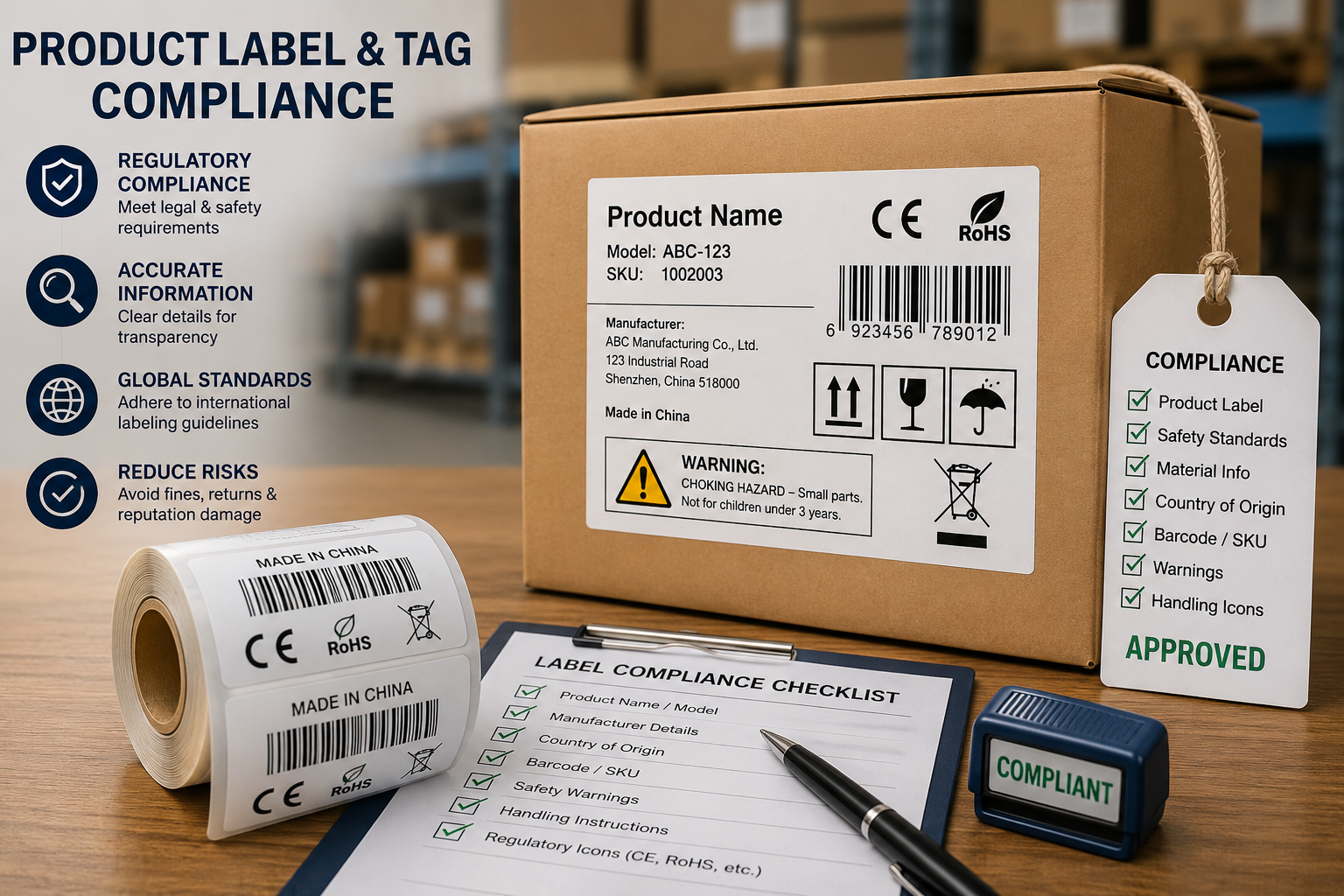
Product labeling rules aren't the most exciting part of running a Shopify store, but they're one of the areas where a small oversight can cause an outsized problem, a shipment held at customs, a product pulled from a marketplace, or a customer complaint that escalates into something more serious. Requirements vary by destination country and product category, which makes this an area where confirming specifics matters more than relying on general assumptions.
Here's an overview of what to understand about product labeling for orders fulfilled from China, and who's actually responsible for getting it right.
📋 Table of Contents
Why Labeling Compliance Matters
Labeling isn't just a formality, many countries use it to enforce consumer protection, safety, and import regulations. A product missing required information can get flagged at customs, delayed, or in some cases refused entry entirely, none of which are good outcomes for a Shopify order a customer is waiting on. For certain product categories, incorrect or missing labeling can also carry legal liability beyond just a shipping delay.
What Happens Without Checking Requirements
Risks of Skipping Labeling Checks
- Shipments held or delayed at customs
- Products refused entry into the destination country
- Customer complaints over missing required information
- Potential legal or regulatory exposure for certain categories
What Checking Requirements Provides
- Smoother customs clearance for shipments
- Products that meet destination country requirements
- Fewer customer issues tied to missing information
- Reduced legal and regulatory risk exposure
Common Labeling Requirements to Know
Requirements differ widely by country and category, but a few categories of information come up repeatedly: country of origin, ingredient or material composition, safety warnings, and relevant certification marks. Products like cosmetics, supplements, electronics, and children's items tend to face more detailed requirements than general merchandise, often including specific language requirements for the destination market.
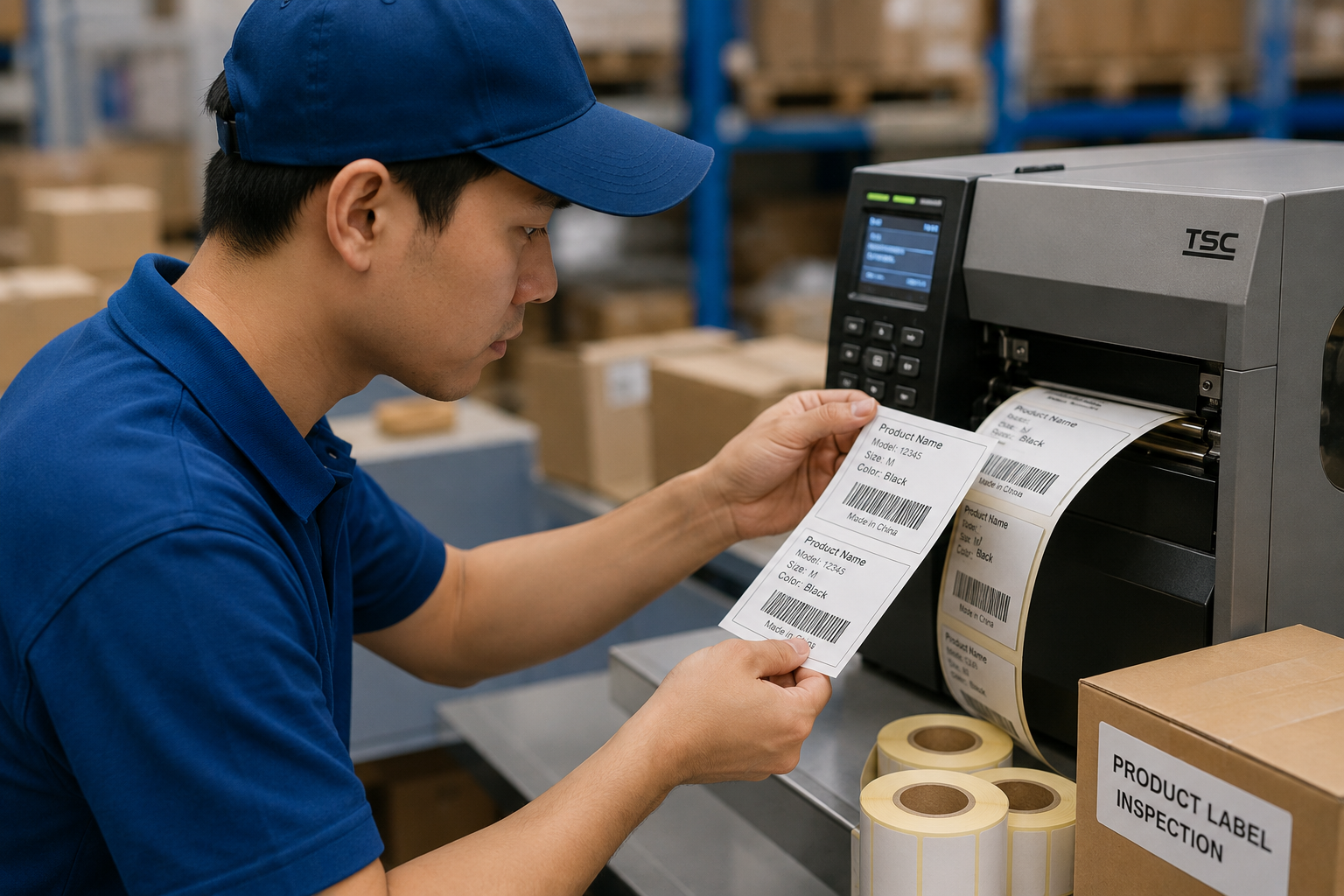
Who's Responsible: Seller or Warehouse
- The seller generally bears ultimate responsibility — as the business selling the product, compliance obligations typically rest with the Shopify seller even if a warehouse applies labels
- Warehouses may offer labeling as a service — some fulfillment partners can apply compliant labels as part of their process, but this needs to be explicitly arranged
- Confirm what the warehouse actually checks — ask specifically whether the warehouse verifies labeling compliance or simply applies whatever labels the seller provides
- Get requirements in writing where possible — for higher-risk product categories, documenting the compliance approach agreed upon with a fulfillment partner is worth the extra step
Higher-Risk vs Lower-Risk Product Categories
| Factor | Higher-Risk Categories | Lower-Risk Categories |
|---|---|---|
| Examples | Cosmetics, supplements, electronics, kids' items | General apparel, home goods, accessories |
| Typical Requirements | Detailed, often country-specific | Generally simpler, more standard |
| Compliance Effort Needed | Higher, requires specific research | Lower, but still worth confirming |
| Risk if Wrong | Potentially significant | Usually more limited |
Confirming Requirements Before You Ship
-
Identify Your Product's Regulatory Category
Determine which regulatory category your product falls into, since this drives what labeling requirements actually apply in each destination market.
-
Research Requirements for Each Destination Market
Check the specific labeling requirements for every country your Shopify store ships to, rather than assuming one market's rules apply universally.
-
Confirm the Division of Responsibility with Your Warehouse
Clarify explicitly with your fulfillment partner who is responsible for applying and verifying compliant labels, so nothing falls through the gap between seller and warehouse.
Need Help with Labeling Compliance?
OneShipPros helps Shopify sellers navigate labeling requirements for their China-fulfilled orders.
Get Started with OneShipPros →