
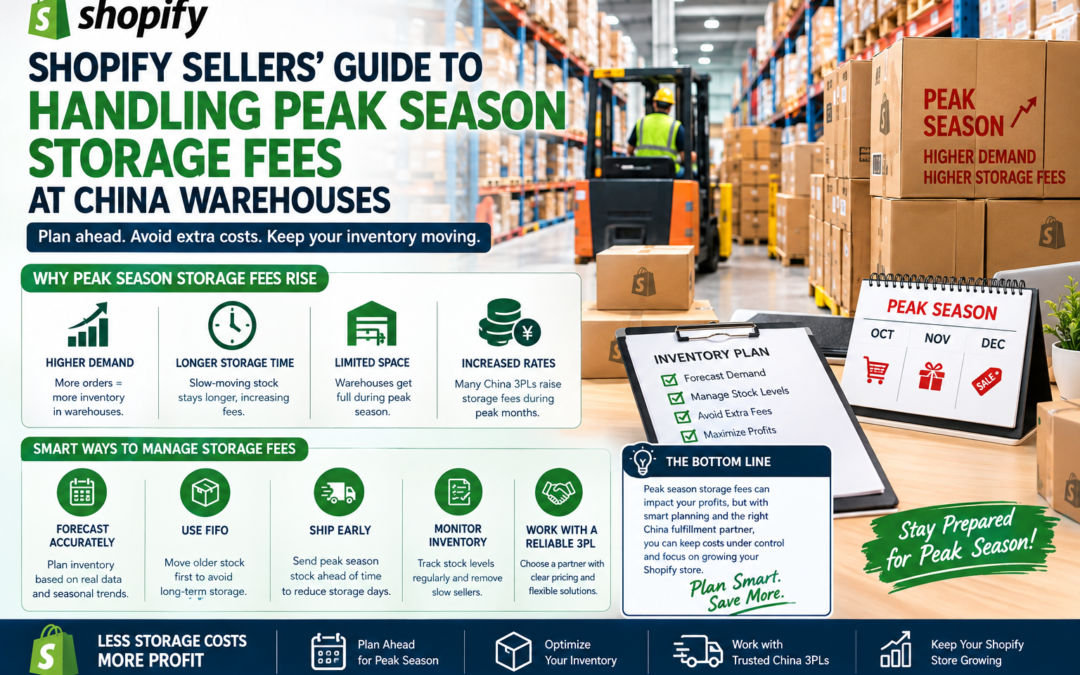
Shopify Sellers' Guide to Handling Peak Season Storage Fees at China Warehouses
Peak season is exactly when Shopify sellers most need inventory sitting ready in a warehouse, and exactly when many warehouses raise their storage rates. Understanding how and when these increases apply, and planning inventory around them, keeps peak season profitable rather than eaten away by unexpected fees.
Warehouse space, like most resources, gets more expensive when demand for it spikes. Many China fulfillment warehouses raise storage rates during peak periods, when sellers across the board are stocking up ahead of major sales seasons and overall warehouse space is under more pressure. For a Shopify seller, this means the exact time inventory levels need to be highest is also when the per-unit cost of holding that inventory tends to climb.
Here's how peak season storage fees typically work, and what a seller can actually do to manage the cost impact.
📋 Table of Contents
Why Storage Fees Increase During Peak Season
Ahead of major sales periods, many Shopify sellers, and businesses across ecommerce broadly, are stocking up on inventory simultaneously, putting pressure on available warehouse space. Fulfillment warehouses often respond with rate increases during these windows, reflecting the higher cost and demand for that space, similar to how hotel prices rise during high-travel periods. This isn't universal, but it's common enough to plan for.
What Happens Without Planning for Peak Fees
Risks of Not Planning for Peak Fees
- Unexpectedly high storage costs eating into peak season margins
- Inventory arriving too early and accruing fees before it's needed
- Overstock sitting through peak season at elevated rates
- No budget line item accounting for the fee increase
What Planning for Peak Fees Provides
- Storage costs budgeted accurately into peak season planning
- Inventory timed to arrive closer to when it's actually needed
- Reduced overstock sitting at elevated peak rates
- Fewer cost surprises eating into seasonal profit
Timing Inventory Arrival Strategically
Rather than shipping peak season inventory as early as production allows, timing arrival to land closer to when it's actually needed reduces the number of days spent accruing storage fees, especially if those fees are already elevated for the season. This has to be balanced against lead time risk, arriving too late is worse than arriving a bit early, but there's often a reasonable middle ground that avoids paying peak rates for weeks longer than necessary.
Forecasting to Avoid Overstock Going Into Peak
- Base peak forecasts on realistic demand — overly optimistic peak season forecasts risk excess inventory sitting at elevated storage rates well past the season
- Review inventory age before peak season starts — clearing existing slow-moving stock before peak avoids paying premium rates on inventory that isn't actually needed
- Plan reorder timing around the fee schedule — if peak rates apply for a defined window, factor that window into when new stock should ideally arrive
- Communicate expected volume to your warehouse in advance — giving the warehouse notice of expected peak volume can sometimes help with both space allocation and cost discussions
Planned vs Unplanned Peak Season Storage
| Factor | Unplanned Approach | Planned Approach |
|---|---|---|
| Storage Cost Predictability | Low, surprises likely | High, budgeted in advance |
| Inventory Arrival Timing | Often too early | Timed closer to need |
| Overstock Risk at Peak Rates | Higher | Reduced |
| Peak Season Margin Impact | More erosion from fees | Better protected |
What to Confirm with Your Warehouse
-
Get Peak Season Rates in Writing
Ask your fulfillment warehouse for exact peak season storage rates and the specific date range they apply to, rather than a general mention that rates "may increase."
-
Build Peak Fees Into Your Cost Forecast
Factor the elevated storage rate into your peak season budgeting, so it's accounted for rather than discovered after the season is underway.
-
Review and Adjust Inventory Timing
Look at your typical inventory arrival timing relative to the peak rate window, and adjust where reasonably possible to minimize days spent at the higher rate.
Planning Inventory for Peak Season?
OneShipPros offers transparent peak season pricing to help you plan with confidence.
Get Started with OneShipPros →