
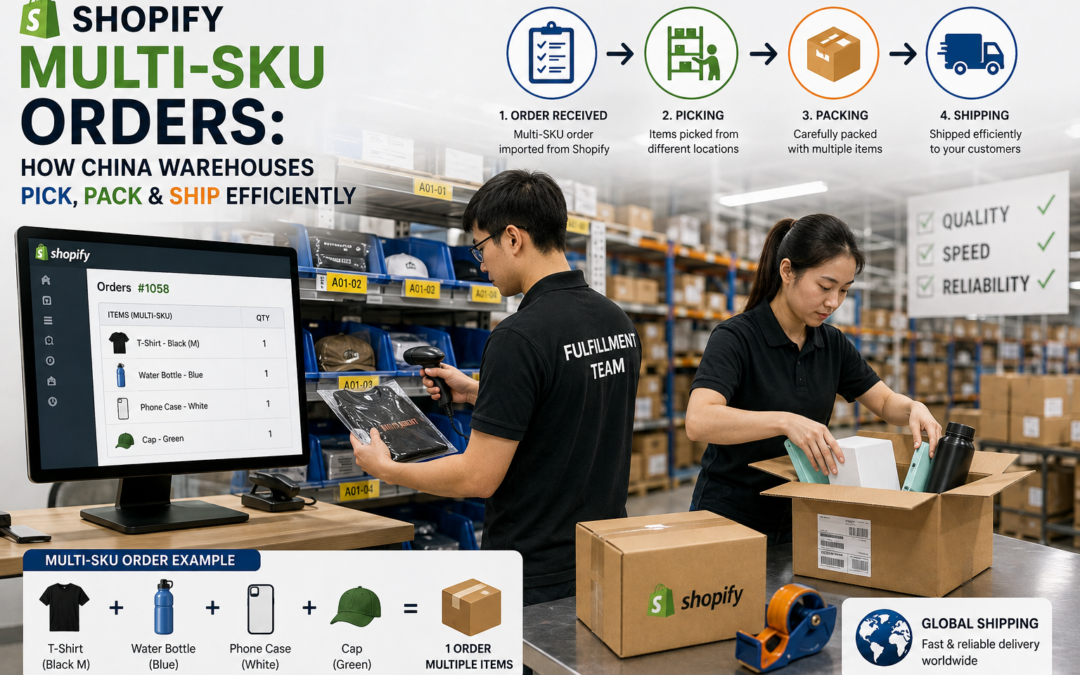
Shopify Multi-SKU Orders: How China Warehouses Pick, Pack & Ship Efficiently
A single-item order is about as simple as fulfillment gets. A Shopify order with five different SKUs in it is a different challenge entirely, more picking steps, more chances for something to go missing, more room for error. Here's how a well-run China fulfillment warehouse handles multi-SKU orders efficiently.

Multi-SKU orders, a single Shopify checkout that includes several different products, are common for stores selling variety packs, complementary items, or customers simply buying more than one thing at once. From a warehouse's perspective, each additional SKU in an order adds a picking step, and each picking step is a chance for something to be missed, mismatched, or left out entirely.
Here's how efficient China fulfillment warehouses structure their picking, packing, and shipping process to keep multi-SKU orders accurate without slowing everything down.
📋 Table of Contents
Why Multi-SKU Orders Are More Complex
A single-SKU order needs one item picked from one location, checked, and packed. A multi-SKU order might require a picker to walk to several different locations across the warehouse, collect each item correctly, and confirm nothing was missed before the box is sealed. The more SKUs in an order, the more opportunities exist for an item to be skipped, the wrong variant grabbed, or a quantity miscounted.
What Happens Without a Structured Process
Risks of an Unstructured Approach
- Items missing from multi-SKU orders without being caught
- Slower fulfillment as pickers walk inefficient routes per order
- Higher error rates as order complexity increases
- No clear verification step before orders are sealed and shipped
What a Structured Process Provides
- Consistent, accurate picking even for complex orders
- Efficient picking routes that reduce wasted time
- A verification step that catches missing items before shipping
- Fulfillment speed that doesn't degrade as order complexity grows
Picking Methods for Multi-SKU Orders
Batch picking is one of the more common approaches for handling multi-SKU orders at volume: rather than picking one order completely before moving to the next, a picker collects items for multiple orders in a single pass through the warehouse, organized by location rather than by order. This reduces total walking distance and speeds up overall throughput, though it requires a reliable system to sort picked items back into their correct individual orders afterward.
Verification Before Packing
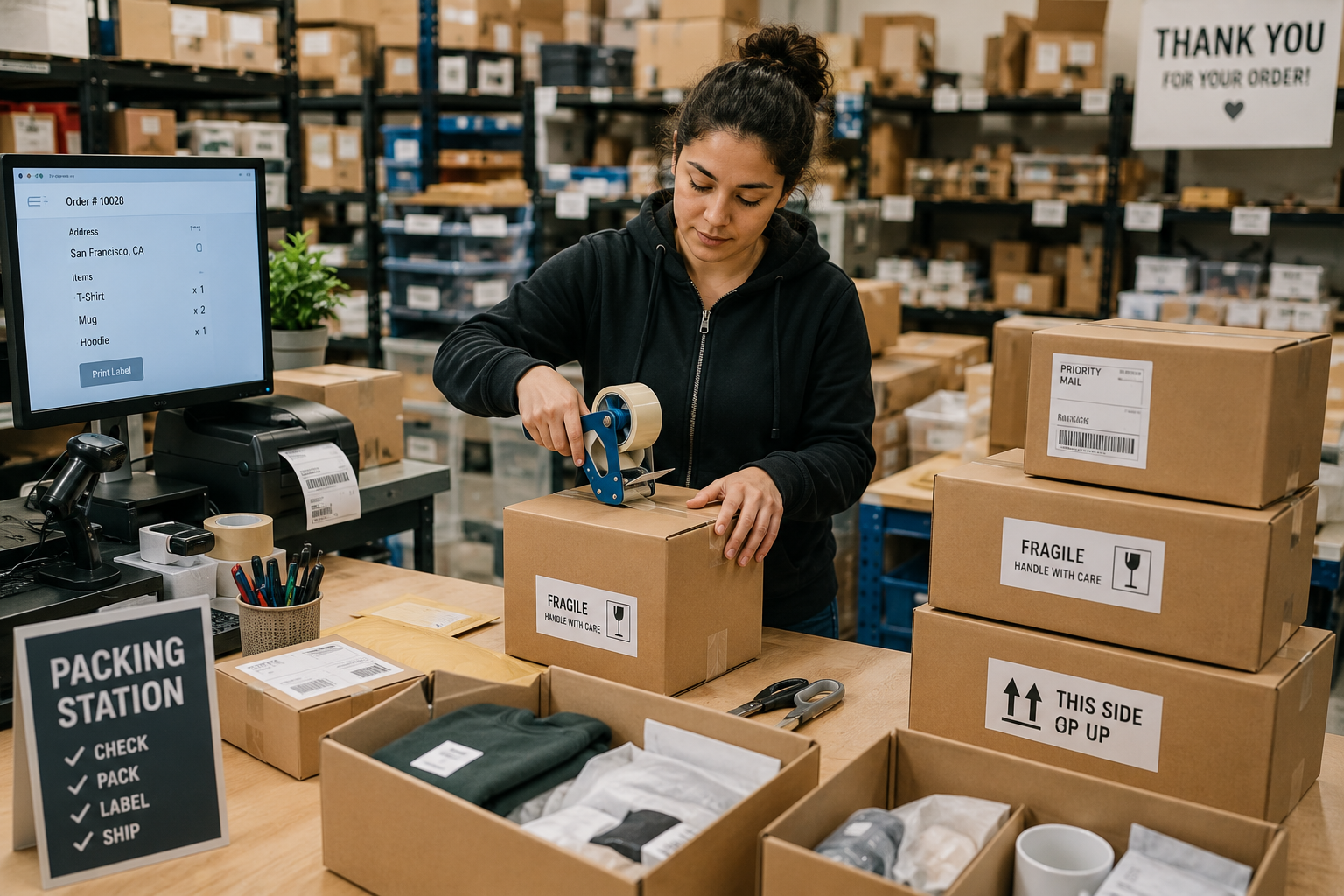
- Barcode scanning at pack stage — scanning each item against the order confirms nothing was missed before the box is sealed
- Item count checks — for orders with multiple quantities of the same SKU, confirming the count matches is as important as confirming the SKU itself
- Visual double-check for complex orders — some warehouses add a manual visual review step for orders above a certain SKU count
- Packing slip cross-reference — including a packing slip listing every item helps both the warehouse and the customer verify the order is complete
Batch Picking vs Order-by-Order Picking
| Factor | Batch Picking | Order-by-Order Picking |
|---|---|---|
| Efficiency at Volume | Higher, less walking time | Lower at high order volume |
| Complexity to Manage | Requires a sorting system | Simpler to track per order |
| Best For | High-volume, multi-SKU orders | Lower volume, simpler orders |
| Error Risk Without Verification | Higher if sorting is manual | Lower, more straightforward |
What to Confirm With Your Fulfillment Partner
-
Ask About Their Picking Method
Understand whether the warehouse uses batch picking, order-by-order picking, or a hybrid approach, and how that scales as your order volume and SKU count grow.
-
Confirm a Verification Step Exists
Ask specifically whether barcode scanning or another verification method is used before packing, rather than assuming manual counting is sufficient at scale.
-
Review Error Rates on Complex Orders
If possible, ask for data or feedback on how multi-SKU order accuracy compares to single-SKU orders, this can reveal whether their process actually holds up under complexity.
Fulfilling Complex Multi-SKU Shopify Orders?
OneShipPros uses organized picking and verification steps to keep multi-item orders accurate at scale.
Get Started with OneShipPros →