
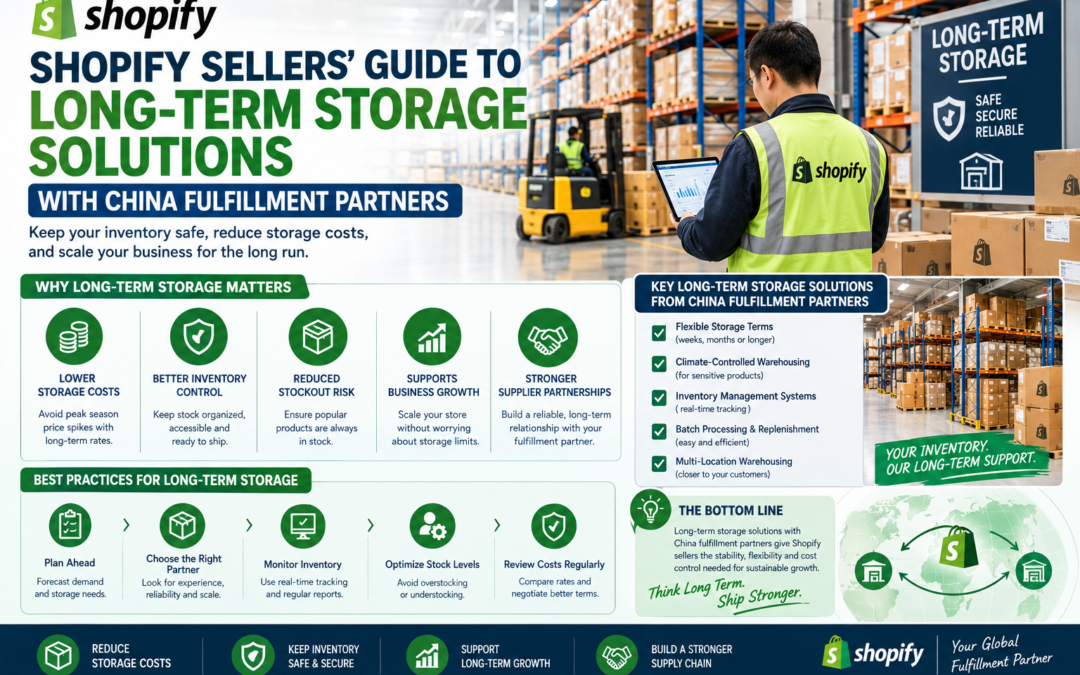
Shopify Sellers' Guide to Long-Term Storage Solutions with China Fulfillment Partners
Not every Shopify product needs to reorder every few weeks. For steady, predictable sellers, buying in larger bulk and storing inventory longer term can genuinely lower per-unit costs, but it only pays off if the product's demand actually holds up over that longer horizon. Here's how to think through long-term storage arrangements.
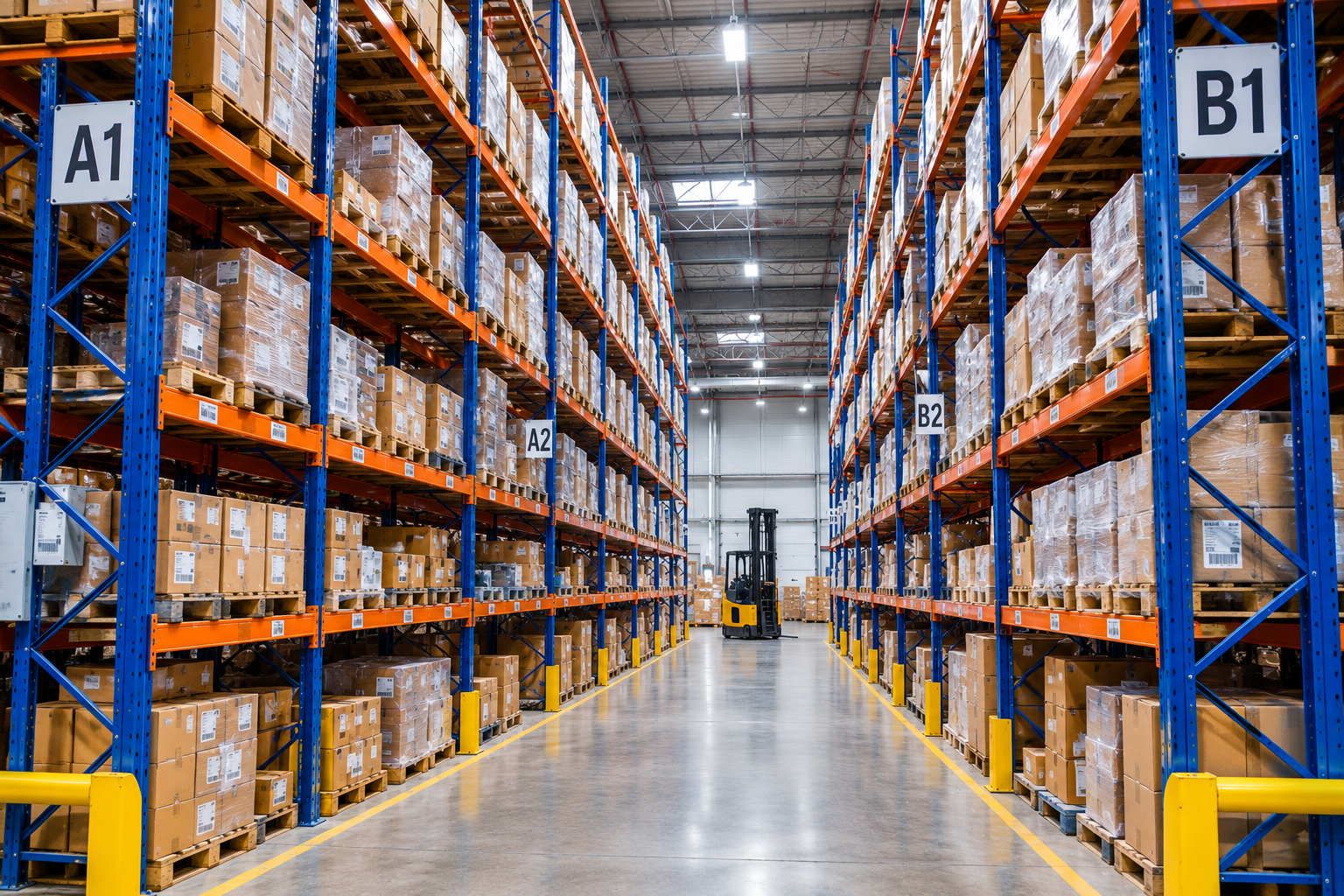
Standard fulfillment storage pricing is generally built around shorter-term inventory turnover, products flowing in and out on a regular reorder cycle. Long-term storage arrangements work differently, often offering a lower per-unit rate in exchange for a volume or duration commitment, which can meaningfully improve margins for products with genuinely predictable, consistent demand.
Here's how long-term storage with a China fulfillment partner typically works, and how to know if it's actually the right fit for a given product.
📋 Table of Contents
How Long-Term Storage Is Typically Priced
Long-term storage arrangements commonly trade a lower monthly per-unit storage rate for a commitment, either a minimum inventory volume, a minimum duration, or both. The specific structure varies meaningfully between fulfillment providers, some offer tiered discounts based on volume, others structure it as a flat reduced rate for inventory held beyond a certain threshold of time. It's worth getting the exact structure in writing rather than assuming a general "bulk discount" applies uniformly.
What Happens Without Checking Product Fit First
Risks of Committing Without Checking Fit
- Locking in bulk inventory for a product with uncertain demand
- Storage savings offset by dead stock risk if demand shifts
- Cash tied up in inventory for longer than the business can absorb
- Missing the actual break-even point where bulk buying pays off
What Checking Fit First Provides
- Long-term storage reserved for genuinely predictable products
- Real savings that materialize rather than theoretical ones
- Cash flow commitments matched to actual demand certainty
- A clear break-even calculation before committing
Products That Fit Long-Term Storage Well
Products with a consistent, non-seasonal sales history, evergreen items with demand that doesn't swing significantly month to month, are the strongest candidates for long-term storage arrangements. The predictability means the risk of inventory becoming dead stock before it sells through is low, which is what actually makes the lower per-unit storage rate a genuine savings rather than a risk trade-off.
Products That Don't Fit Long-Term Storage Well
- Seasonal products — demand swings tied to a specific season make a long-term storage commitment risky if the window is misjudged
- Trend-driven products — items riding a current trend can lose demand quickly, leaving bulk-purchased inventory stranded
- New, unproven products — without a sales history to validate demand, committing to bulk long-term storage is largely a guess
- Products with a short shelf life — expiration-dated goods generally aren't good candidates for extended storage commitments regardless of demand predictability
Long-Term vs Standard Storage
| Factor | Long-Term Storage | Standard Storage |
|---|---|---|
| Per-Unit Storage Cost | Lower | Higher |
| Flexibility | Lower, commitment required | Higher, no lock-in |
| Dead Stock Risk | Higher if demand shifts | Lower |
| Best For | Proven, steady products | New or variable-demand products |
Deciding If Long-Term Storage Makes Sense
-
Confirm the Product Has a Proven, Stable Sales History
Only consider long-term storage for products with genuinely consistent demand data behind them, not optimistic projections.
-
Calculate the Real Break-Even Point
Compare the storage savings from the long-term arrangement against the realistic risk of the excess inventory not selling through in time.
-
Get the Full Terms in Writing
Confirm the exact discount structure, commitment length, and any exit terms with your fulfillment partner before committing.
Considering Long-Term Storage for Your Best Sellers?
OneShipPros offers flexible long-term storage options for consistently selling Shopify products.
Get Started with OneShipPros →