
Shopify Kitting & Bundling Services: How China 3PLs Prepare Complex Orders
A bundle listed on Shopify as one product often isn't one product in the warehouse it's several items that need to come together correctly before shipping. Here's how China 3PLs actually handle kitting and bundling, and what makes it work smoothly.
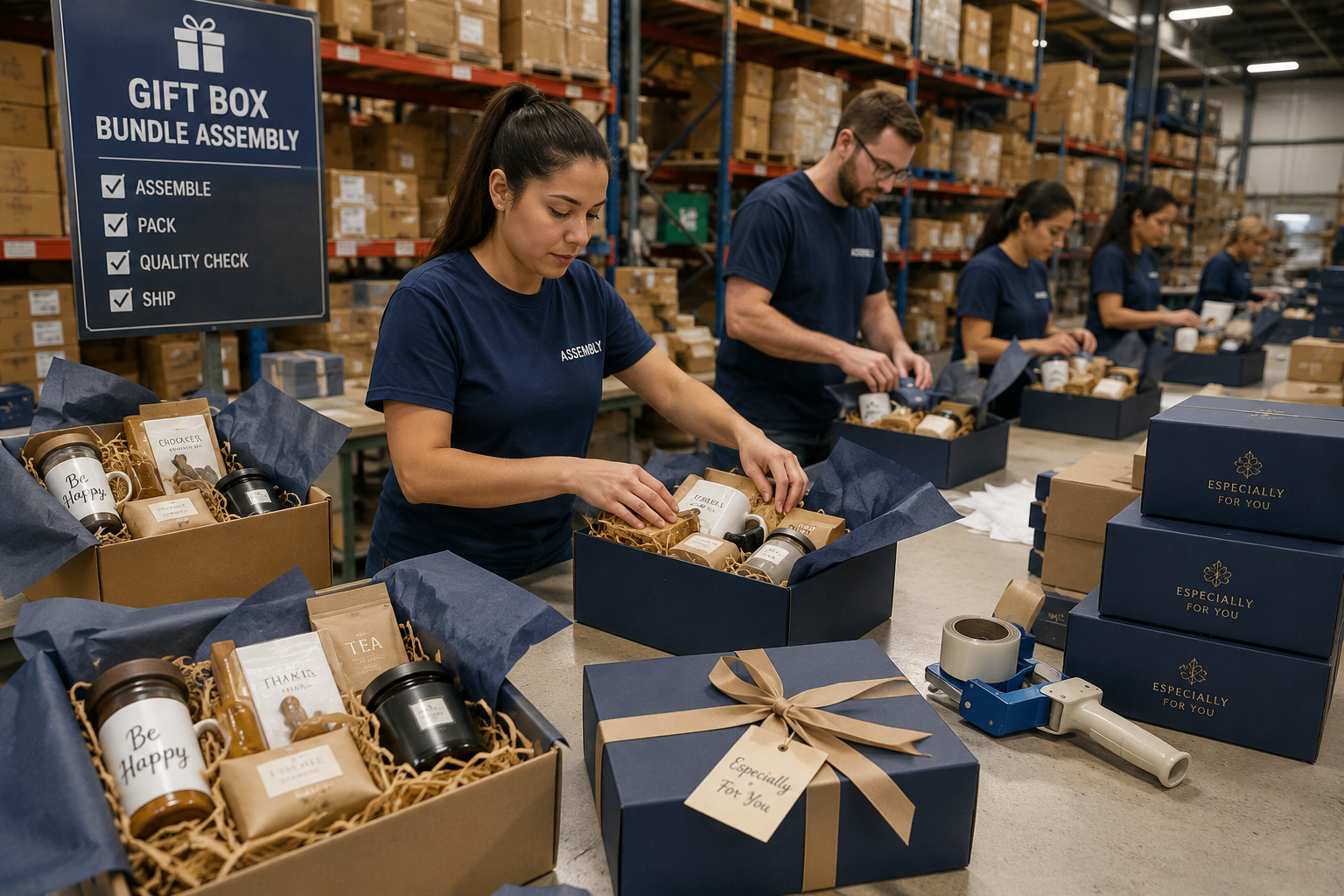
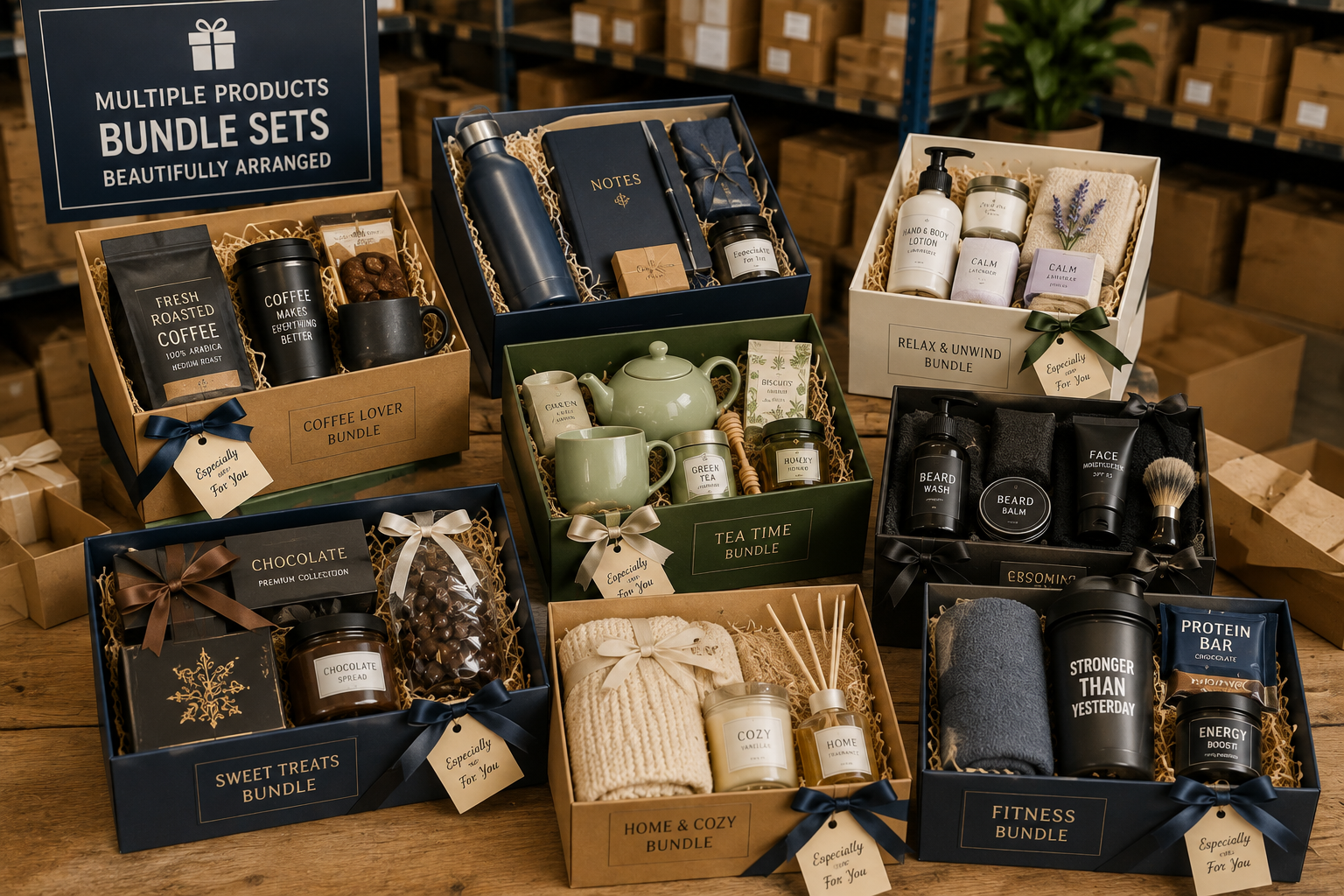
Product bundles are a proven way to increase average order value on Shopify pair a hero product with complementary items, sell them as one listing, and the customer gets a better deal while the store gets a bigger cart. What's less visible from the storefront is what it takes to actually fulfill that bundle correctly, every time, without the wrong component ending up in the box.
That's where kitting comes in the fulfillment-side process that makes bundling actually work in practice, not just on the product page.
📋 Table of Contents
What Kitting Actually Involves
Kitting means physically gathering the individual components of a bundle multiple products, sometimes packaging inserts or promotional materials and assembling them into a single unit before it ships. This might mean shrink-wrapping items together, placing them into a dedicated bundle box, or simply picking and packing multiple SKUs into one outer package correctly labeled as a single bundle order. It sounds simple in description, but at volume, it introduces real complexity that single-SKU picking doesn't have.
Where Bundled Orders Go Wrong Without Proper Kitting
Common Kitting Mistakes
- Missing components because inventory for one item in the bundle ran out unnoticed
- Incorrect quantity of a specific component within the bundle
- Bundle treated as a single SKU without deducting individual component stock correctly
- Inconsistent presentation between bundles due to no standardized kitting process
What Proper Kitting Prevents
- Component-level inventory tracking that flags shortages before they ship incomplete
- Verified quantities checked against the bundle's defined specification
- Individual component stock deducted correctly, not just the bundle SKU
- Consistent assembly and presentation across every bundle shipped
Pre-Kitting vs Assemble-to-Order
There are two general approaches to handling bundles at the warehouse level. Pre-kitting means assembling a batch of bundles in advance, ready to ship as soon as an order comes in this works well for consistently selling bundles with a stable, unchanging component list. Assemble-to-order means the bundle is only put together once a specific order is placed, which suits bundles that change frequently, include customization options, or don't sell in high enough volume to justify pre-assembling a batch.
Whichever approach fits, the underlying component inventory needs to be tracked accurately in your Shopify inventory management setup, since a bundle is only as reliable as the individual stock levels behind it.
What to Confirm With a Fulfillment Partner for Kitting
- Component-level inventory tracking — confirm they track stock for each individual item within a bundle, not just the bundle SKU as a whole
- Kitting turnaround time — ask how kitting affects overall processing time, especially for assemble-to-order bundles
- Quality control on assembled bundles — verify there's a check step confirming the correct components and quantities before shipping
- Handling of bundle stockouts — clarify what happens if one component runs out while others remain in stock
- Experience with your specific bundle complexity — a simple two-item bundle and a ten-piece gift set require very different levels of kitting sophistication
Pre-Kitting vs Assemble-to-Order Compared
| Factor | Pre-Kitting | Assemble-to-Order |
|---|---|---|
| Processing Speed | Faster, ready to ship | Slower, assembled per order |
| Flexibility | Less flexible, fixed component list | More flexible, easy to adjust |
| Best For | High-volume, stable bundles | Lower-volume or customizable bundles |
| Waste Risk | Higher if a bundle stops selling | Lower, only assembled as needed |
Which Approach Fits Your Bundles
-
Pre-Kit if...
A bundle is a proven, consistent seller with a fixed component list and steady order volume the speed advantage of pre-assembly outweighs the flexibility trade-off.
-
Assemble-to-Order if...
A bundle is new, seasonal, customizable, or hasn't yet proven consistent demand this avoids tying up inventory in pre-assembled units that might not sell as expected.
-
Revisit the Approach as Bundles Mature
A bundle that starts as assemble-to-order can shift to pre-kitting once it proves itself as a consistent seller, and vice versa if demand changes.
Selling Bundles or Gift Sets on Shopify?
OneShipPros offers reliable kitting and bundling services with component-level inventory tracking, so your bundles ship correctly every time.
Get Started with OneShipPros →