

Shopify Sellers' Guide to Choosing Between FOB and China Fulfillment Direct Shipping
FOB and a China fulfillment warehouse aren't really competing services, they're different points on a spectrum of how much logistics responsibility a Shopify seller takes on directly. Understanding where that line sits, and which side makes sense for your stage of business, is worth getting right before committing.
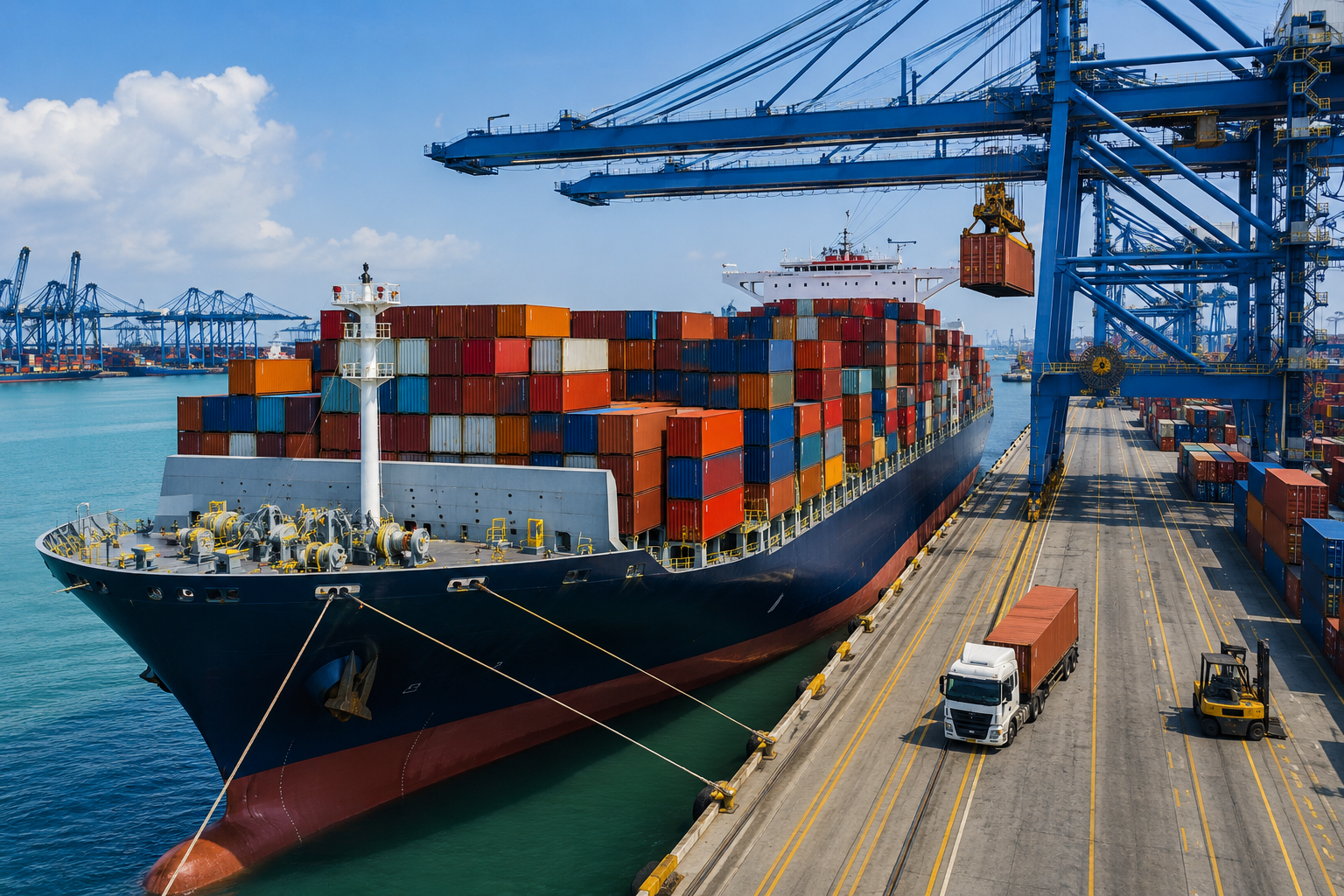
FOB (Free on Board) and using a China fulfillment warehouse for direct shipping represent two different levels of involvement in the logistics chain. FOB means taking on responsibility for goods once they leave the origin port, managing international shipping, customs, and often domestic warehousing independently. A fulfillment warehouse, by contrast, handles that complexity on a seller's behalf, in exchange for fees and somewhat less direct control.
Here's how the two actually compare, and how to think about which one fits a given Shopify store's stage and resources.
📋 Table of Contents
What FOB Actually Means
Under FOB terms, the seller takes ownership and responsibility for goods once they're loaded onto the vessel at the origin port. From that point forward, the seller (or a freight forwarder they've hired) manages international shipping, customs clearance at the destination, and typically arranges their own warehousing, whether that's a separate domestic 3PL or a self-managed facility. This gives more control over the shipping process but also means managing significantly more moving parts.
What Happens Without Understanding the Trade-Off
Risks of Not Understanding the Trade-Off
- Choosing FOB before having the operational capacity to manage it
- Staying with an all-inclusive fulfillment model longer than cost-efficient
- Underestimating the customs and logistics knowledge FOB requires
- Missing the point where switching models would genuinely help
What Understanding It Provides
- A model chosen deliberately for the business's actual stage
- Clear awareness of what additional responsibility FOB requires
- Cost savings realized once volume justifies the switch
- Confidence in managing whichever model is chosen
When FOB Makes Sense
FOB tends to make the most financial sense at higher order volumes, where the cost savings from cutting out a fulfillment warehouse's markup become significant enough to justify the added complexity. It also fits sellers who already have, or are willing to build, logistics expertise, whether that's an in-house team, a trusted freight forwarder relationship, or existing familiarity with customs processes. For an operation without that foundation, FOB can introduce more risk than it's worth.

When China Fulfillment Direct Shipping Makes Sense
- Earlier-stage or lower-volume stores — the operational simplicity of a fulfillment warehouse outweighs the marginal cost savings FOB might offer at low volume
- No in-house logistics expertise — sellers without customs or freight forwarding experience avoid a steep learning curve by using a fulfillment partner
- Wanting predictable, bundled pricing — a fulfillment warehouse's pricing structure is often simpler to plan around than the variable costs of managing shipping independently
- Testing new markets or products — the lower operational overhead makes it easier to experiment without committing to managing full logistics
FOB vs Fulfillment Direct Shipping
| Factor | FOB | Fulfillment Direct Shipping |
|---|---|---|
| Control Over Shipping | Higher | Lower |
| Cost at High Volume | Potentially lower | Higher, includes warehouse markup |
| Operational Complexity | Higher, more to manage | Lower, mostly handled for you |
| Best For | Established, higher-volume sellers | Newer or lower-volume sellers |
Transitioning from Fulfillment to FOB
-
Confirm the Volume Threshold Actually Justifies It
Run the numbers to see whether the cost savings from FOB at your current volume genuinely outweigh the added logistics burden, rather than assuming it always will.
-
Build or Access Logistics Expertise First
Either hire relevant experience or establish a trusted freight forwarder relationship before transitioning, rather than learning customs and shipping management under live order pressure.
-
Consider a Gradual Transition
Some sellers move a portion of their volume to FOB while keeping the rest with a fulfillment partner, easing into the added responsibility rather than switching entirely at once.
Not Sure Which Shipping Model Fits Your Store?
OneShipPros helps Shopify sellers navigate fulfillment options as their business scales.
Get Started with OneShipPros →