

Shopify Flash Sales: Can Your China Fulfillment Partner Handle the Volume?
A flash sale can double or triple a Shopify store's daily order volume in a matter of hours, and the marketing side is usually the easy part. The real question is whether the warehouse behind the scenes can actually keep up. Here's how to find out before the sale goes live, not during it.

Flash sales are built to convert fast: a countdown timer, a steep discount, a limited window. From the marketing side, that's the whole strategy. But every order that comes in during that window still has to be picked, packed, and shipped by an actual warehouse, and warehouses have a ceiling on how many orders they can process in a day. If a flash sale generates more orders than the fulfillment partner can handle, the result isn't more sales, it's delayed shipping and frustrated customers.
Here's what to check with your China fulfillment partner before running a flash sale, so the volume spike doesn't become a fulfillment bottleneck.
📋 Table of Contents
Why Fulfillment Capacity Matters for Flash Sales
A Shopify store's checkout can handle a traffic spike without much trouble, that's largely a hosting and infrastructure question. Order fulfillment is different, it's physical labor bound by warehouse floor space, staff headcount, and packing station throughput. A flash sale that triples order volume for a few hours can easily exceed a warehouse's normal daily capacity, even if the warehouse handles regular volume without issue.
What Happens Without Checking Capacity First
Risks of Not Confirming Capacity
- Orders backing up and shipping days later than expected
- Customer complaints and support tickets piling up post-sale
- Inventory shortages if stock wasn't positioned for the spike
- Warehouse staff overwhelmed with no advance warning
What Confirming Capacity in Advance Provides
- A realistic expectation of how fast orders will actually ship
- Warehouse staffing planned around the sale date
- Inventory pre-positioned to meet expected demand
- A smoother post-sale experience for customers
Questions to Ask Your Fulfillment Partner
Before scheduling a flash sale, it's worth having a direct conversation with your fulfillment partner rather than assuming their normal-day capacity will simply scale. Ask about their maximum daily order throughput, whether they can bring in additional staff for a known high-volume date, and how much advance notice they need to prepare. A partner that can't answer these questions clearly is one worth stress-testing with a smaller sale first.
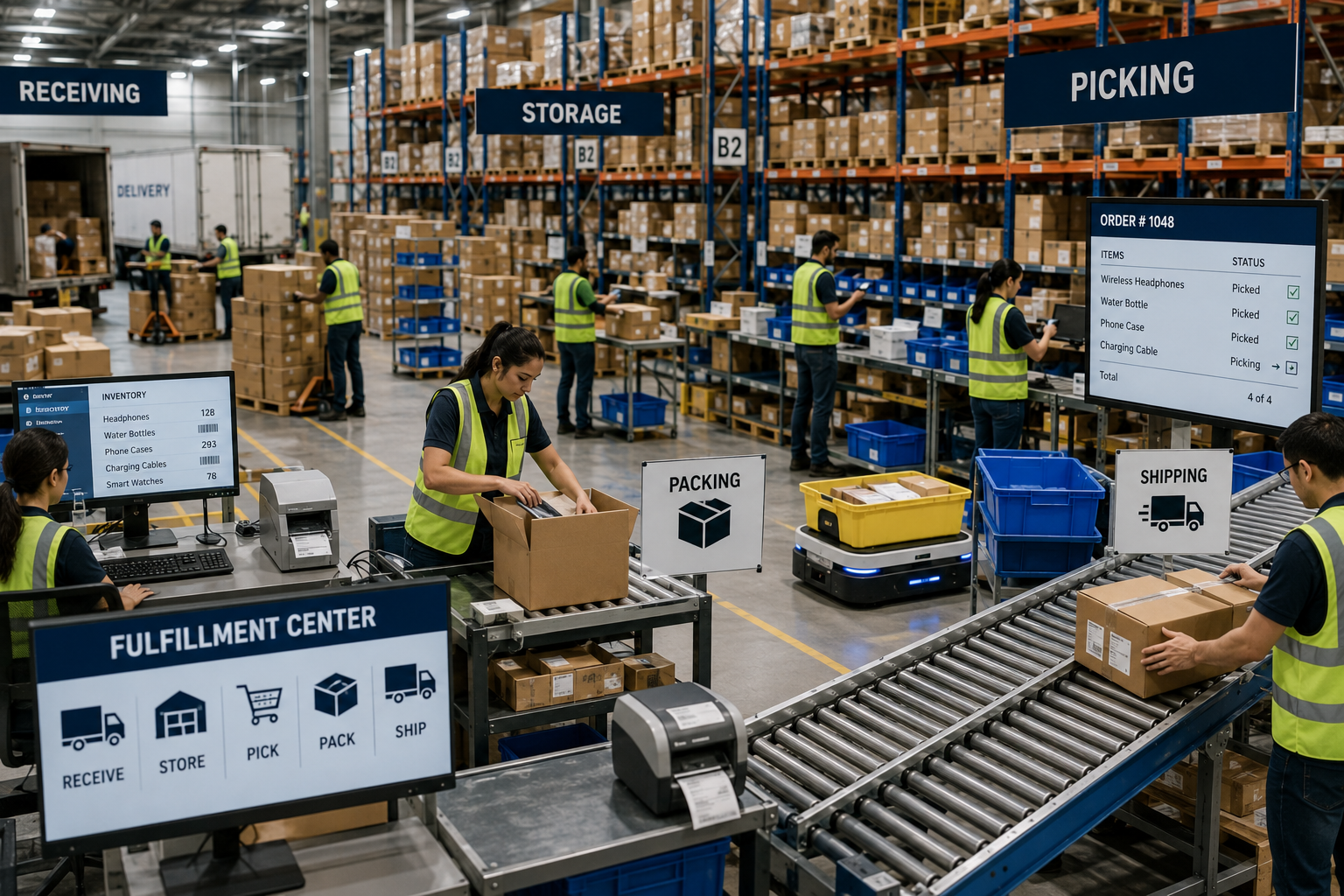
Inventory Positioning Before a Flash Sale
- Confirm stock levels match expected demand — a flash sale is pointless if the warehouse runs out of the featured product mid-sale
- Account for lead time on restocks — if the sale sells through inventory, factor in how long replenishment will actually take before promising future availability
- Position high-demand SKUs for fast picking — some warehouses can prioritize placement of featured sale items for quicker access during the spike
- Avoid overselling on Shopify — make sure inventory counts sync frequently enough that Shopify doesn't accept orders for stock that's already gone
Normal-Day vs Flash-Sale Fulfillment Needs
| Factor | Normal Day | Flash Sale Day |
|---|---|---|
| Order Volume | Steady, predictable | Spiked, concentrated in hours |
| Staffing Needs | Standard shift | Extra staff often required |
| Inventory Risk | Low | Higher, stockout risk on hot SKUs |
| Advance Notice Needed | None | Days to a week, typically |
Planning a Flash Sale Around Fulfillment Reality
-
Confirm Capacity Before Setting the Sale Date
Talk to your fulfillment partner about expected volume and get a realistic answer on throughput before finalizing the flash sale date on Shopify.
-
Give the Warehouse Advance Notice
Share the planned sale date and expected volume with your fulfillment partner early enough for them to plan staffing accordingly.
-
Monitor Fulfillment Speed During and After the Sale
Track how quickly orders are actually shipping during the sale window and shortly after, so any bottleneck is caught early rather than discovered through customer complaints.
Planning a Flash Sale on Shopify?
OneShipPros helps sellers confirm fulfillment capacity and prepare inventory before high-volume sale events.
Get Started with OneShipPros →