
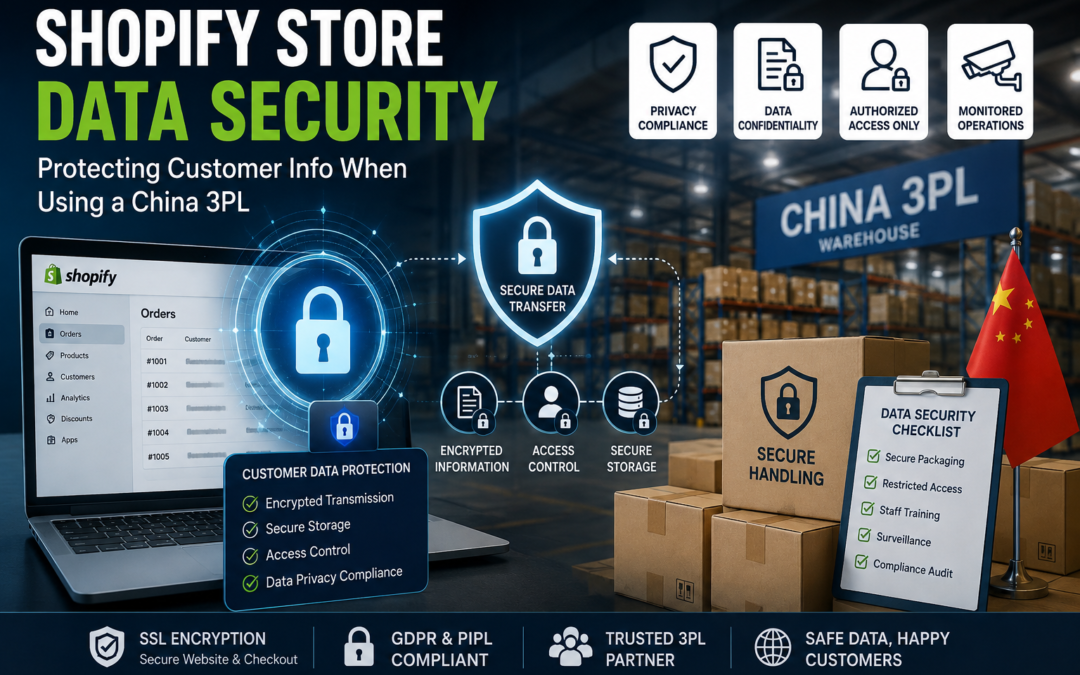
Shopify Store Data Security: Protecting Customer Info When Using a China 3PL
Sending order data to a fulfillment partner is a necessary part of the process but it doesn't mean handing over more information than they actually need. Here's how to think about customer data security when a China 3PL is part of the fulfillment chain.
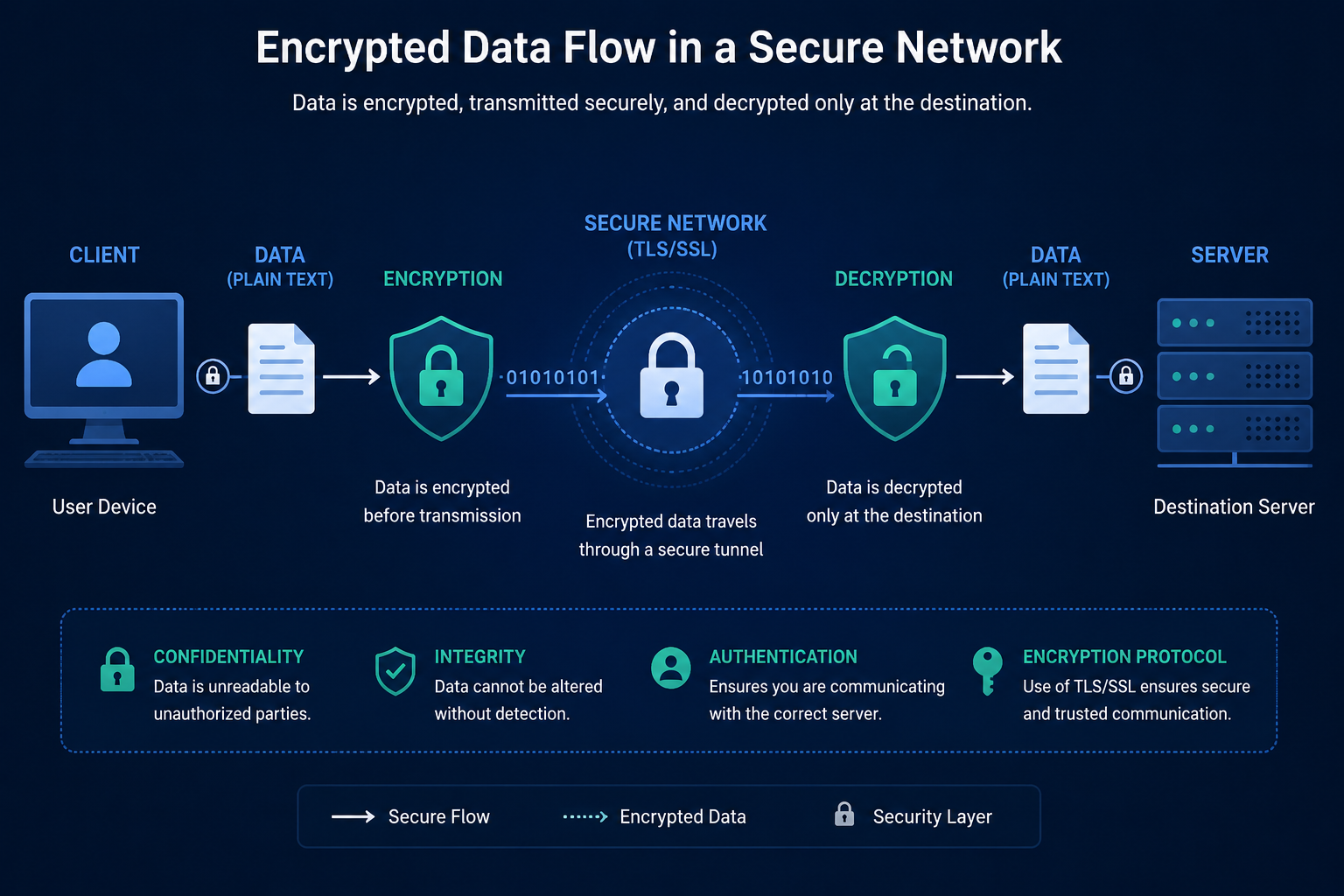
Fulfilling an order inherently requires sharing some customer information a name, a shipping address, sometimes a phone number for delivery coordination. That's unavoidable and reasonable. What matters is making sure only the necessary information is shared, that it's transmitted and stored securely, and that the fulfillment partner has real practices in place to protect it, rather than just assuming it's handled responsibly by default.
Here's a practical look at what data actually needs to flow to a fulfillment partner, and how to keep that exchange as secure as possible.
📋 Table of Contents
What Data Actually Needs to Be Shared
For a fulfillment partner to actually ship an order correctly, they generally need the customer's shipping name and address, sometimes a phone number for carrier delivery coordination, and the order and product details necessary to pick and pack correctly. That's the operational minimum. Full payment card details, for example, are never something a fulfillment partner needs, since payment processing happens entirely within Shopify's own systems, separate from the fulfillment workflow.
Where Oversharing or Weak Practices Create Risk
Common Data Handling Risks
- Sharing more customer data than operationally necessary
- Transmitting order data through unsecured or informal channels
- No clear policy from the fulfillment partner on data retention or deletion
- Assuming security practices without ever actually confirming them
What Reduces Risk
- Sharing only the data fields genuinely needed to fulfill an order
- Using a secure, established integration rather than manual file transfers
- A clear, confirmed data retention and deletion policy
- Directly verifying the partner's data handling practices, not assuming
What Good Data Handling Looks Like
A fulfillment partner with solid data practices limits internal access to customer information to only the staff who need it for their role, transmits order data through secure, encrypted channels rather than plain email attachments or unsecured spreadsheets, and has a clear policy on how long customer data is retained after an order is fulfilled and when it's deleted. None of this requires exotic security measures, it's mostly a matter of the fulfillment partner having deliberate, documented practices rather than an ad hoc approach.
On the seller's side, this connects to how Shopify order data is transmitted to the fulfillment partner in the first place, a secure API integration is generally preferable to manually exporting and emailing spreadsheets of customer information.

Questions to Ask a Fulfillment Partner
- What data fields do they actually require? — confirm they're not requesting more customer information than genuinely necessary to fulfill orders
- How is order data transmitted? — ask whether integration happens through a secure API or app, versus manual file transfers
- What's their data retention policy? — clarify how long customer data is kept after an order is completed, and when it's deleted
- Who has internal access to customer data? — ask whether access is limited to relevant staff or broadly available internally
- Do they have a formal data processing agreement available? — this may be relevant depending on applicable privacy regulations for your customer base
Necessary Data vs Unnecessary Data
| Data Type | Typically Necessary | Typically Unnecessary |
|---|---|---|
| Shipping Name & Address | Yes, required for delivery | — |
| Phone Number | Often, for carrier coordination | — |
| Order & Product Details | Yes, required for pick-and-pack | — |
| Full Payment Card Details | — | No, handled entirely by Shopify |
| Unrelated Personal Data | — | No, not needed for fulfillment |
Practical Steps for Shopify Sellers
-
Audit What Data Is Currently Being Shared
Review the actual data fields being transmitted to your fulfillment partner and confirm each one is genuinely necessary for order fulfillment.
-
Confirm the Transmission Method Is Secure
Move away from manual spreadsheet exports or unsecured email attachments toward a proper API integration or dedicated fulfillment app where possible.
-
Ask About Their Data Practices Directly
Don't assume good data handling, confirm it directly with the fulfillment partner, and put relevant expectations in writing if your customer base requires specific privacy compliance.
Want a Fulfillment Partner That Takes Data Security Seriously?
OneShipPros limits data access, uses secure integrations, and maintains clear data handling practices to protect your customers' information.
Get Started with OneShipPros →