
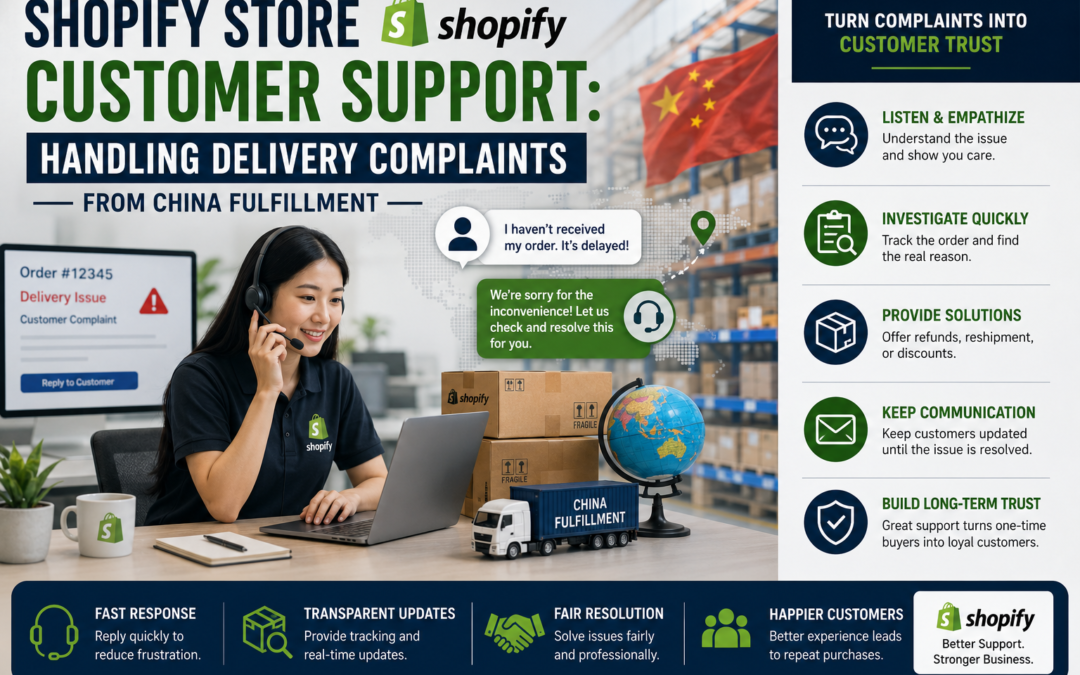
Shopify Store Customer Support: Handling Delivery Complaints from China Fulfillment
Delivery complaints, late shipments, damaged items, missing packages, are one of the most predictable categories of customer support a Shopify seller sourcing from China will handle. Having a clear approach ready before they happen makes each one faster to resolve and less likely to escalate.

Delivery-related complaints are a near-guaranteed part of running a Shopify store fulfilled from China. Longer international shipping times, more transit points, and occasional customs delays all add points where something can go wrong, or simply feel slower than a customer expected. None of that makes these complaints unmanageable, but it does mean having a clear, repeatable approach ready in advance rather than improvising each time.
Here's how to handle the most common delivery complaints, delays, damage, and missing items, in a way that resolves the individual issue and reduces the chance of it recurring.
📋 Table of Contents
Why Delivery Complaints Are Common
International shipping from China simply involves more steps and more distance than domestic fulfillment, customs clearance, longer transit times, and more handoffs between carriers. Even with a reliable fulfillment partner, some percentage of orders will run into a delay, a damaged item, or a support ticket asking where a package is. Treating this as a predictable, manageable category rather than a series of surprises makes the support process much smoother.
What Happens Without a Clear Approach
Risks of Handling Complaints Reactively
- Inconsistent, improvised responses across different support tickets
- Slower resolution times that frustrate customers further
- No feedback loop back to the fulfillment warehouse about recurring issues
- Preventable negative reviews from mishandled complaints
What a Clear Approach Provides
- Consistent, fast responses across all support tickets
- Customers who feel heard even when the news isn't great
- A feedback loop that helps the fulfillment partner improve
- Fewer complaints escalating into public negative reviews
Handling Shipping Delay Complaints
For delay complaints, honesty tends to work better than vague reassurance. Acknowledge the delay directly, provide the most accurate updated timeline available (checking actual tracking data rather than guessing), and offer a concrete next step, whether that's a proactive tracking update or a small gesture of goodwill for a significant delay. Customers are generally more patient with an honest, specific answer than with a generic apology that doesn't address the actual timeline.
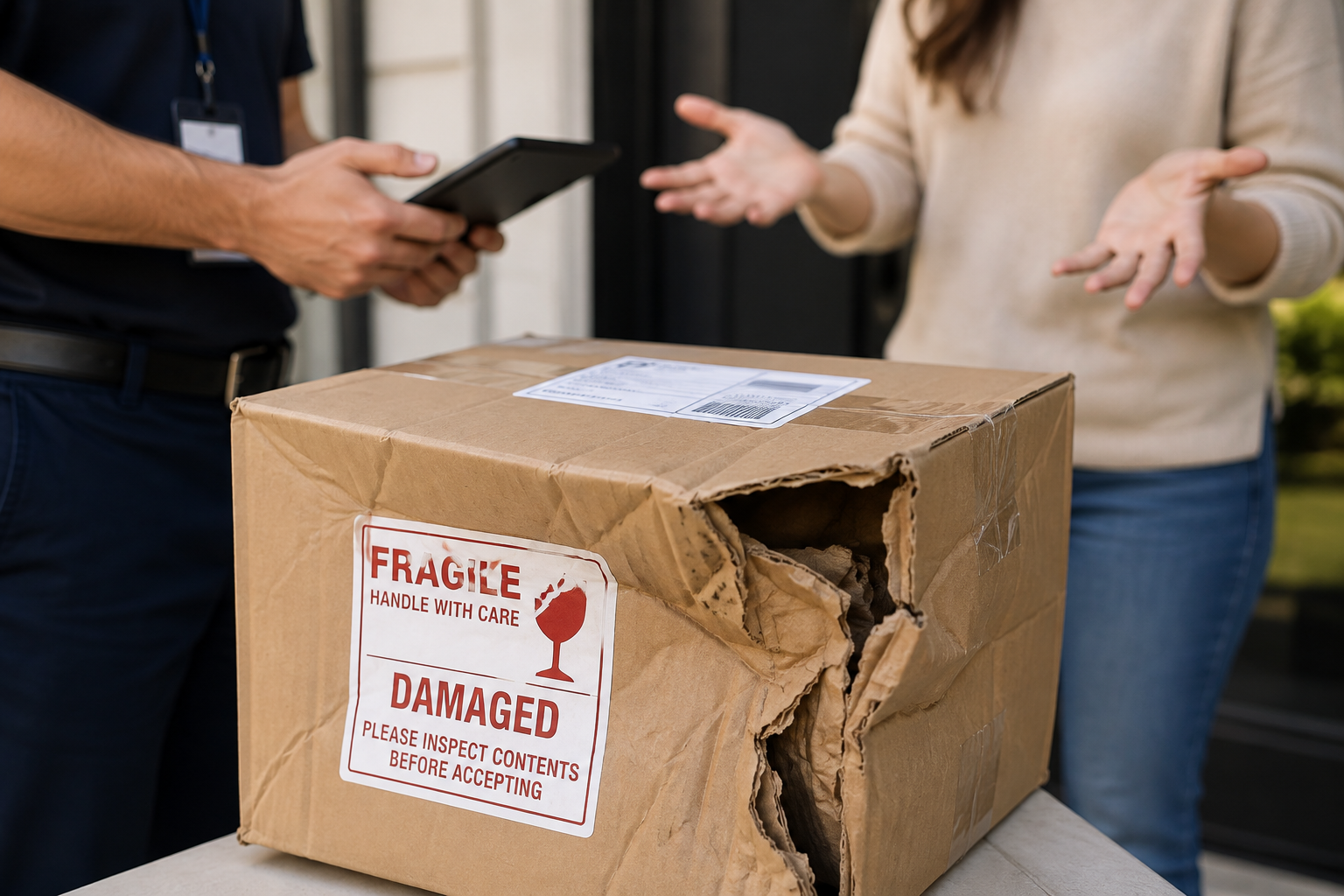
Handling Damaged or Missing Item Complaints
- Request a photo for damaged items — this speeds up resolution and gives useful documentation to share with the fulfillment warehouse
- Resolve promptly with a replacement or refund — a fast resolution matters more to most customers than an extended investigation before acting
- Flag the incident with your fulfillment partner separately — resolving the customer's issue and addressing the root cause with the warehouse are two different steps, both worth doing
- Track patterns over time — a recurring issue with a specific product or shipping method is a signal worth investigating further with the fulfillment team
Reactive vs Proactive Communication
| Factor | Reactive (Wait for Complaint) | Proactive (Communicate Early) |
|---|---|---|
| Customer Frustration | Higher, feels like chasing answers | Lower, feels informed |
| Support Ticket Volume | Higher | Lower |
| Effort Required | Lower upfront, higher reactive cost | Some upfront setup, less reactive work |
| Impact on Reviews | More negative delivery reviews | Fewer delivery-related complaints |
Reducing Complaint Volume Overall
-
Set Realistic Expectations at Checkout
Display accurate, honest shipping time estimates on the Shopify storefront, rather than an optimistic figure that sets customers up for disappointment.
-
Send Proactive Tracking Updates
Automated updates at key shipping milestones reduce the number of "where is my order" tickets that would otherwise come in.
-
Create a Standard Response Template for Common Issues
Prepare clear, honest response templates for delays, damage, and missing items, so support responses are fast and consistent rather than improvised each time.
Dealing With Delivery Complaints on Your Shopify Store?
OneShipPros helps sellers reduce delivery issues with reliable, communicative fulfillment.
Get Started with OneShipPros →