
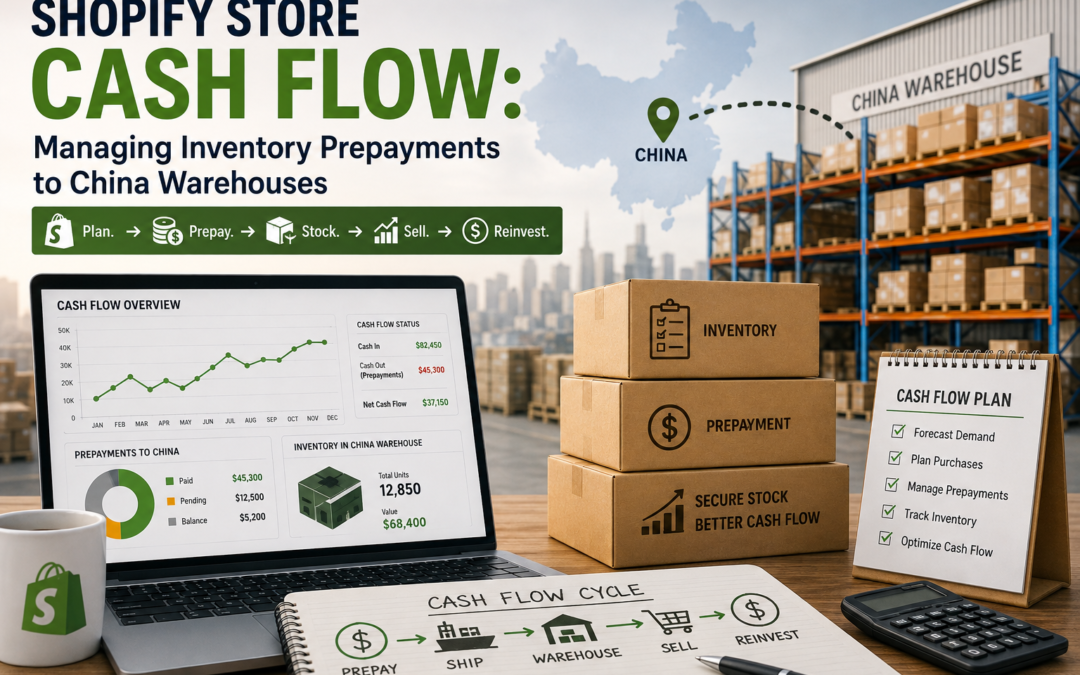
Shopify Store Cash Flow: Managing Inventory Prepayments to China Warehouses
Paying for inventory before it exists, and often before it even ships, is a routine part of sourcing from China, but it puts real pressure on a Shopify store's cash flow. Here's how prepayment works, why it's standard practice, and what sellers can actually do to ease the strain.

Sourcing inventory from China almost always involves paying before the goods are fully in hand, sometimes a deposit before production starts, sometimes full payment before shipping. For a Shopify store still building cash reserves, this prepayment requirement can create a real gap between money going out and revenue coming back in from sales of that same inventory.
Here's how inventory prepayment works in practice, why it's standard, and what levers a Shopify seller actually has to manage the cash flow impact.
📋 Table of Contents
Why Prepayment Is Standard Practice
From a manufacturer or fulfillment warehouse's perspective, prepayment protects them against producing or holding goods for a buyer who might not follow through on payment. This is especially common with newer buyer relationships or smaller order volumes, where the supplier has less basis to extend trust. It's a reasonable business practice on their end, even though it shifts real cash flow pressure onto the Shopify seller.
The Cash Flow Gap It Creates
What the Gap Looks Like
- Cash tied up in inventory weeks or months before it sells
- Reorder timing constrained by available cash, not just demand
- Growth potentially limited by how much prepayment can be afforded
- Less financial cushion for unexpected costs elsewhere in the business
What Managing It Well Looks Like
- Reorder cycles sized to actual cash flow capacity
- Some flexibility negotiated into payment terms
- Reserves maintained for the prepayment-to-sale gap
- Growth paced sustainably rather than cash-constrained reactively
Ways to Reduce the Strain
Smaller, more frequent inventory orders reduce the size of each individual cash outlay, even though they may slightly increase per-unit shipping costs. This trade-off is often worth it for a cash-constrained store, spreading prepayment obligations out rather than committing a large sum at once. Reviewing actual sales velocity regularly helps size these orders accurately, avoiding both understocking and tying up more cash than necessary in excess inventory.

Negotiating Better Payment Terms
- Partial deposit instead of full prepayment — some suppliers will accept a smaller upfront deposit with the balance due before shipping, rather than full payment upfront
- Extended terms for established relationships — a proven order history can sometimes unlock better terms than a brand-new account would get
- Trade credit insurance or financing — some sellers use third-party financing specifically designed to bridge the inventory prepayment gap
- Volume-based leverage — larger, more consistent order volume generally gives more room to negotiate than sporadic small orders
Full Prepayment vs Partial Deposit
| Factor | Full Prepayment | Partial Deposit |
|---|---|---|
| Upfront Cash Needed | Higher | Lower |
| Availability | Widely offered | Often requires negotiation |
| Cash Flow Impact | Larger single outlay | Spread across two payments |
| Typical For | New or smaller accounts | Established, higher-volume accounts |
Planning Reorders Around Cash Flow
-
Map Out the Full Cash Cycle
Track the actual timeline from prepayment to product arrival to sale to revenue collection, so reorder decisions are based on real cash flow patterns, not assumptions.
-
Ask Directly About Payment Flexibility
Raise the question of partial deposits or extended terms with suppliers and fulfillment partners directly, most won't offer better terms unprompted.
-
Keep a Cash Buffer for the Prepayment Gap
Maintain a reserve specifically sized to cover the gap between prepaying for inventory and collecting revenue from selling it, rather than operating right at the edge.
Managing Cash Flow Around Inventory Prepayments?
OneShipPros helps Shopify sellers plan inventory and fulfillment in a way that respects real cash flow constraints.
Get Started with OneShipPros →