
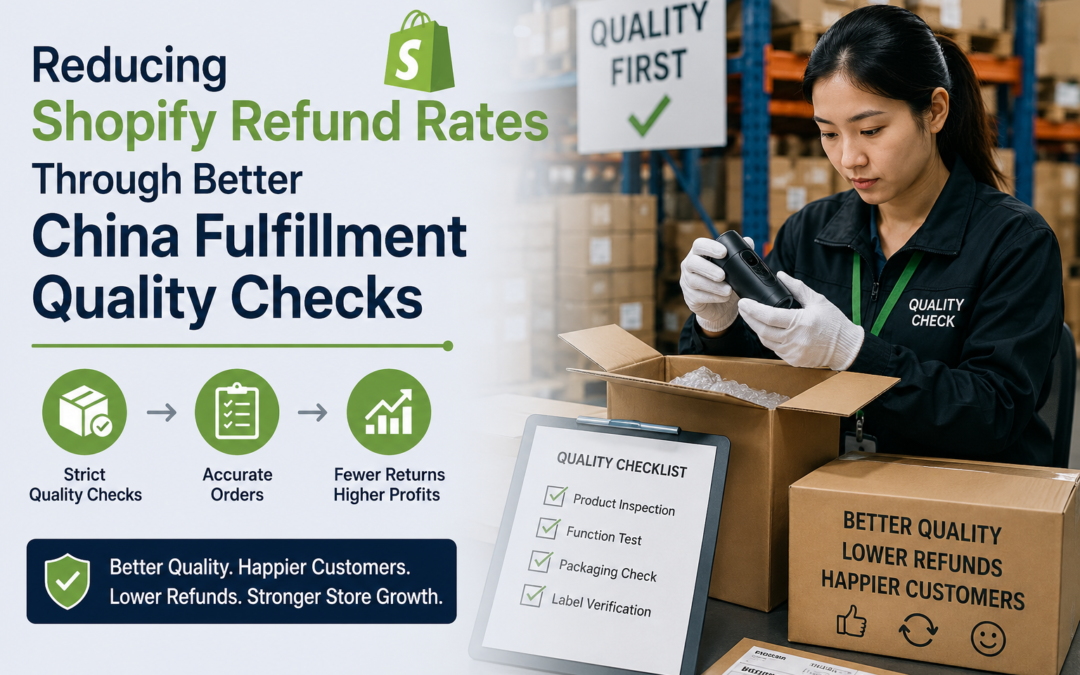
Reducing Shopify Refund Rates Through Better China Fulfillment Quality Checks
A meaningful share of Shopify refund requests trace back to what happened before the order ever left the warehouse, wrong items, damaged goods, missing components. Here's how stronger quality checks at your China fulfillment partner can catch those issues before they become a refund.

Not every refund is about the product itself disappointing a customer. A meaningful portion come from things that went wrong before the order ever left the warehouse: the wrong item got picked, the product arrived damaged, or a multi-part item shipped with a piece missing. These are exactly the kinds of problems a solid quality check process can catch before shipping, rather than after a customer opens the box.
Here's how quality checks at a China fulfillment warehouse connect directly to Shopify refund rates, and what's worth confirming with your fulfillment partner.
📋 Table of Contents
Where Fulfillment-Related Refunds Actually Come From
Refund reasons on a Shopify store usually fall into two broad buckets: the customer didn't like the product itself, or something went wrong in getting it to them correctly. The second bucket, wrong item shipped, item arrived broken, a component missing from a bundle, is largely preventable at the warehouse level, before the package ever ships. That's the part a fulfillment partner has direct control over.
What Happens Without Quality Checks
Risks of Skipping Quality Checks
- Wrong items shipped without being caught before dispatch
- Damaged products reaching customers undetected
- Incomplete bundles or multi-part orders missing components
- Higher refund rates and negative reviews tracing back to fulfillment
What Quality Checks Provide
- Wrong-item mistakes caught before shipping, not after delivery
- Damaged goods identified and replaced pre-shipment
- Complete, verified bundles and multi-part orders
- A measurable reduction in fulfillment-related refunds
Core Quality Checks Worth Confirming
Not every fulfillment warehouse runs the same level of quality check by default, some do a basic item-count verification, others go further with visual inspection. It's worth asking specifically what a partner checks before an order ships, rather than assuming a thorough process is standard. At minimum, confirming the shipped item matches the order and checking for visible damage are reasonable baseline expectations.
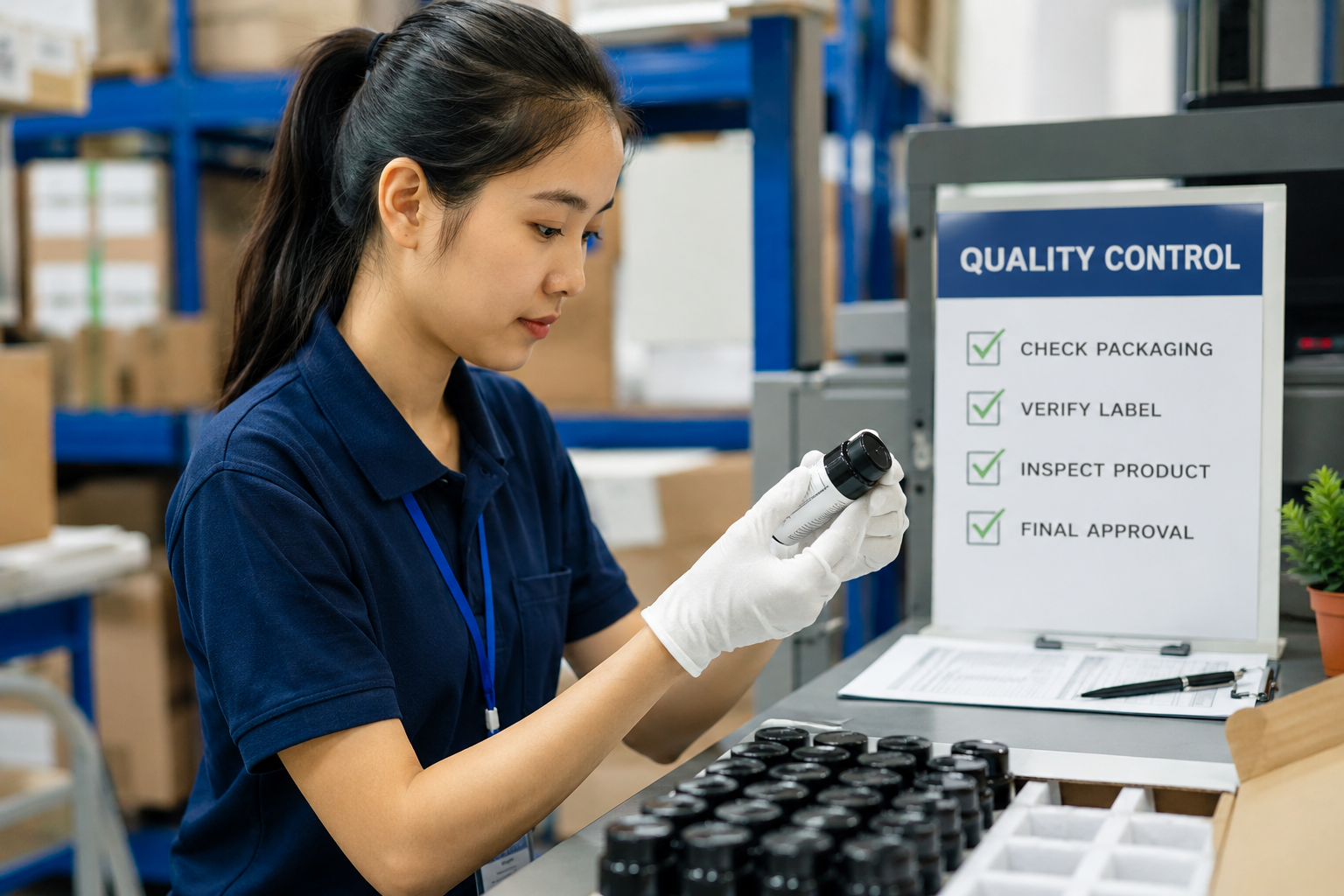
Extra Checks for Fragile or Multi-Part Products
- Component count verification — for bundles or multi-part products, confirm every piece is physically present before the box is sealed
- Fragile item handling — products prone to damage in transit may need extra packaging material or a dedicated inspection step
- Functional checks where relevant — for electronics or battery-powered items, a basic power-on check can catch dead-on-arrival units before they ship
- Random sampling for high-volume SKUs — for products shipping in large quantities, periodic spot checks can catch a batch-level issue early
Quality Checks vs No Quality Checks
| Factor | With Quality Checks | Without Quality Checks |
|---|---|---|
| Refund Rate Impact | Generally lower | Higher, preventable refunds |
| Fulfillment Speed | Slightly slower per order | Marginally faster |
| Customer Trust | Stronger, fewer bad experiences | Weaker, more negative reviews |
| Long-Term Cost | Lower, fewer replacements/refunds | Higher, ongoing refund losses |
Getting Quality Checks Set Up
-
Ask What Checks Are Already in Place
Get specific about what your current or prospective fulfillment partner actually checks before shipping, rather than assuming quality control is happening by default.
-
Identify Higher-Risk Products for Extra Checks
Flag fragile items, bundles, and electronics for additional inspection steps, since these categories tend to generate a disproportionate share of fulfillment-related refunds.
-
Track Refund Reasons Over Time
Review Shopify refund data periodically to see how much is fulfillment-related versus product-related, this helps confirm whether quality checks are actually moving the needle.
Want to Lower Your Refund Rate?
OneShipPros runs quality checks before every shipment to help reduce fulfillment-related refunds.
Get Started with OneShipPros →