
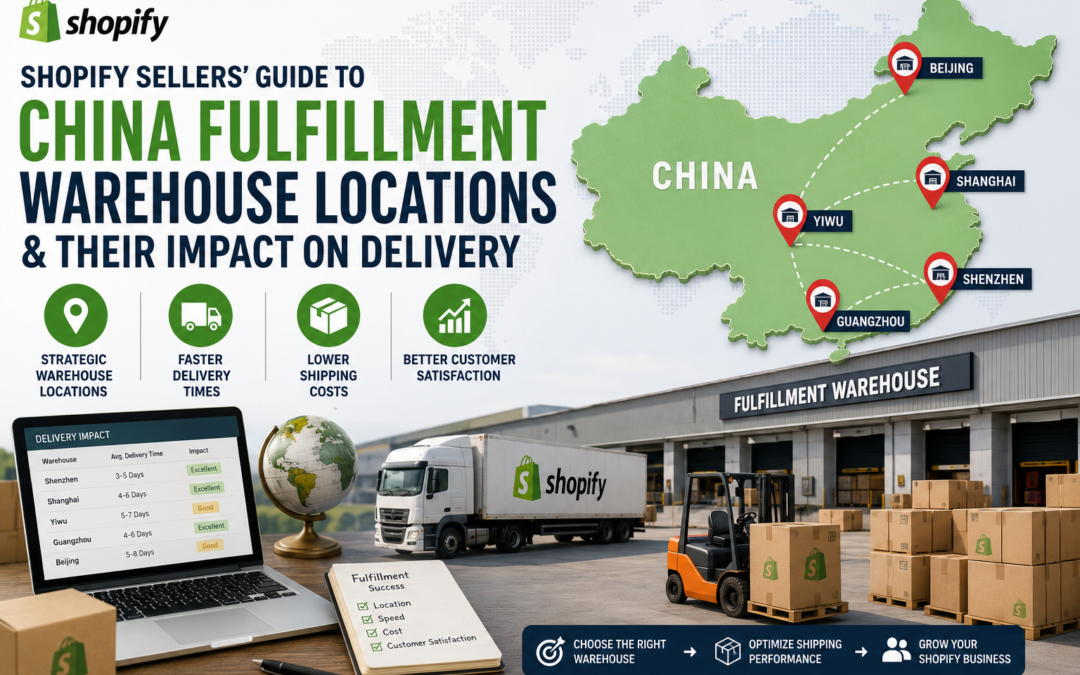
Shopify Sellers' Guide to China Fulfillment Warehouse Locations & Their Impact on Delivery
"China fulfillment" isn't one single location a warehouse near a major port and one further inland can mean genuinely different delivery timelines for the exact same product. Here's what to actually know about warehouse location before choosing a partner.
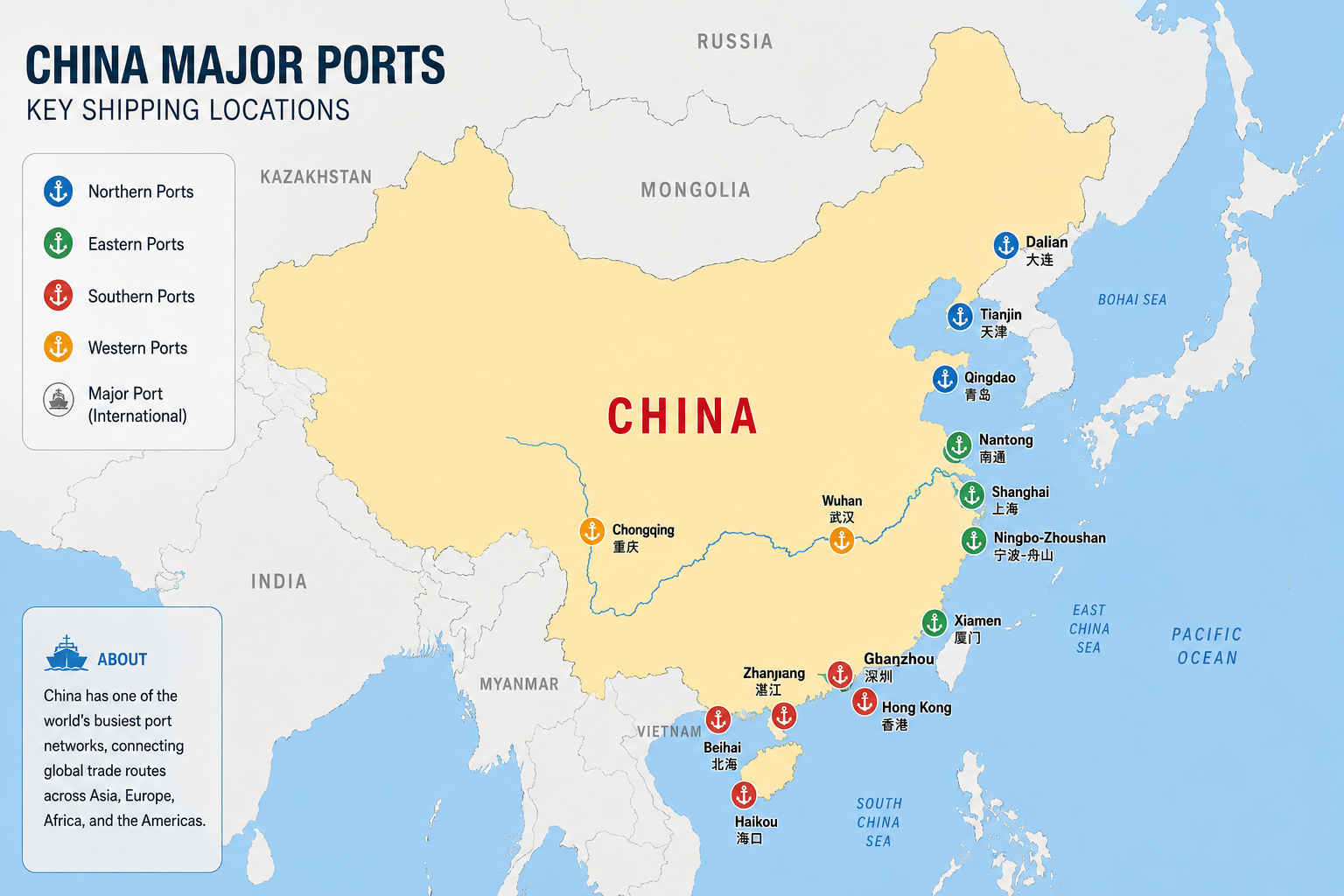
China is a big country, and fulfillment warehouses aren't evenly spread across it. Some sit close to major international ports and airports, plugged into well-established shipping routes. Others are located further inland, closer to specific manufacturing hubs but further from the infrastructure that gets a package moving internationally fast. Both types of locations can be legitimate choices, but they're not interchangeable when it comes to delivery speed.
Here's what warehouse location actually affects, and what's worth asking about before committing to a fulfillment partner.
📋 Table of Contents
Why Warehouse Location Actually Matters
Once a package leaves a warehouse, it still has to travel to a port or airport before it can begin its international journey. A warehouse located close to major shipping infrastructure shortens this first leg significantly, while one further inland adds extra domestic transit time before international shipping even begins. Multiplied across every single order, this difference in warehouse location can add up to a meaningfully different average delivery time for a Shopify store's customers.
Where Location Gets Overlooked in Partner Selection
What Happens When Location Is Ignored
- A price comparison that doesn't account for added transit time
- Assuming "China fulfillment" is a single, uniform delivery experience
- Discovering a longer-than-expected delivery time only after committing
- No consideration of how location aligns with manufacturing proximity
What Considering Location Provides
- A realistic delivery time estimate before committing to a partner
- Understanding of the trade-off between price and shipping speed
- Alignment between warehouse location and manufacturing proximity
- Fewer surprises once the fulfillment relationship is underway
What to Know About Common Fulfillment Regions
Coastal regions near major ports, such as those around Shenzhen, Guangzhou, and Shanghai, tend to have strong international shipping infrastructure and established carrier relationships, since these areas handle enormous volumes of export traffic already. Warehouses positioned in these regions generally have a shorter first-leg transit time to international shipping. That said, the right location also depends on where a product is actually manufactured, a warehouse close to the specific factory producing your goods can reduce inbound logistics time, even if it's not directly on the coast.
Balancing these factors is part of a broader evaluation that should also account for how well a location supports your Shopify shipping settings and delivery estimate accuracy, since the estimate shown to customers should reflect the real logistics behind wherever your inventory actually sits.
Questions to Ask About a Warehouse's Location
- Proximity to major ports or airports — ask specifically how far the warehouse is from the shipping infrastructure it relies on
- Proximity to your product's manufacturer — confirm how easily inventory can move from the factory to the warehouse
- Available shipping carriers and routes from that location — ask which carriers actually service that specific warehouse region
- Real transit time data, not just distance — request actual average shipping times from that location, not a theoretical estimate
- Whether they operate multiple locations — some agents offer a choice of warehouse regions depending on your specific needs
Location Factors and Their Delivery Impact
| Location Factor | Delivery Speed Impact | Trade-off to Consider |
|---|---|---|
| Near Major Coastal Ports | Faster international shipping start | May be further from inland manufacturers |
| Near Manufacturing Hub | Faster inbound inventory logistics | May add domestic transit before export |
| Established Carrier Routes | More reliable, faster transit | May limit carrier options if inland |
| Multiple Warehouse Options | Flexibility to optimize per product | Added coordination complexity |
Balancing Location Against Other Priorities
-
Weigh Location Alongside Price and Service Quality
Treat location as one factor among several, not an isolated deciding criterion, a good location doesn't compensate for poor accuracy or communication elsewhere.
-
Prioritize Manufacturing Proximity for Inbound Efficiency
If your product's manufacturing location is fixed, weigh warehouse proximity to that factory alongside proximity to shipping infrastructure.
-
Request Real Transit Data, Not Assumptions
Ask for actual historical shipping time data from a specific location rather than assuming a coastal warehouse is automatically faster in every case.
Want a Warehouse Location That Actually Fits Your Needs?
OneShipPros operates from well-connected locations with strong carrier relationships, helping Shopify sellers get realistic, fast delivery estimates.
Get Started with OneShipPros →