

Shopify Peak Season Prep: How a China Fulfillment Partner Handles Black Friday & Cyber Monday Surges
Behind every order that ships on time during BFCM is a warehouse quietly scaling up weeks in advance. Here's what actually happens inside a China fulfillment center to handle the Black Friday and Cyber Monday order surge and what Shopify sellers should be asking about it.
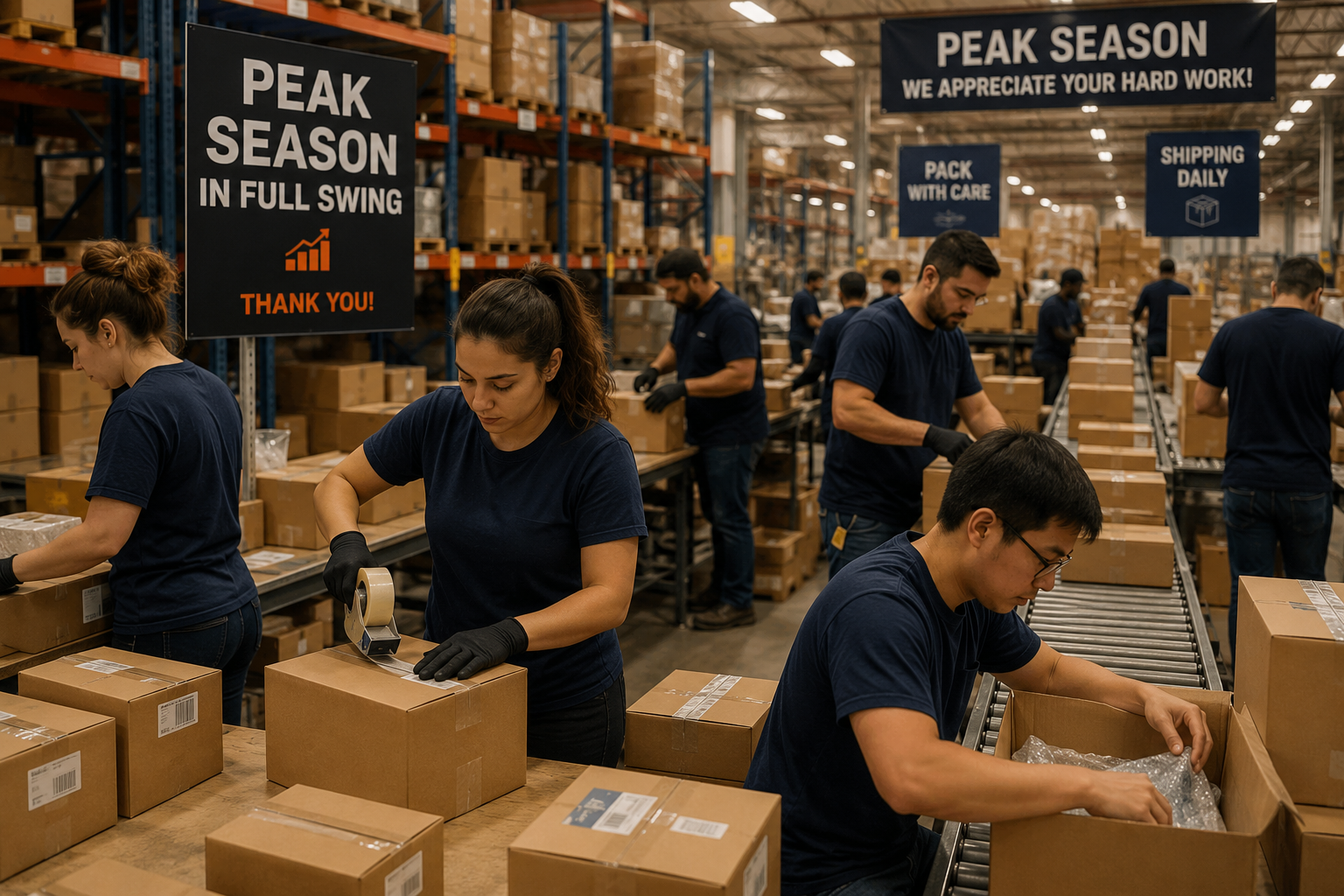
Most BFCM advice for Shopify sellers focuses on the seller's side of the equation: forecasting, ad spend, discount strategy. Less gets said about what's actually happening on the other end, inside the warehouse where those orders get picked, packed, and shipped. For stores fulfilling from China, understanding how the fulfillment partner itself scales for the surge is just as important as your own prep.
Here's what a well-run China fulfillment operation actually does differently during Black Friday and Cyber Monday, and what that means for the Shopify sellers relying on it.
📋 Table of Contents
What a Normal Order Volume Day Looks Like
On a typical day, a China fulfillment center runs at a steady, predictable pace pick-and-pack staff sized to normal order volume, standard shift hours, and shipping carriers picking up at their usual scheduled times. This works fine because demand is roughly consistent day to day, and the warehouse doesn't need extra capacity sitting idle most of the year.
BFCM breaks that pattern almost overnight. A warehouse that comfortably handles a normal day's volume can see order counts multiply several times over in a 72-hour window.
Where Fulfillment Centers Get Overwhelmed
What Happens at an Unprepared Warehouse
- Pick-and-pack backlog builds as order volume outpaces staffing
- Popular SKUs run low faster than restocking can keep up
- Shipping carrier pickups get delayed due to volume across all clients
- Customer communication breaks down when delays aren't flagged early
What a Prepared Warehouse Does Differently
- Temporary staff onboarded and trained weeks in advance
- High-demand SKUs pre-staged near packing stations
- Carrier capacity and pickup windows confirmed ahead of time
- Proactive delay communication built into the process
How a Well-Prepared Warehouse Scales for BFCM
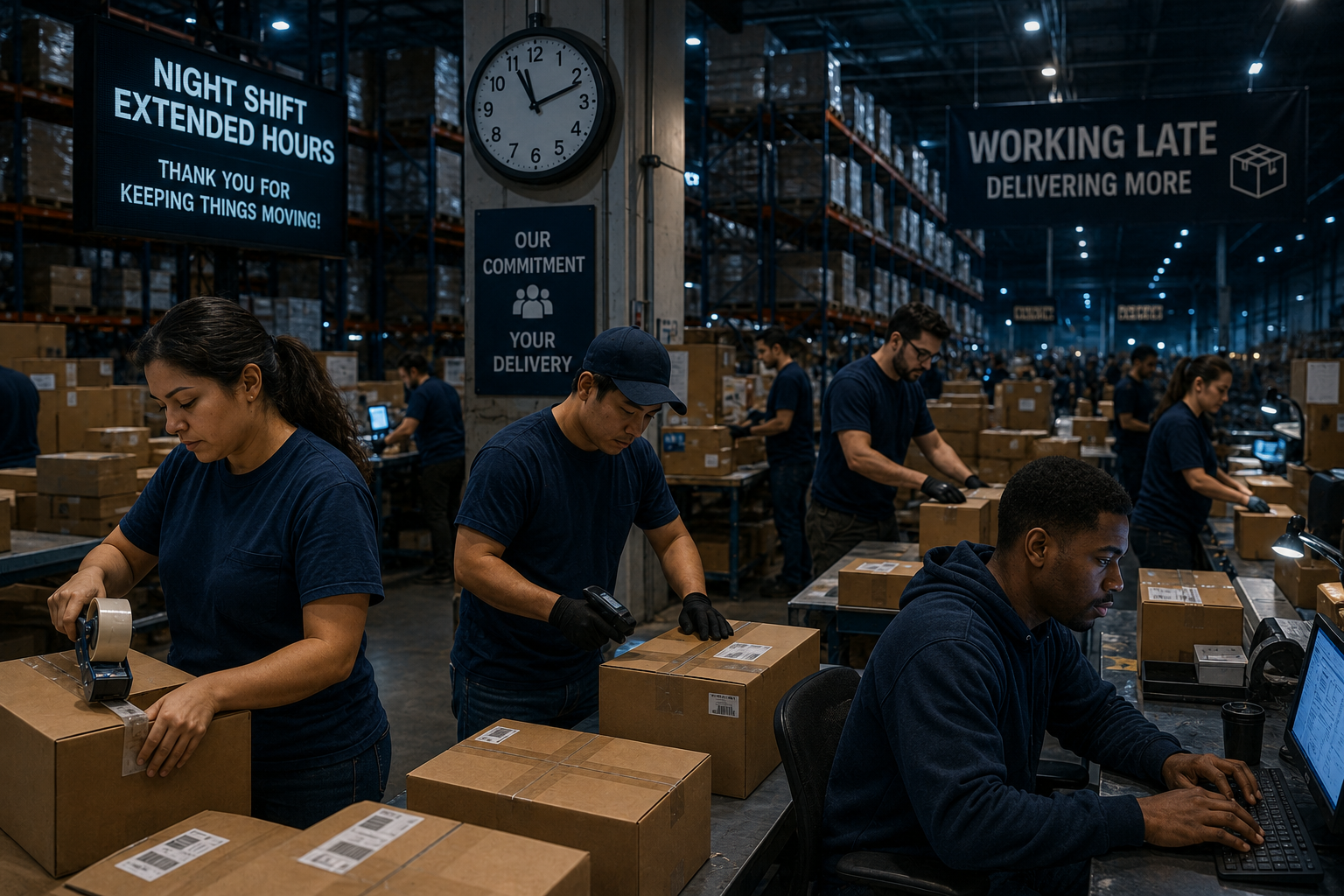
The warehouses that handle BFCM smoothly start planning months out, not days. Staffing gets ramped up with temporary or seasonal workers trained specifically on peak-season workflows. Inventory for known bestsellers gets physically relocated closer to packing stations, cutting down on internal travel time per order. Shipping carrier capacity gets locked in through advance agreements, since carriers themselves prioritize clients who booked ahead over those requesting space last-minute.
None of this is visible to a Shopify seller unless they ask about it directly which is exactly why confirming your Shopify order sync and fulfillment agent's BFCM readiness ahead of time matters as much as your own store's marketing prep.
What to Ask Your Fulfillment Partner Before BFCM
- Peak season staffing plan — ask specifically how much additional staff they bring on and when that ramp-up starts
- Order processing cutoffs — confirm the latest order time that still guarantees same-day or next-day processing during peak days
- Carrier capacity commitments — ask whether shipping capacity is pre-booked or handled on a first-come basis during BFCM
- Delay communication process — clarify how and when you'll be notified if processing or shipping falls behind
- Past BFCM performance — ask directly how they performed during the last peak season, including any known issues
Normal Operations vs BFCM Operations
| Factor | Normal Operations | BFCM Operations (Prepared Warehouse) |
|---|---|---|
| Staffing Level | Standard team size | Temporary staff added weeks in advance |
| Shift Hours | Standard hours | Extended or added shifts |
| Bestseller Inventory Placement | Standard warehouse layout | Pre-staged near packing stations |
| Carrier Capacity | Standard scheduled pickups | Pre-booked capacity commitments |
| Delay Communication | As-needed | Proactive updates during peak days |
Signs Your Fulfillment Partner Is Actually Ready
-
Warning Signs to Watch For
Vague answers about staffing plans, no clear order cutoff times, or an inability to describe how last year's peak season actually went are signs the warehouse may not be ready for a surge.
-
Good Signs to Look For
Specific staffing numbers, confirmed carrier capacity agreements, clear cutoff dates, and a proactive communication plan all indicate the partner has done this before and planned accordingly.
-
Confirm Early, Not in November
Ask these questions in late summer, while there's still time to adjust plans or supplement with a backup option if the answers raise concerns.
Want a Fulfillment Partner That's Actually Ready for BFCM?
OneShipPros scales staffing, pre-stages inventory, and locks in carrier capacity ahead of peak season, with proactive updates if anything changes.
Get Started with OneShipPros →