
Bulk Inventory Storage in China vs Local Shopify Fulfillment: Cost Comparison
Both models can fulfil the same Shopify orders, but the money moves very differently underneath. Here's a straight comparison of what it actually costs to hold bulk stock in China versus a local fulfillment center, and where each one wins.

Once a Shopify store moves past one-off dropship orders and starts reordering the same SKUs every month, the question of where to actually hold that stock becomes a real cost decision. Keep it in China close to the factory, or freight it over in bulk and store it locally where it can reach customers fast? Both are common setups, and both show up in the profit-and-loss statement in very different places.
This isn't a "which is objectively better" question. It's a cash-flow, speed, and volume question and the right answer usually depends on how fast a given SKU actually sells.
📋 Table of Contents
How Local Shopify Fulfillment Works
A local fulfillment center whether a 3PL warehouse in the US/EU or your own storage space receives inventory in bulk, then picks, packs, and ships individual Shopify orders as they come in, usually with same-day or next-day dispatch and delivery inside 2-5 business days. Storage is billed per pallet, bin, or cubic foot per month, and most 3PLs plug directly into Shopify so stock levels and order status sync automatically.
This model is what makes fast shipping badges and reliable delivery windows possible on a Shopify storefront, since the stock is already sitting close to the customer before the order is even placed.
Where Local-Only Fulfillment Falls Short
Common Pain Points at Scale
- Storage cost per unit is high compared to China warehousing
- Cash gets tied up in stock sitting on local shelves
- Slow-moving SKUs quietly eat into monthly storage fees
- Restocking still requires a bulk freight shipment from China anyway
What Still Works Well
- Fast, predictable delivery windows for customers
- No per-order international shipping delay
- Easier returns handling and customer service
- Deep Shopify app integration, real-time stock sync
What Changes With Bulk Storage in China
Storing bulk inventory at a China warehouse or fulfillment agent's facility drops the monthly cost per unit sharply, since warehousing rates near manufacturing hubs are a fraction of what local 3PLs charge. It also puts your stock right next to the factory, which makes quality checks, repacking, and reorders faster to coordinate. The trade-off shows up the moment a customer places an order: if that order ships directly from China, delivery time jumps compared to a local warehouse.
The workaround most sellers land on is treating China storage as a staging point rather than the final leg freight stock over in bulk on a schedule, then let a local warehouse handle the actual per-order shipping once it lands. Getting your Shopify inventory sync set up correctly across both locations is what keeps stock counts accurate through that handoff.
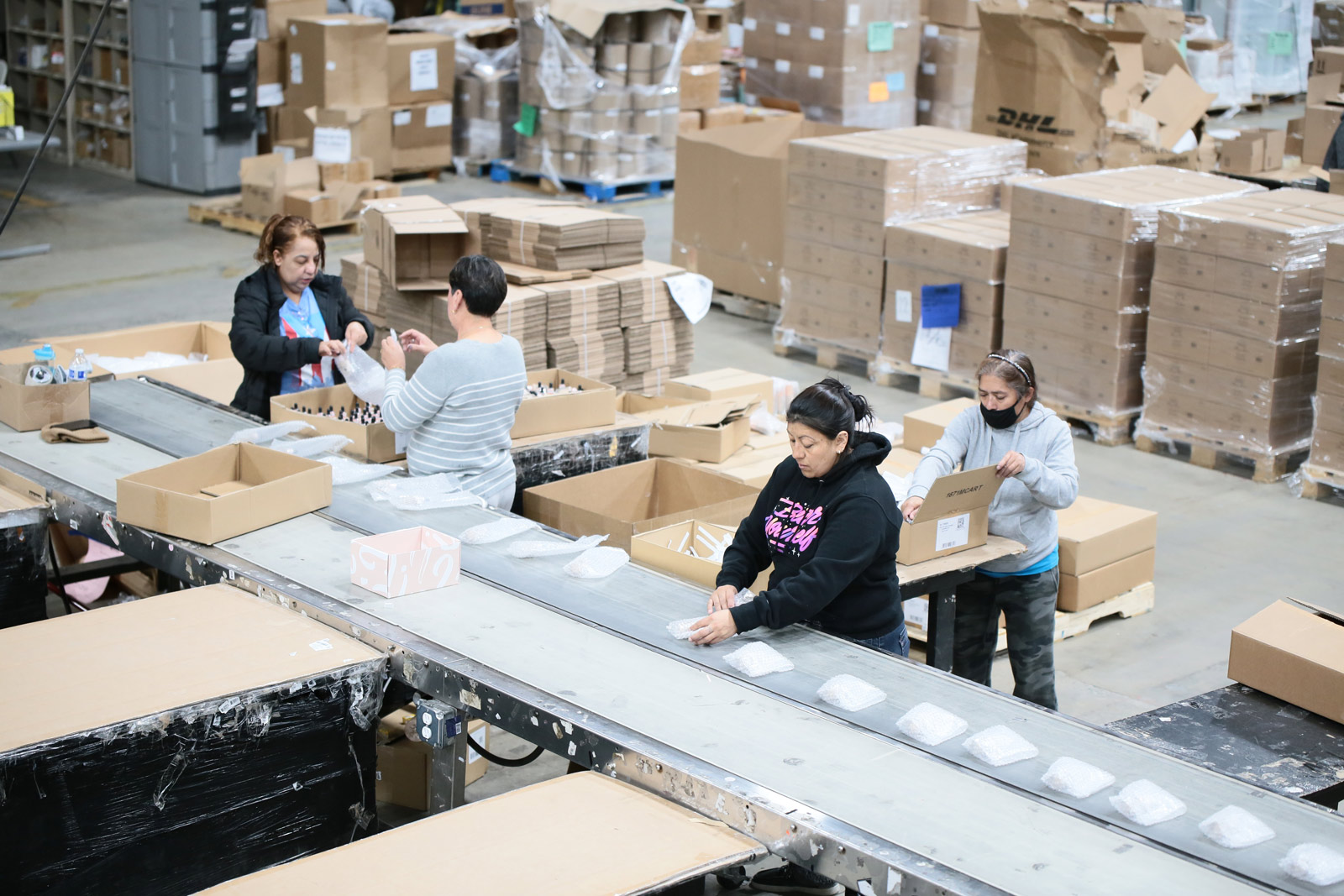
Bulk Storage in China: What to Actually Look For
- Storage rate structure — ask whether pricing is per pallet, per cubic meter, or per unit per month, and whether it rises after a free storage period
- Minimum freight batch size — confirm how much stock needs to move at once to make a bulk shipment cost-efficient
- Inventory visibility — real-time stock counts synced to Shopify matter more once inventory is split across two locations
- Quality control before storage — check whether the warehouse inspects goods on arrival, since problems are cheaper to catch before stock is stored, not after it ships
- Repacking and labeling support — useful if products need barcoding or relabeling before they move on to a local fulfillment center
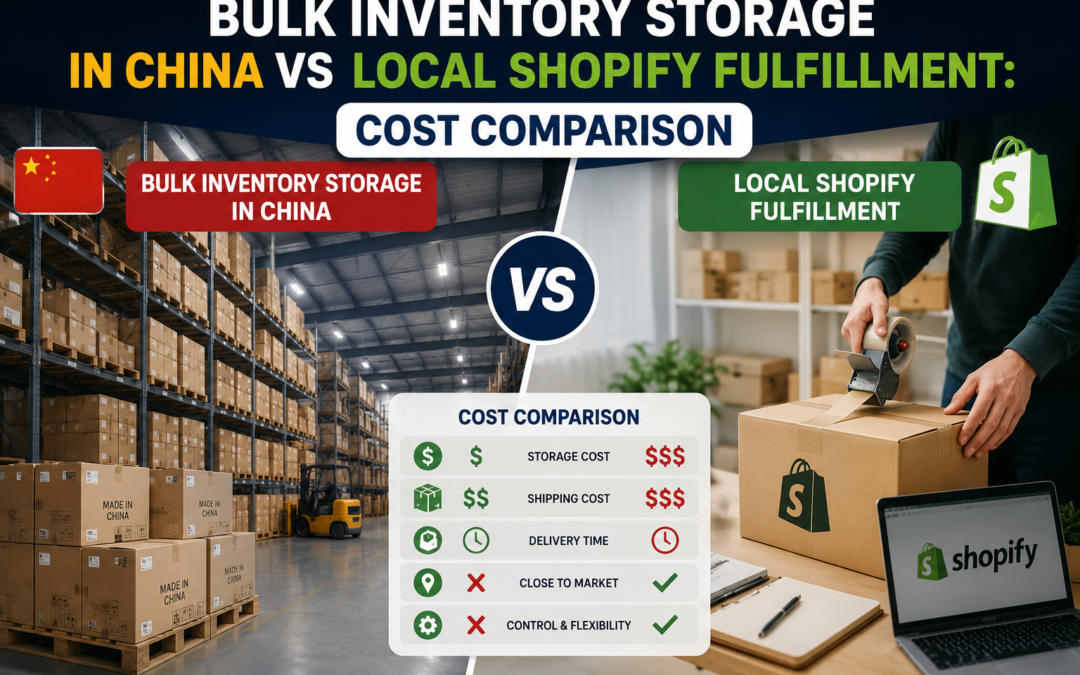
Cost Comparison: Local Fulfillment vs China Bulk Storage
| Factor | Local Shopify Fulfillment | China Bulk Storage |
|---|---|---|
| Monthly Storage Cost | Higher, per pallet/bin | Lower, especially at volume |
| Delivery Time (US) | 2-5 days | 7-20+ days if shipped direct |
| Cash Flow Impact | Capital tied up locally | Depends on freight schedule |
| Reorder Coordination | Requires freight from China anyway | Faster, right at the factory |
| Best For | Fast-moving bestsellers, active orders | Slower-moving or bulk-purchased stock |
When It Makes Sense to Switch
-
Stick with Local-Only Fulfillment if...
Your order volume is still low, you need every SKU deliverable within a few days, or you don't yet have the reorder volume to justify a separate bulk freight schedule.
-
Consider China Bulk Storage if...
You're paying for local storage on slow-moving SKUs, want to lower your landed cost per unit by ordering larger batches, or already ship enough volume to make scheduled freight worthwhile.
-
Consider a Hybrid Approach
Most established Shopify sellers park bulk stock in China at low storage cost, then freight working inventory of proven bestsellers to a local fulfillment center getting the low cost of one and the delivery speed of the other.
Ready to Set Up a Smarter Storage Split?
OneShipPros offers bulk warehousing in China plus local fulfillment handoff, with real-time inventory sync straight into your Shopify store.
Get Started with OneShipPros →