
BFCM & Peak Season Prep: How Shopify Sellers Should Plan Fulfillment from China
By the time Black Friday week actually arrives, your fulfillment plan should already be finished not started. Here's a realistic timeline for Shopify sellers sourcing from China to prep inventory, freight, and warehouse capacity before peak season demand hits.
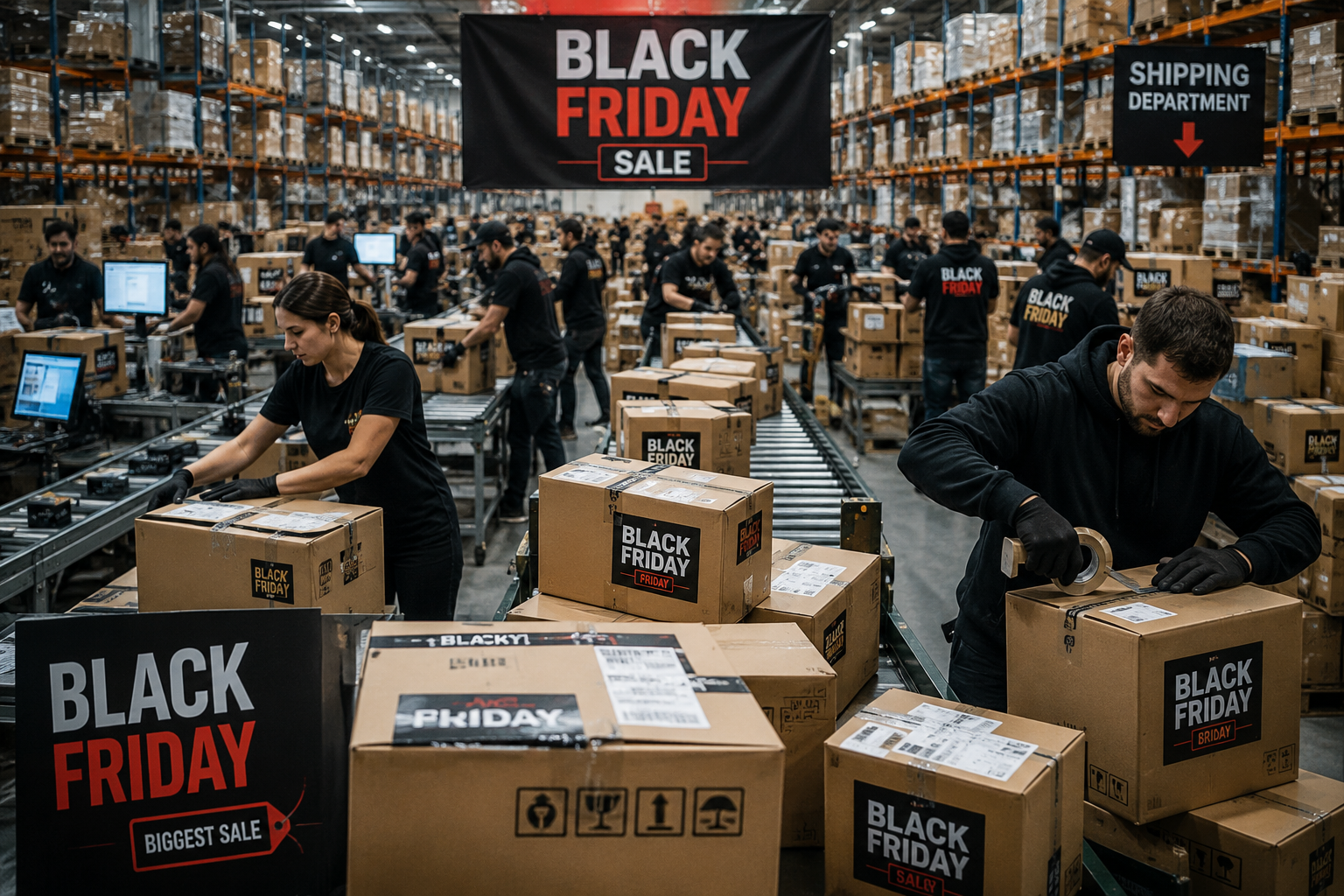
Black Friday and Cyber Monday are the two days everyone plans around, but the fulfillment work that makes or breaks BFCM happens months earlier. Once the sale is live, there's no fixing a stock shortfall a container doesn't cross the ocean any faster because your ad spend is working. For Shopify sellers sourcing from China, peak season prep is really a supply chain timing problem disguised as a marketing one.
Here's how to work backward from Black Friday to figure out when inventory actually needs to move.
📋 Table of Contents
Why Peak Season Planning Starts So Early
Sourcing from China adds two time-consuming steps that a domestic supplier doesn't have: production lead time at the factory, and ocean or air freight to get stock into the fulfillment warehouse. Combined, these can easily eat six to ten weeks before a single unit is even available to ship to a customer. Add in the fact that factories and freight carriers get busier as everyone else preps for the same peak season, and the math makes early planning non-negotiable.
Sellers who wait until October to think about BFCM stock are usually already too late to fix a shortfall through normal channels.
Where Sellers Get Caught Off Guard
Common Peak Season Mistakes
- Placing bulk purchase orders too close to Black Friday
- Underestimating freight transit time during the industry's busiest months
- Not confirming warehouse capacity or shipping cutoffs in advance
- Forecasting demand off average months instead of last year's peak data
What Good Peak Season Prep Looks Like
- Purchase orders placed 3-4 months ahead of Black Friday
- Freight booked early, before carrier capacity tightens
- Confirmed shipping cutoff dates with the fulfillment agent
- Demand forecast built from last year's actual peak season numbers
What Changes During Peak Season at a China Warehouse
During Q4, China fulfillment warehouses handle a spike in order volume across every client they serve, not just yours. Pick-and-pack turnaround can slow slightly during the busiest weeks, and shipping carriers often introduce peak season surcharges or tighter capacity limits. None of this is a dealbreaker, but it does mean the buffer time you'd normally have shrinks right when order volume is highest.
Making sure your Shopify inventory sync is accurate matters even more during this window, since a stockout during BFCM is far costlier than one during a slow month.

What to Confirm With Your Fulfillment Agent Before Q4
- Peak season shipping cutoffs — ask for the last safe order date to guarantee delivery before Christmas, and build backward from there
- Warehouse capacity limits — confirm they can actually handle your expected order volume increase without delays
- Surcharges and fee changes — many carriers and agents apply peak season surcharges, get these in writing ahead of time
- Safety stock recommendations — ask what buffer they suggest holding based on your sales history and lead times
- Communication plan during peak weeks — confirm how you'll get updates if delays happen during the busiest stretch
BFCM Prep Timeline: Working Backward from Black Friday
| Timeframe Before BFCM | What Should Happen | Why It Matters |
|---|---|---|
| 14-16 Weeks Out | Forecast demand, place factory purchase orders | Production lead time is the longest lever |
| 10-12 Weeks Out | Book ocean or air freight to warehouse | Carrier capacity tightens as Q4 approaches |
| 6-8 Weeks Out | Confirm stock has landed, verify counts | Catches shortfalls while there's still time to react |
| 3-4 Weeks Out | Confirm shipping cutoffs with fulfillment agent | Missing this risks late holiday deliveries |
| Black Friday - Cyber Monday | Monitor order flow, track stock in real time | Fastest window to catch and react to issues |
When to Start Each Step
-
Start Now if...
You haven't placed your peak season purchase order yet and Black Friday is less than four months away production and freight lead times don't leave much room to wait.
-
Confirm Capacity Next if...
Stock is ordered but you haven't verified your fulfillment agent's Q4 capacity and shipping cutoffs get this in writing before order volume actually spikes.
-
Monitor Closely During Peak Week
Once BFCM hits, keep a close eye on real-time stock levels and shipping performance so any issue gets caught in hours, not days.
Getting Ready for This Year's Peak Season?
OneShipPros helps Shopify sellers plan BFCM inventory, freight timing, and warehouse capacity well ahead of the rush so nothing gets left to chance.
Get Started with OneShipPros →