
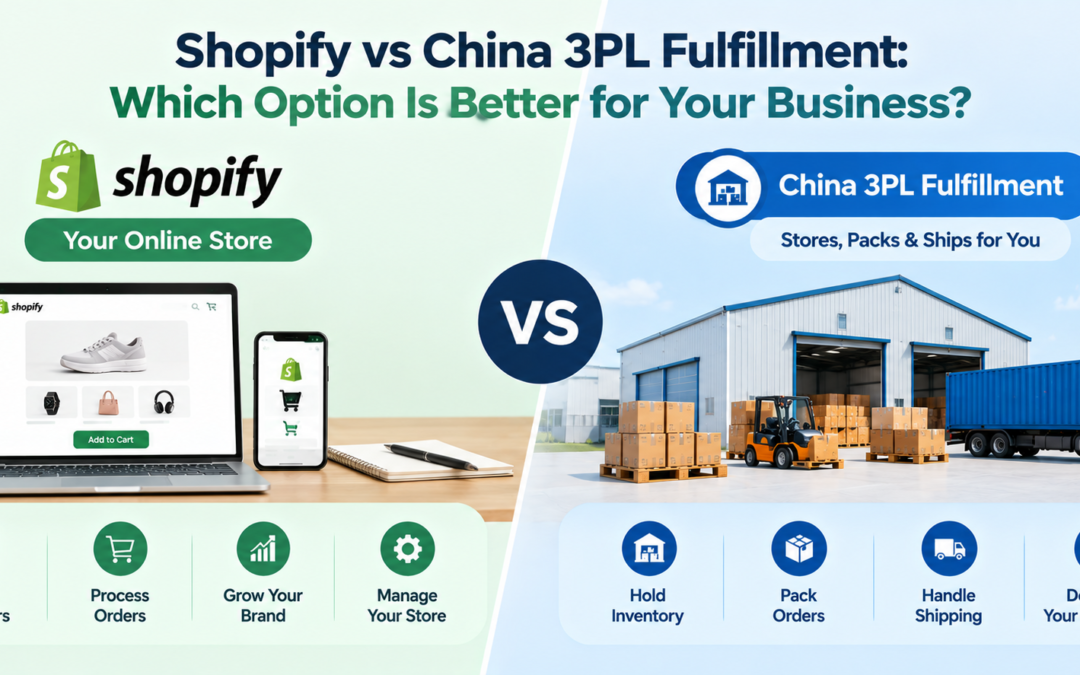
Shopify vs China 3PL Fulfillment: Which Option Is Better for Your Business?
"3PL" is one of those terms that sounds more complicated than it is, it just means a third-party logistics provider, a company that stores, packs, and ships your inventory for you. A China 3PL does that from warehouses in China, often close to where your products were made in the first place. Shopify still runs the store on top of it. Here's what actually changes once a 3PL enters the picture.
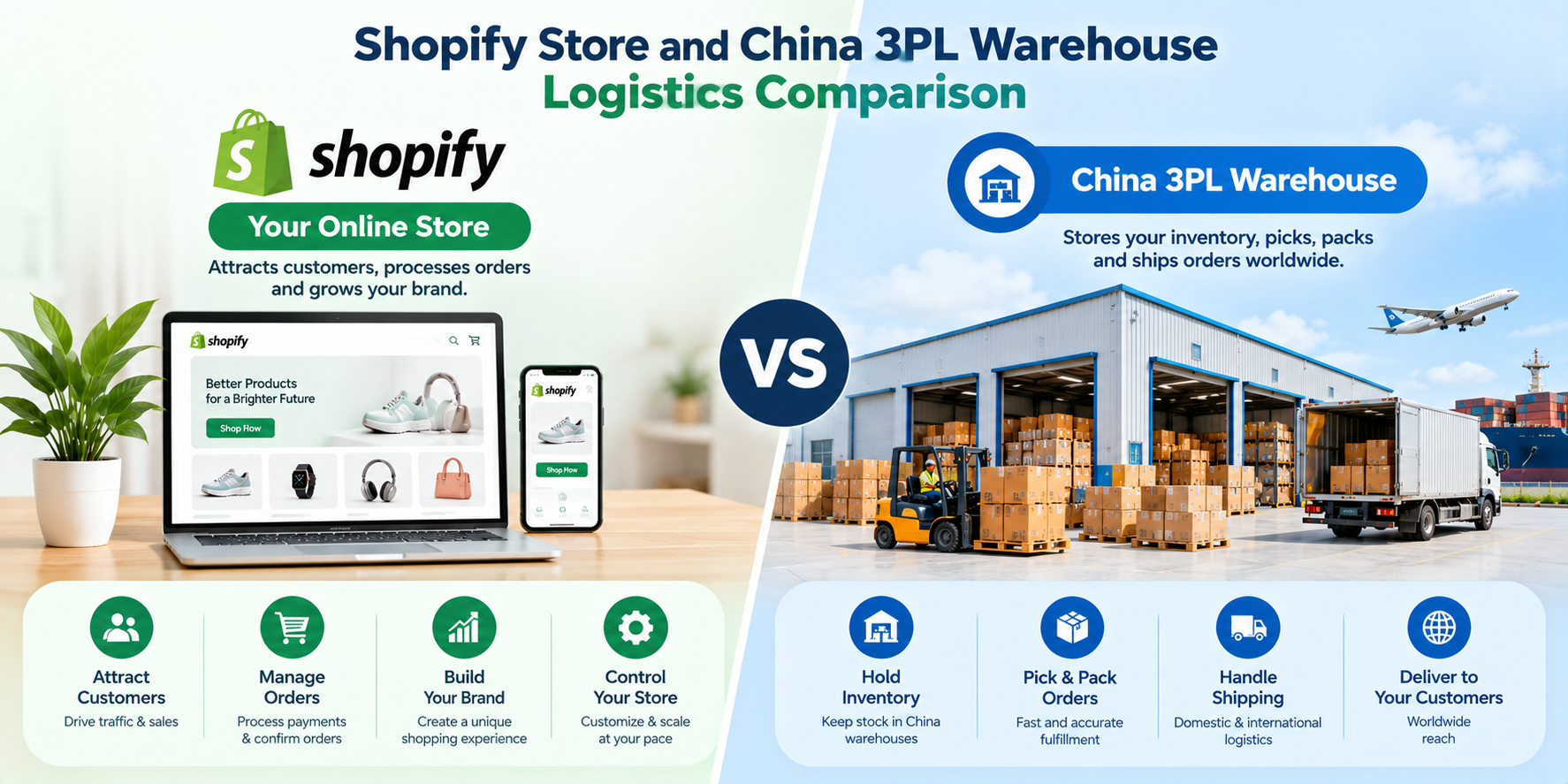
Sellers researching fulfillment options eventually run into the term "3PL" and start wondering if it's something different from the China fulfillment services or warehouses they've already heard about. Mostly, it isn't, 3PL is simply the formal industry term for a third-party company handling your storage and shipping. A China 3PL is that same idea, just based in China, usually with the added benefit of being close to the factories many Shopify sellers already source from.
What's worth digging into is what a proper 3PL setup typically includes beyond basic storage and shipping, and whether that level of service is something your business actually needs yet.
📋 Table of Contents
Two Different Jobs, Not Two Competitors
Shopify handles the storefront, listings, cart, and checkout, the parts your customer interacts with directly. A China 3PL sits entirely on the logistics side, receiving your inventory, storing it in a warehouse, and picking, packing, and shipping orders as they come through. It's a formal, often larger-scale version of what a smaller China fulfillment partner does, typically with more infrastructure and technology behind it. Neither one replaces the other, they're built to run in tandem.
How a 3PL Connects to Shopify
Most China 3PLs offer either a Shopify app or a direct API integration, syncing orders, inventory counts, and tracking numbers automatically between the two systems. Some also support multi-channel selling, meaning the same warehouse can fulfill orders from Shopify alongside other sales channels like Amazon or eBay, all from one shared inventory pool. That's a step up from a basic fulfillment app, which usually only connects to a single storefront.
What a China 3PL Adds Beyond Basic Storage
- Multi-channel fulfillment — one warehouse can serve Shopify along with other marketplaces from shared inventory, instead of managing stock separately per channel
- Warehouse management technology — real-time inventory tracking, automated reordering alerts, and detailed reporting dashboards
- Returns processing — a formal 3PL usually handles inbound returns, inspections, and restocking, not just outbound shipping
- Scalable storage capacity — space and staffing that can flex up during peak seasons without you managing extra warehouse logistics yourself
Where It Falls Short
A 3PL's scale and technology come with a higher bar to entry. Many require minimum inventory levels or monthly order volume to make the partnership worthwhile, so it's usually not a fit for a small or early-stage store. Contracts and onboarding can also take longer to set up than a plug-and-play dropshipping app, and switching 3PLs later means physically moving inventory, which adds real cost and downtime.
Side by Side
| Factor | Shopify | China 3PL |
|---|---|---|
| What it handles | Storefront, checkout, customer experience | Warehousing, order fulfillment, returns |
| Who it's for | Anyone selling online | Stores with consistent volume across channels |
| Multi-channel support | N/A | Often included |
| Entry requirements | None | May require minimum volume |
| Replaces the other? | No | No |
Setting Things Up the Right Way
-
Confirm Consistent Order Volume First
Make sure sales are steady enough to meet a 3PL's typical minimum inventory or order requirements before reaching out.
-
Connect the 3PL's App or API to Shopify
Set up automatic order and inventory syncing so fulfillment runs without manual intervention.
-
Expand to Multi-Channel If Relevant
If you sell on more than just Shopify, ask whether the 3PL can fulfill those channels from the same shared inventory pool.
Ready for 3PL-Level Fulfillment?
OneShipPros helps Shopify sellers set up scalable, multi-channel fulfillment from China as their business grows.
Get Started with OneShipPros →