
Shopify Store vs China Fulfillment Partner: Do You Need Both?
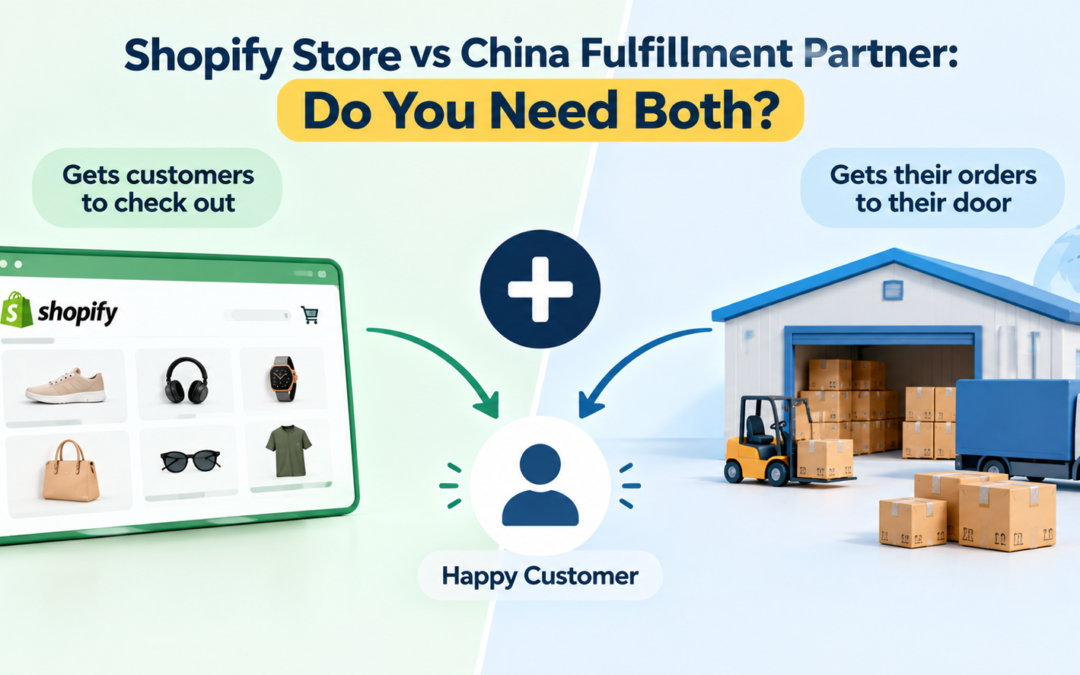
Short answer, most stores eventually do, just not from the very first sale. The longer answer is more useful though. A Shopify store and a China fulfillment partner solve two completely different problems, one gets customers to check out, the other gets their orders to their door. Whether you need the second one yet depends on where your store actually stands right now.
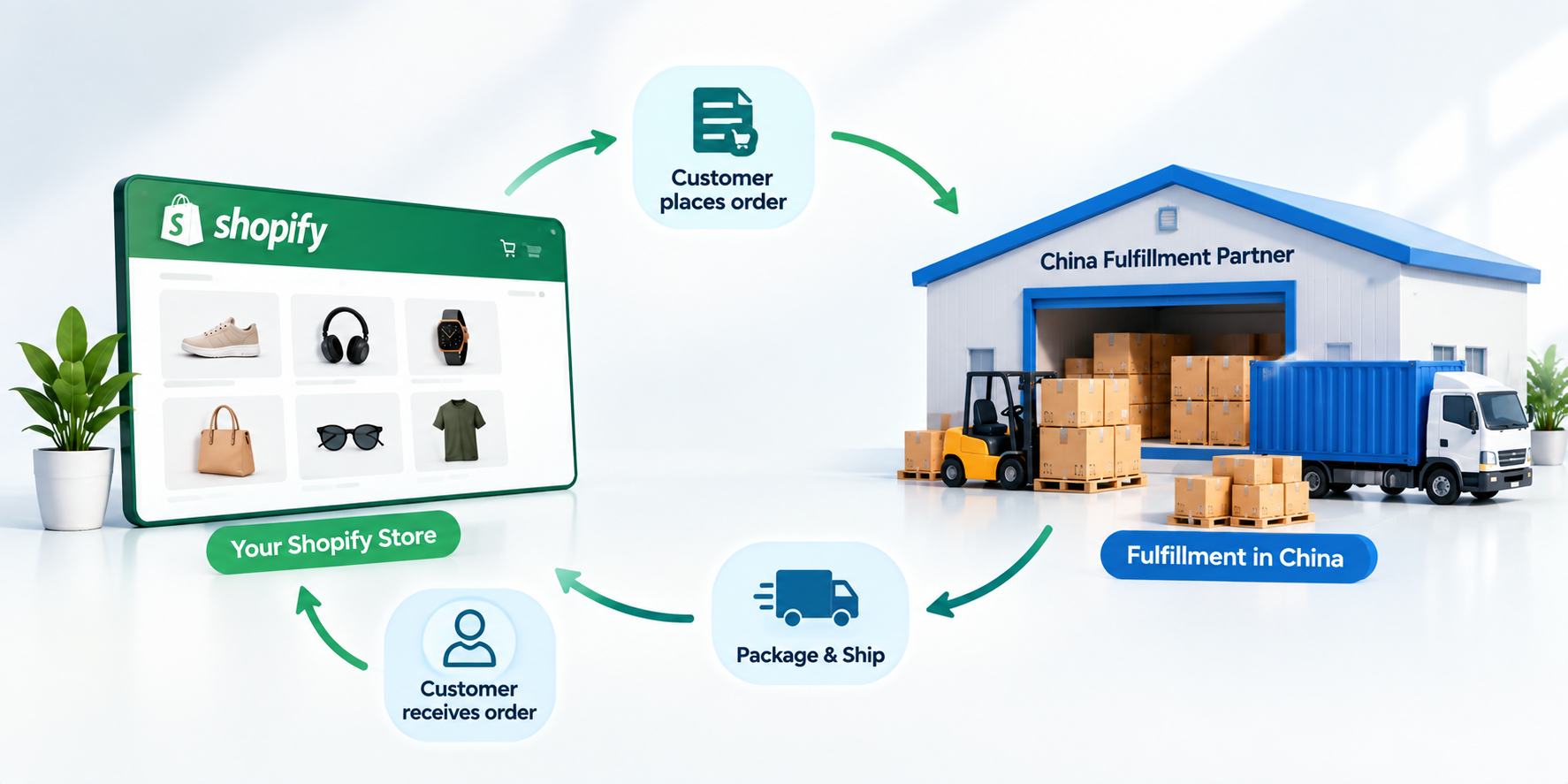
New sellers often treat this like an either-or decision, as if setting up a Shopify store means fulfillment is already sorted, or as if bringing on a fulfillment partner is something only "serious" businesses need. Neither framing is quite right. Shopify gets a store live and taking orders. A China fulfillment partner is a separate relationship entirely, one focused on storing inventory, packing it correctly, and getting it shipped reliably once a sale happens.
The real question isn't whether the two compete. It's whether your store has reached the point where bringing in a dedicated fulfillment partner actually pays off.
📋 Table of Contents
Two Different Roles in the Same Business
Shopify is the platform your entire storefront runs on, the theme, product pages, cart, and checkout that customers actually interact with. A China fulfillment partner is a separate business relationship, usually a warehouse operator who stores your inventory, packs your orders, and ships them out under agreed terms. One is software you subscribe to. The other is a company you work with directly. They're not alternatives to each other, they just operate on completely different sides of the same sale.
How a Fulfillment Partner Plugs Into Shopify
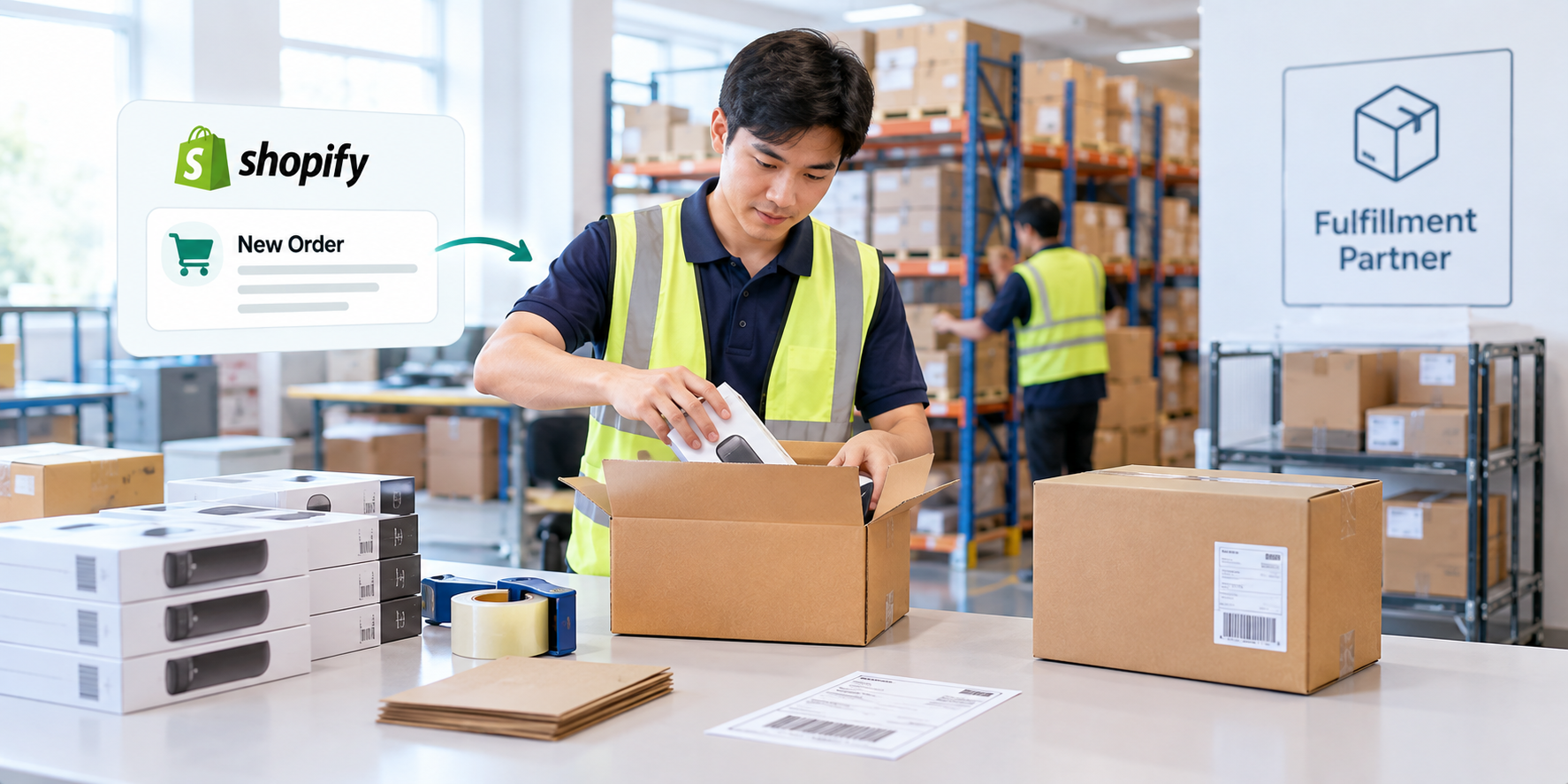
Most China fulfillment partners connect through an app integration or a direct API link with your Shopify store, so orders sync automatically the moment a customer checks out. Some sellers manage this through a self-serve app, others work with a dedicated account manager who handles setup and ongoing coordination. Either way, the aim is the same, an order placed on Shopify should reach the warehouse without anyone manually forwarding it.
What a Fulfillment Partner Actually Adds
- Dedicated account support — a real point of contact for quality issues, delays, or custom requests, rather than a shared, anonymous supplier queue
- Custom packaging and branding — full control over how a package looks and feels since the inventory and process are dedicated to your store
- Consistent, negotiated shipping rates — rates that often improve as your volume grows, unlike the flatter per-order costs of dropshipping
- Quality control before shipment — inventory can be inspected in bulk, catching issues before they ever reach a customer
Signs You Might Not Need One Yet
Not every store benefits from a fulfillment partner right away. If you're still testing which products sell, running low and unpredictable order volume, or don't have consistent cash flow to hold inventory, a dropshipping app is usually still the better fit. Bringing on a fulfillment partner too early means paying for warehousing and support you're not yet using enough to justify.
Side by Side
| Factor | Shopify Alone | Shopify + Fulfillment Partner |
|---|---|---|
| What it handles | Storefront, checkout, customer experience | Everything Shopify does, plus warehousing and shipping |
| Best for | New or untested stores | Stores with proven, consistent order volume |
| Inventory risk | None on its own | You hold and pay for stock |
| Support level | Self-serve, app-based | Dedicated account relationship |
| Replaces the other? | No | No |
Deciding When to Bring One On
-
Get the Shopify Store Running Cleanly First
Make sure branding, listings, and checkout are solid, and that at least a few products are selling consistently.
-
Watch for the Signals
Rising per-order shipping costs, inconsistent supplier delivery times, or a product that keeps selling are all signs it's time to look into a fulfillment partner.
-
Bring On a Partner for What's Proven
Move consistent sellers to a dedicated China fulfillment partner while newer, untested products stay on your existing dropshipping setup.
Wondering If You're Ready for a Fulfillment Partner?
OneShipPros works with Shopify sellers to figure out the right time to move from dropshipping to a dedicated fulfillment setup.
Get Started with OneShipPros →