
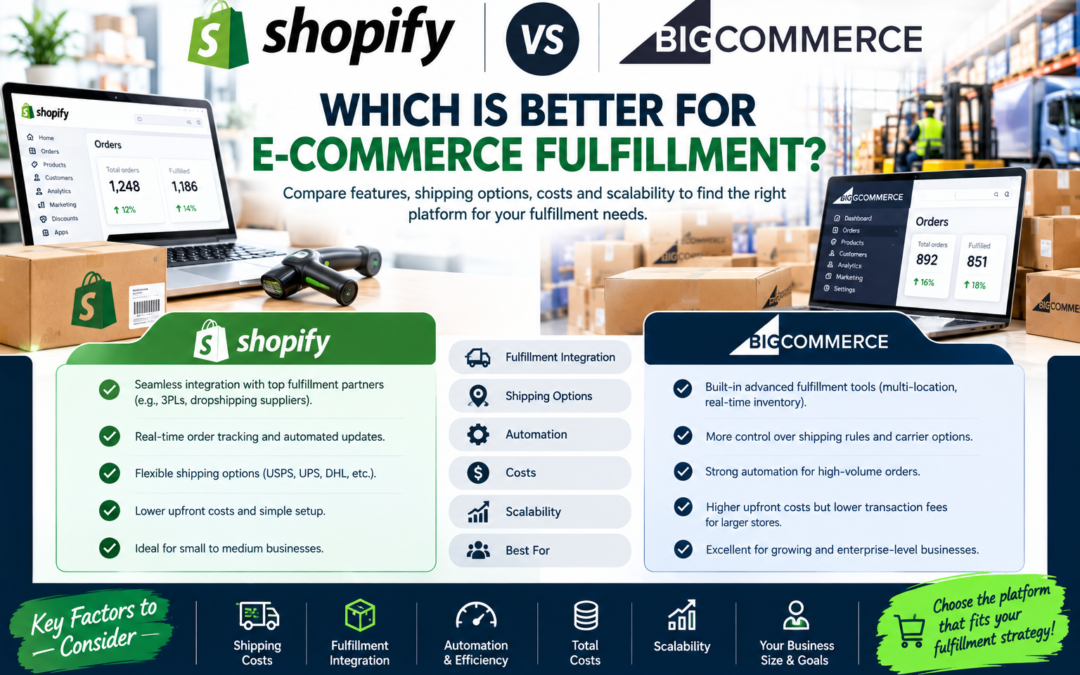
Shopify vs BigCommerce: Which Is Better for E-commerce Fulfillment?
Shopify and BigCommerce both handle ecommerce fulfillment integration well, but they get there differently, Shopify leaning on a huge app ecosystem, BigCommerce building more capability in natively. For a seller weighing the two specifically around fulfillment, that difference matters. Here's how they actually compare.
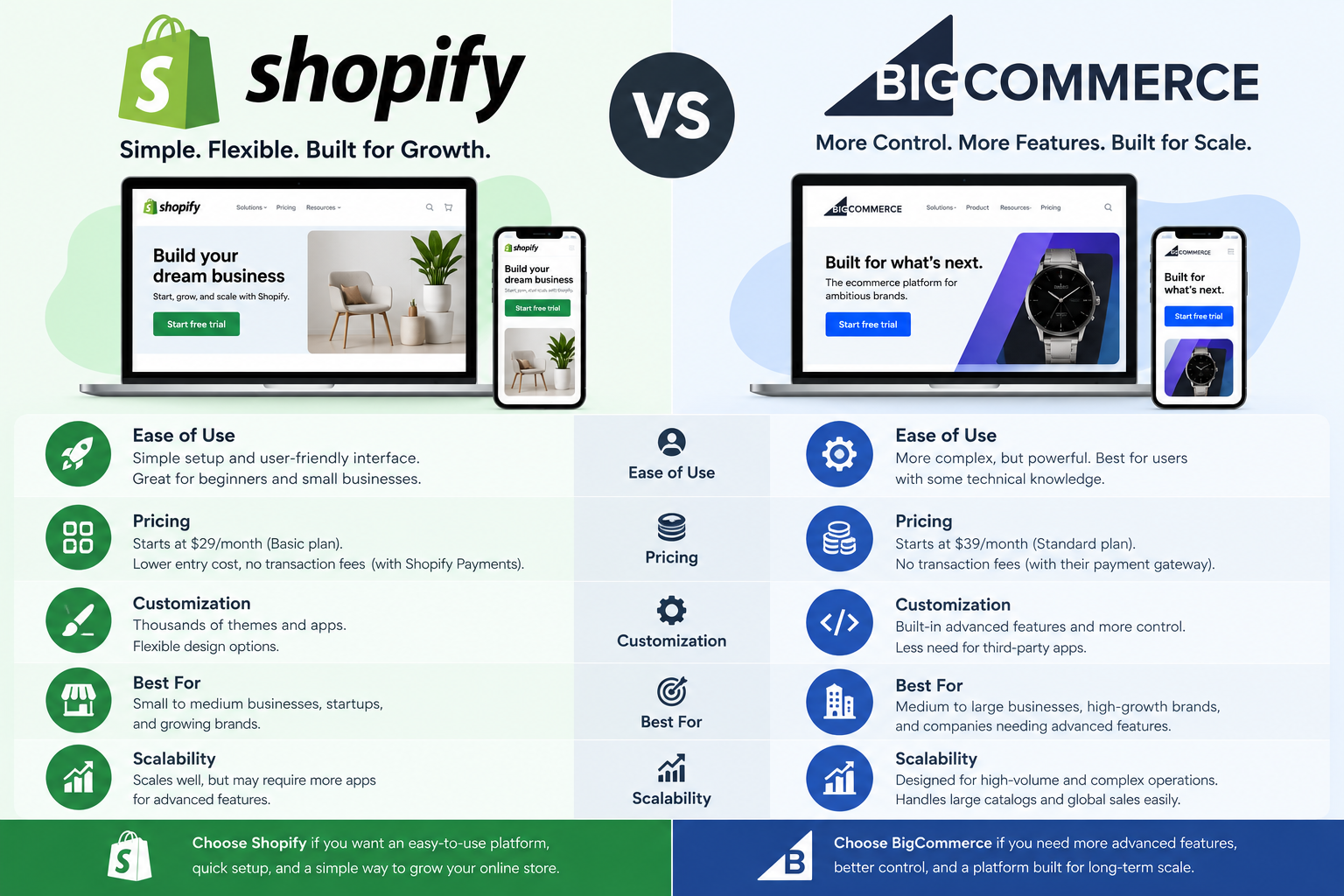
Shopify and BigCommerce are both well-established ecommerce platforms, and both support solid fulfillment integrations, but the paths they take differ. Shopify's core strength is its enormous app ecosystem, nearly any fulfillment or logistics need has a dedicated app built for it. BigCommerce takes a more built-in approach, bundling more native functionality, including strong multi-channel selling support, without requiring as many third-party apps to get there.
Here's how the two platforms actually compare specifically around fulfillment integration and operational needs.
📋 Table of Contents
Fulfillment App Ecosystem
Shopify's app store is significantly larger than BigCommerce's, which means more choice, and more competition among developers, when it comes to fulfillment and logistics apps specifically. For a seller with a very particular fulfillment workflow need, there's a reasonably good chance a purpose-built Shopify app already exists for it. BigCommerce's app marketplace is smaller, though it covers the core fulfillment integration needs most sellers actually have.
Shopify's App Advantage
- Larger overall app marketplace
- More fulfillment-specific niche apps available
- More competition driving app quality and updates
- Well-established integrations with major 3PLs
Where BigCommerce Differs
- Smaller app marketplace overall
- Fewer niche, highly specific fulfillment apps
- Relies more on built-in native functionality instead
- Still covers core fulfillment integration needs well
Native Built-In Features
BigCommerce tends to bundle more functionality directly into the core platform that Shopify often requires a separate app to achieve, this can mean fewer moving parts and fewer app subscription costs for features BigCommerce includes by default. Whether this matters significantly depends on which specific features a seller actually needs, for some, BigCommerce's native approach simplifies things; for others, Shopify's app-based flexibility offers more precise customization.
Multi-Channel Selling Support
- BigCommerce's native multi-channel strength — BigCommerce is often noted for solid built-in support for selling across multiple channels without heavy reliance on third-party apps
- Shopify's app-based multi-channel approach — Shopify supports multi-channel selling well too, largely through its app ecosystem rather than deep native functionality
- Fulfillment implications of multi-channel selling — selling across several channels increases the importance of accurate, synced inventory across all of them, regardless of platform
- Evaluate based on your actual channel mix — the right platform depends on which specific channels matter most to your business
Fulfillment Warehouse Compatibility
Most established China fulfillment warehouses build integrations for both major platforms, since both represent significant market share. Platform choice generally doesn't restrict which fulfillment partner a seller can work with, though it's still worth confirming directly with a prospective fulfillment partner that their specific integration supports whichever platform you're using, and how mature that integration actually is.
Shopify vs BigCommerce at a Glance
| Factor | Shopify | BigCommerce |
|---|---|---|
| App Ecosystem Size | Larger | Smaller |
| Native Built-In Features | Fewer, more app-reliant | More, less app-reliant |
| Multi-Channel Selling | Strong via apps | Strong natively |
| Fulfillment Warehouse Support | Widely supported | Widely supported |
Which Platform Fits Your Fulfillment Needs
-
Assess Your Specific Fulfillment Needs
Identify the exact fulfillment features and integrations your business needs, then check which platform's app store or native features actually cover them.
-
Consider Your Multi-Channel Strategy
If multi-channel selling is a priority, evaluate BigCommerce's native support against Shopify's app-based approach for your specific channel mix.
-
Confirm Fulfillment Partner Compatibility Directly
Before committing to either platform, confirm with your prospective China fulfillment warehouse that they have a mature, well-tested integration for it.
Need Reliable Fulfillment for Your Store?
OneShipPros supports fulfillment integrations for growing ecommerce stores on major platforms.
Get Started with OneShipPros →