
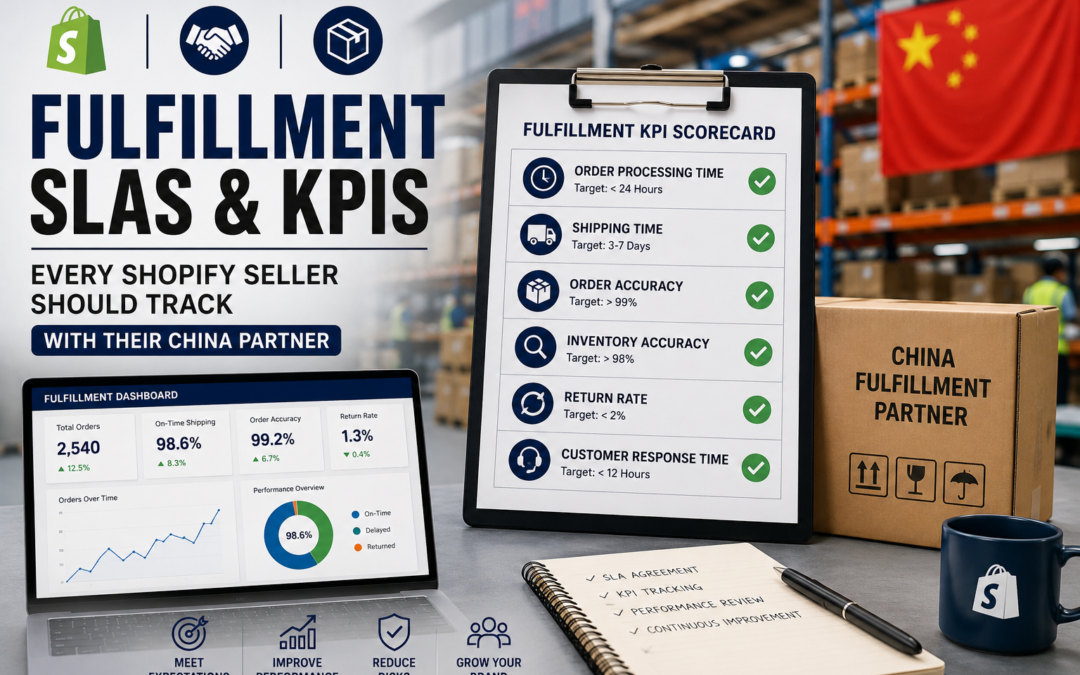
Fulfillment SLAs & KPIs Every Shopify Seller Should Track with Their China Partner
"They're pretty reliable" isn't a metric. Here are the specific SLAs and KPIs Shopify sellers should actually track with a China fulfillment partner so performance is measured, not just assumed.
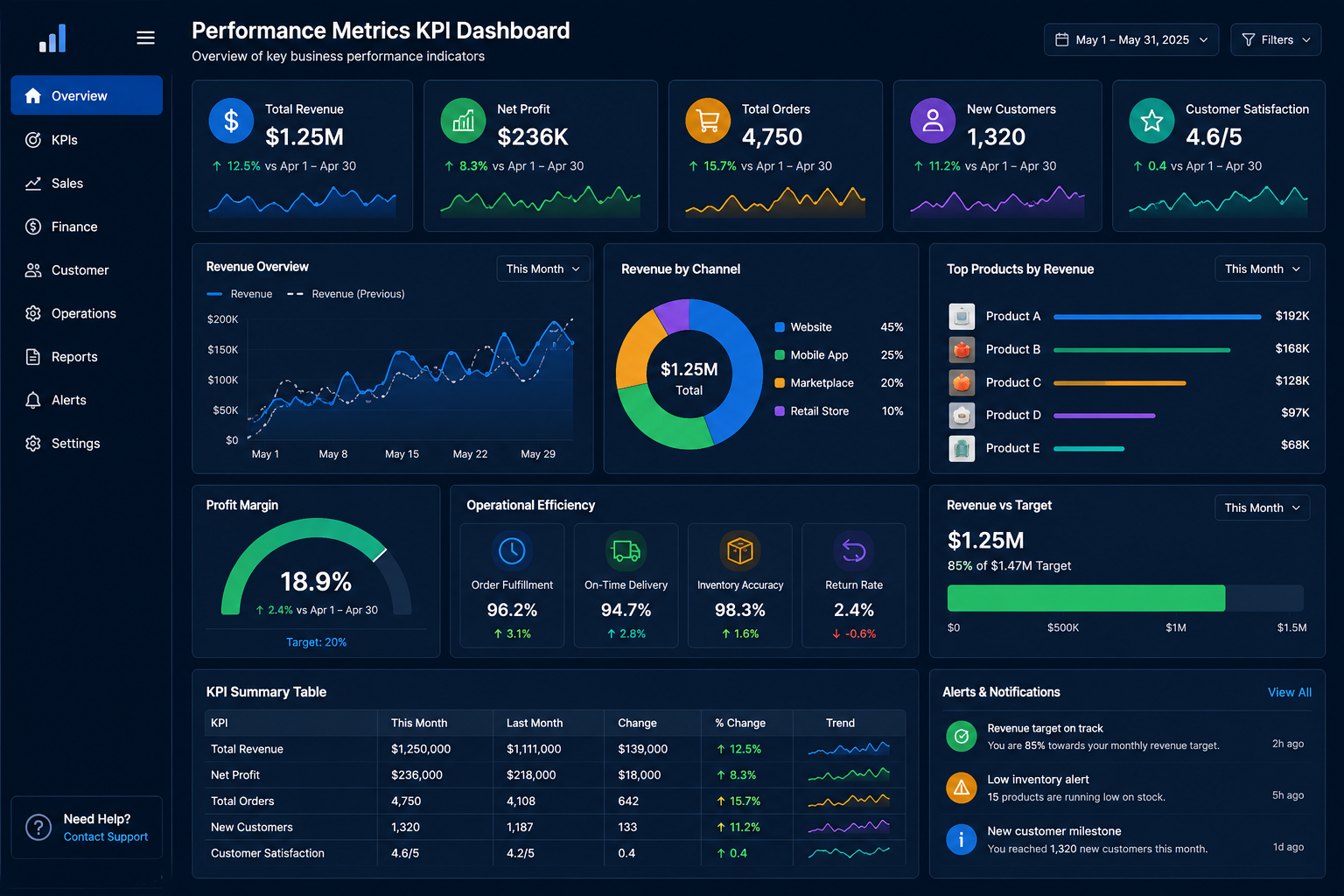
A lot of Shopify sellers judge their fulfillment partner the same way they judge most vendors: gut feeling, occasional complaints, and a vague sense of whether things are "going fine." That works until it doesn't, usually right when a problem has already been building for months without anyone noticing because there was no number tracking it.
SLAs and KPIs turn that vague impression into something measurable, which makes it possible to catch a decline before it becomes a pattern of complaints.
📋 Table of Contents
Why SLAs Matter More Than General Trust
An SLA, or service level agreement, puts a specific, measurable commitment behind a promise instead of a vague assurance like "we ship fast." Without one, there's no clear standard to hold a fulfillment partner to, and no early warning system if performance starts slipping. A KPI is the ongoing measurement that shows whether those commitments are actually being met over time, not just on the day the contract was signed.
Together, they turn fulfillment performance from something you assume into something you can actually verify.
Where Sellers Go Without Any Real Tracking
What Happens Without SLAs or KPIs
- Performance issues go unnoticed until customer complaints pile up
- No clear standard to hold the fulfillment agent accountable to
- Difficult to compare performance against other potential partners
- Problems get addressed reactively instead of caught early
What Tracking Actually Provides
- Early warning when performance starts to decline
- A clear, agreed-upon standard both sides can reference
- Objective data for renewal or renegotiation conversations
- Confidence that issues are being caught before customers notice
The Core KPIs Worth Tracking
A handful of KPIs cover most of what matters in a fulfillment relationship: order processing time (how long between order placement and shipment), pick-and-pack accuracy rate (the percentage of orders shipped correctly), on-time shipping percentage (orders that ship within the agreed window), and support response time (how quickly issues get acknowledged and resolved). Tracking these consistently, rather than only noticing when something goes wrong, is what turns fulfillment management from reactive to proactive.
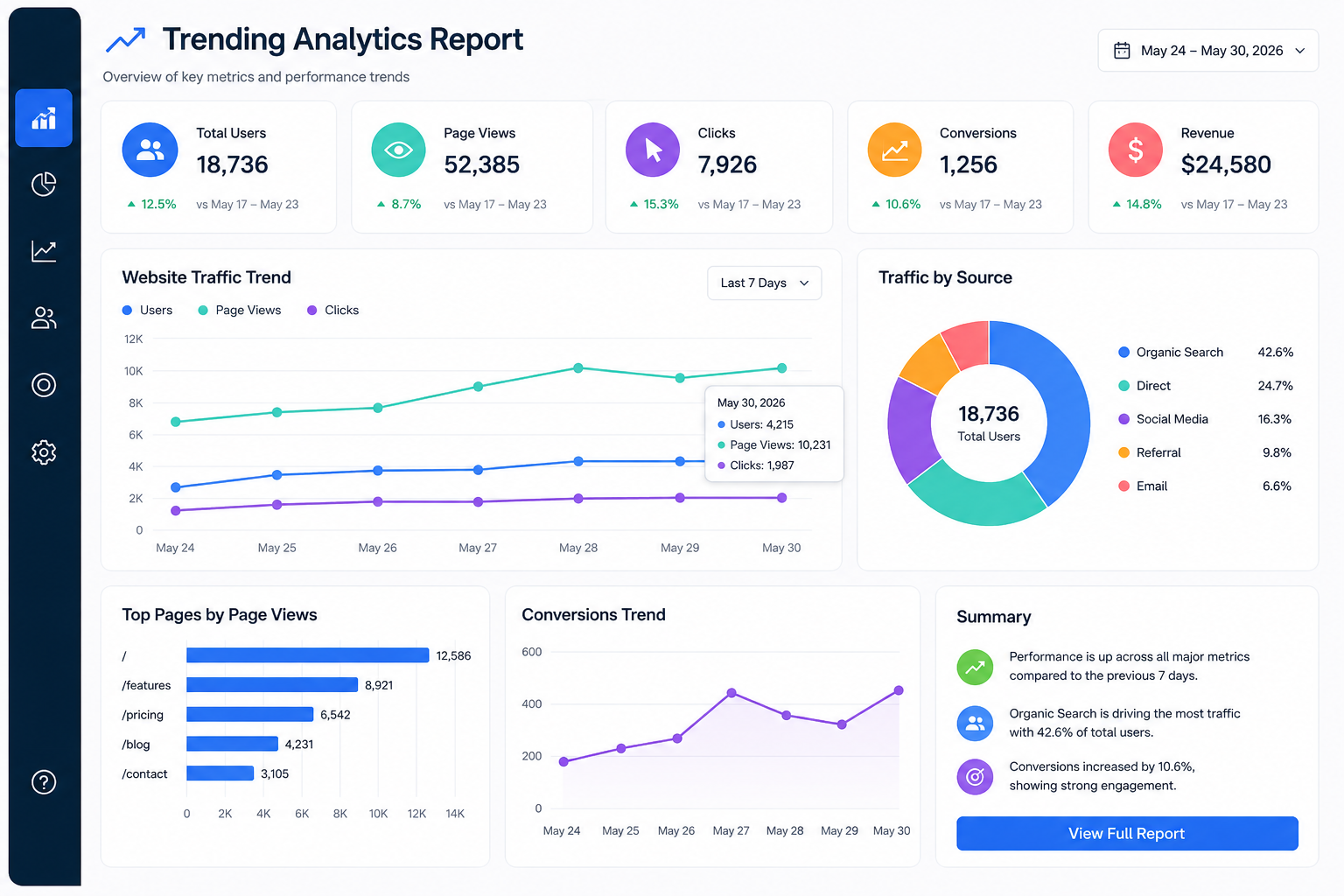
Most of this data should be visible through your Shopify order and fulfillment reporting, cross-referenced against whatever reporting the fulfillment agent provides directly.
What to Put in Writing with Your Fulfillment Agent
- Specific numeric targets — get exact commitments (e.g. "99% accuracy," "same-day processing for orders before 2pm") rather than vague language
- Consequences for missed SLAs — clarify what happens if targets aren't consistently met, whether that's a fee credit or a formal review
- Reporting frequency and format — agree on how often you'll receive performance data and in what format
- Peak season adjustments — confirm whether SLAs shift during BFCM or other high-volume periods, and by how much
- Review and renegotiation triggers — set a clear point at which underperformance prompts a formal conversation, not just informal frustration
Target Benchmarks for Common Fulfillment KPIs
| KPI | Reasonable Target | Why It Matters |
|---|---|---|
| Order Processing Time | Same-day or next-day for standard orders | Directly affects total delivery time |
| Pick-and-Pack Accuracy | 99% or higher | Fewer wrong items and return requests |
| On-Time Shipping Rate | 95% or higher | Consistency with quoted delivery windows |
| Support Response Time | Within 24 hours | Faster resolution when issues do occur |
| Inventory Count Accuracy | 99% or higher | Prevents overselling and stockout surprises |
How Often to Review These Numbers
-
Set Up Baseline Tracking First
Before evaluating whether performance is good or bad, spend the first month or two simply collecting accurate baseline numbers for each KPI.
-
Review Monthly Under Normal Conditions
Once a baseline exists, a monthly check-in is usually sufficient to catch any gradual decline before it becomes a real problem.
-
Increase Frequency During Peak Periods
Around BFCM or other high-volume stretches, shift to weekly or even daily monitoring, since problems compound faster when order volume is elevated.
Want a Fulfillment Partner That Reports Real Numbers?
OneShipPros provides transparent SLA commitments and regular KPI reporting, so you always know exactly how your fulfillment is performing.
Get Started with OneShipPros →