
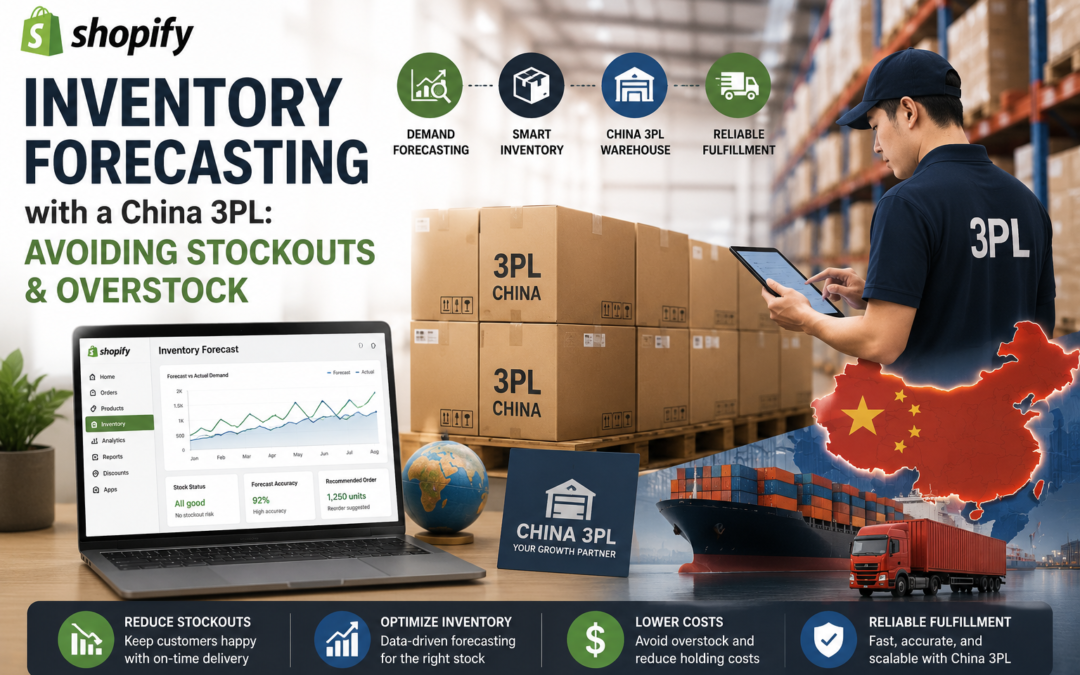
Shopify Inventory Forecasting with a China 3PL: Avoiding Stockouts & Overstock
Long lead times don't have to mean guesswork. Here's how to build a forecasting process for Shopify inventory sourced from China one that keeps you from running out of bestsellers or sitting on stock that won't move.
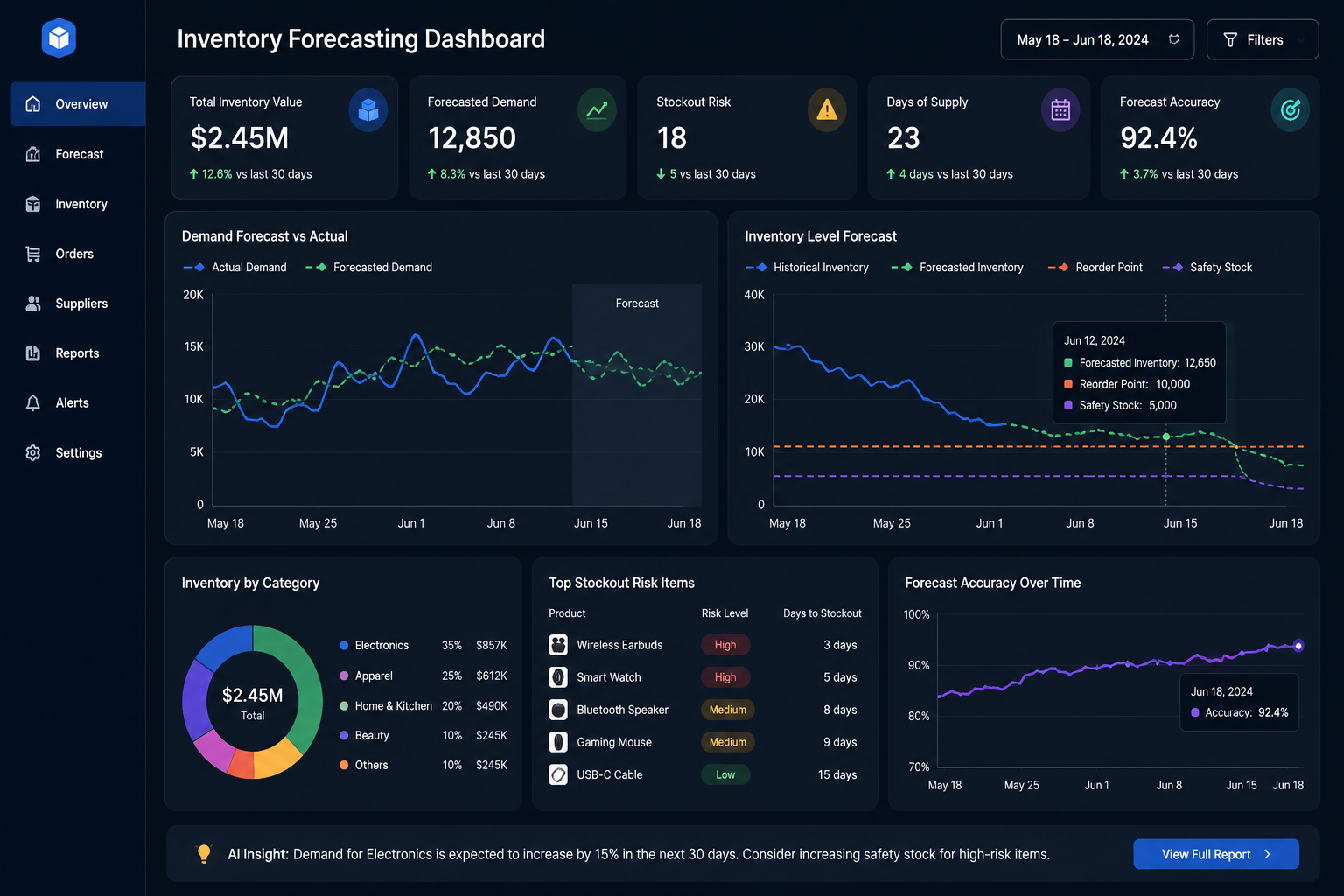
Forecasting inventory is hard enough with a domestic supplier who can turn around a rush order in days. Add a China-based supply chain into the mix, where production and freight can take two months combined, and a forecasting mistake stops being a minor inconvenience and starts being a real revenue problem either a stockout on your bestseller or cash tied up in stock that isn't moving.
The good news is that forecasting for a longer lead time isn't fundamentally different, it just requires planning further ahead and trusting the data more than instinct.
📋 Table of Contents
Why Forecasting Is Harder with a China Supply Chain
A domestic reorder might take one to two weeks to land back on the shelf. A China-sourced reorder usually involves production time at the factory plus ocean or air freight, which combined can easily stretch past eight weeks. That gap means a forecasting mistake shows up on the shelf months after the decision was made, by which point it's too late to course-correct quickly.
This is why forecasting for China-sourced inventory has to work further ahead of actual demand than most sellers are used to if they started out with a domestic supplier.
Where Forecasting Usually Goes Wrong
Common Forecasting Mistakes
- Reordering based on current stock level instead of projected depletion date
- Ignoring seasonality when forecasting reorder timing
- Ordering a large safety buffer "just in case," tying up cash unnecessarily
- Not adjusting forecasts after a marketing push changes sales velocity
What Accurate Forecasting Looks Like
- Reorder points based on sales velocity plus full lead time
- Seasonal adjustments built in ahead of known demand spikes
- A reasonable, calculated safety buffer, not a guess
- Forecasts reviewed and adjusted monthly against actual sales
Building a Forecast That Accounts for Lead Time
The core of good forecasting is simple math: take your average daily or weekly sales velocity for a SKU, multiply it by your total lead time (production plus freight plus any buffer), and that's roughly how much stock needs to be on hand or in transit at any given moment to avoid a stockout. The complexity comes from keeping that number updated as sales velocity changes, and from layering in a safety buffer that protects against demand spikes without overcommitting cash to slow-moving stock.
Getting this right also depends on accurate, real-time stock visibility through your Shopify inventory management setup, since a forecast built on outdated stock numbers will be wrong no matter how good the underlying math is.

What to Track for Accurate Forecasting
- Sales velocity per SKU — track units sold per day or week for each product individually, not just store-wide averages
- Total combined lead time — production time plus freight transit time plus any customs or receiving delay
- Seasonal demand patterns — note which SKUs spike around specific months or events so reorders can be timed ahead of them
- Reorder point per SKU — the stock level that should trigger a new purchase order, calculated from velocity and lead time
- Actual vs forecasted sales — review monthly to catch forecasting drift before it becomes a stockout or overstock problem
Stockout Risk vs Overstock Risk: Finding the Balance
| Risk Factor | Stockout Risk (Ordering Too Late) | Overstock Risk (Ordering Too Much) |
|---|---|---|
| Immediate Impact | Lost sales, unhappy customers | Cash tied up in unsold stock |
| Recovery Speed | Slow, full lead time to restock | Slow, requires selling through excess |
| Root Cause | Reorder point set too low or too late | Safety buffer set too high, or demand overestimated |
| Prevention | Accurate lead time and velocity tracking | Realistic safety buffer, monthly forecast review |
When to Reorder: A Simple Framework
-
Calculate Your Reorder Point
Multiply average daily sales velocity by total lead time in days, then add a safety buffer based on demand variability that number is your reorder trigger point for each SKU.
-
Adjust for Seasonality in Advance
If a SKU historically spikes around a certain month or event, move its reorder point earlier for that period rather than reacting once the spike has already started.
-
Review Monthly, Not Just at Reorder Time
Compare actual sales against forecasted sales every month to catch drift early, adjusting reorder points before they cause a stockout or unnecessary overstock.
Want Help Building a Forecasting Process That Works?
OneShipPros helps Shopify sellers set accurate reorder points and lead time tracking, so stock decisions are based on real data, not guesswork.
Get Started with OneShipPros →