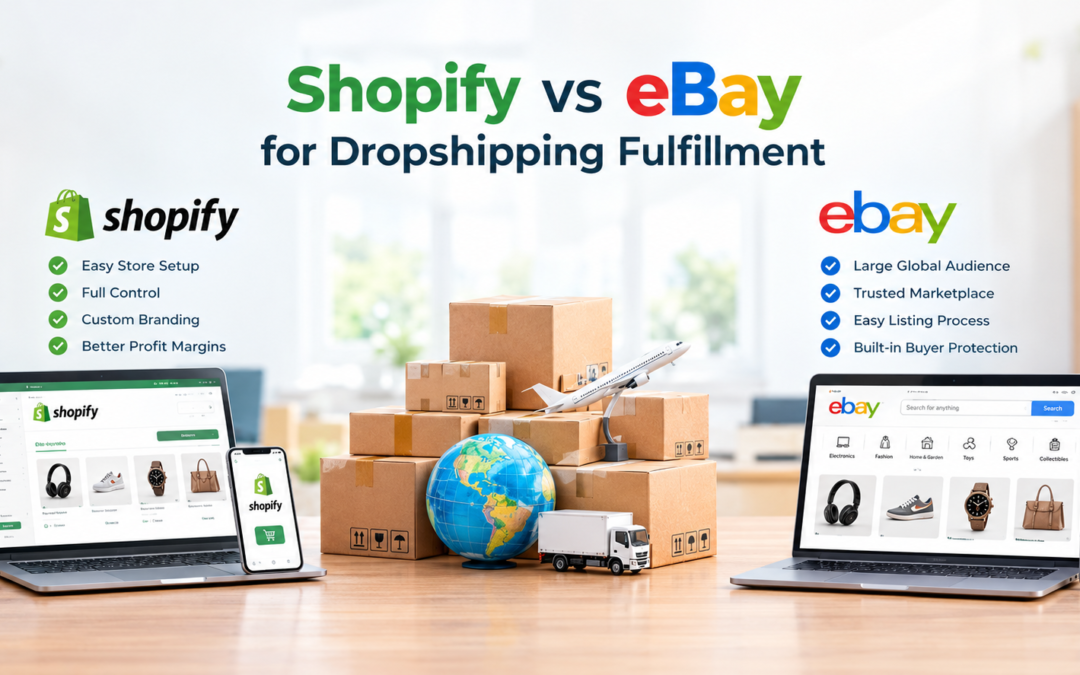
Shopify vs eBay for Dropshipping Fulfillment
Shopify vs eBay dropshipping is really a choice between owning a store and renting space in a marketplace. Shopify gives you control over suppliers, branding, and fulfillment automation. eBay gives you ready-made buyers, but with stricter rules on how orders are sourced and shipped. Here is how the two compare for fulfillment.
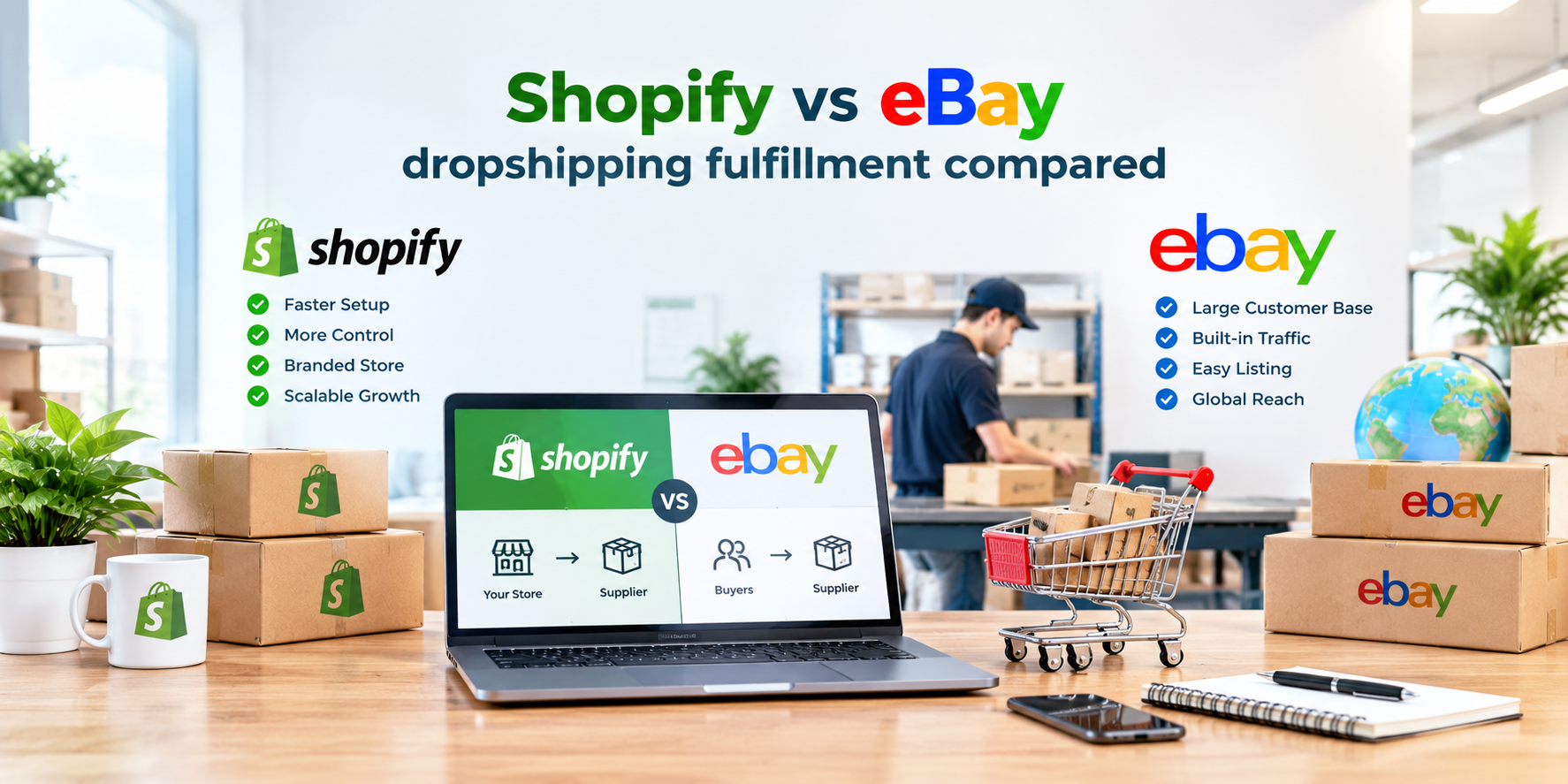
Many dropshippers start by asking where they should list their first products. eBay is tempting because buyers are already there, so you can test a product without building traffic from scratch. Shopify takes longer to set up and needs its own marketing, but it gives you a store you fully control.
For dropshipping, fulfillment is where the two platforms differ most. This guide compares how each one handles supplier connections, order automation, shipping times, tracking, and returns, so you can choose the one that fits your plan.
📋 Table of Contents
The Core Difference Between the Two
Shopify is a platform for running your own independent store. You pick your suppliers, design your brand, and own the customer relationship. eBay is a marketplace, so shoppers arrive through eBay search and your listings compete inside eBay's rules, fees, and seller ratings.
For dropshipping, this means Shopify offers more freedom and automation, while eBay offers faster access to buyers but less control over how you fulfill orders.
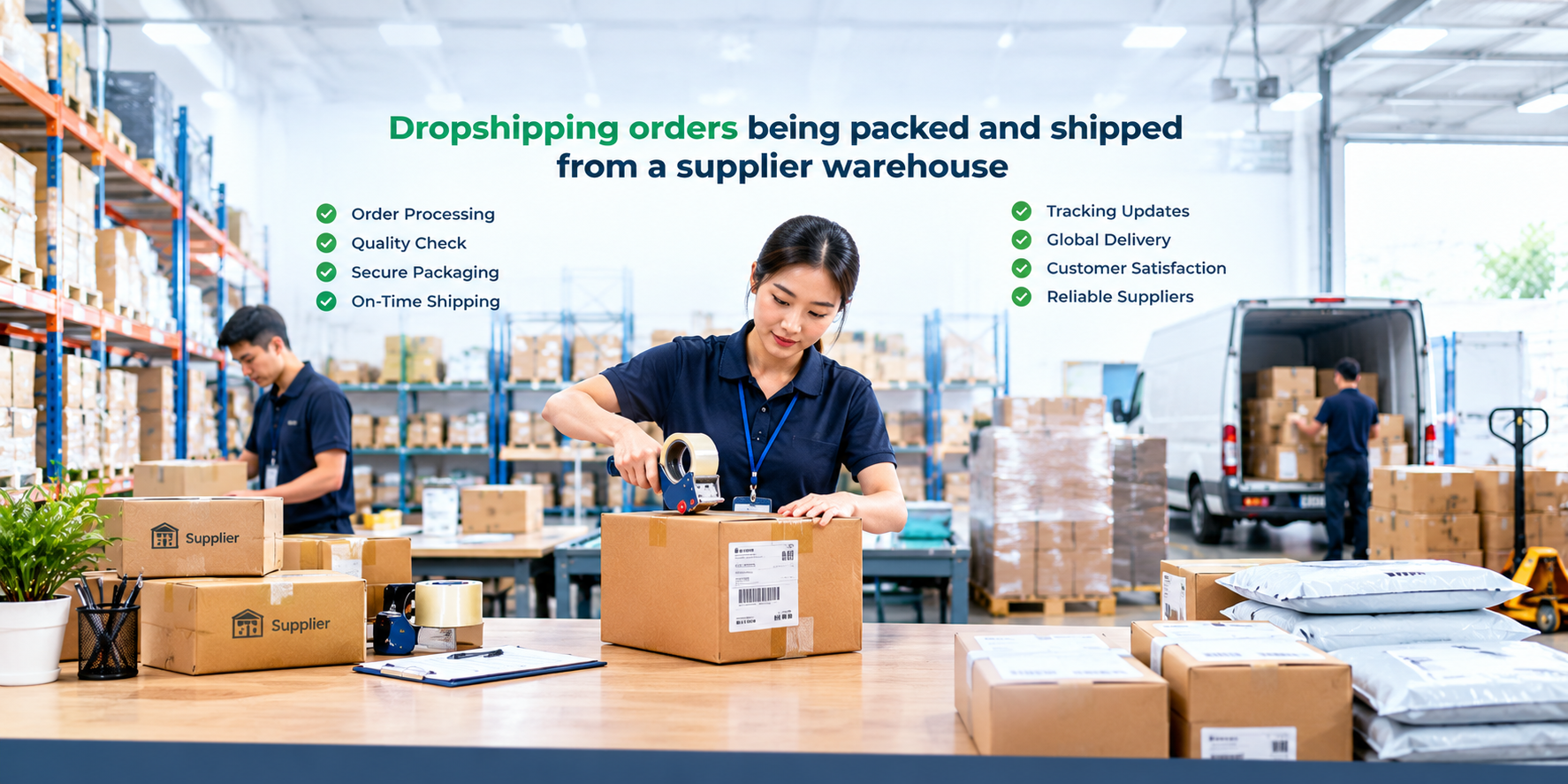
How Fulfillment Works on Each Platform
On Shopify, dropshipping apps can import supplier products, sync prices and stock, and send each new order to the supplier automatically. Many also push tracking numbers back to the customer. This reduces manual work as your order volume grows, and you can switch suppliers or add backup ones without changing platforms.
On eBay, you can still dropship, but the tooling is more limited and more of the process tends to be manual or handled through third-party listing tools. You are also held to eBay's handling time and tracking expectations, so a slow supplier can quickly hurt your seller performance.
Supplier Apps
Shopify connects to many dropshipping and fulfillment apps
Order Automation
Orders can flow to suppliers with little manual work
Handling Time
eBay expects you to ship and provide tracking on time
Returns
You stay responsible for returns on both platforms
eBay Dropshipping Rules to Know
eBay allows dropshipping, but you remain responsible for the item, the shipping time, the tracking, and any returns or disputes. In general, buying an item from another retail marketplace and having it shipped straight to your buyer is not something eBay's policy supports, so dropshippers usually need to work with wholesale suppliers or approved fulfillment partners.
Because eBay measures sellers on things like late shipments, tracking uploads, and defect rates, long supplier shipping times can become a real risk. Always read the current policy and plan your supplier's processing and delivery times before you list.
Pros and Cons for Dropshipping
✓ Shopify Strengths
- Large library of dropshipping and fulfillment apps
- Automated order routing and tracking updates
- Full control over branding and customer data
- Easy to add or switch suppliers
✗ Shopify Limitations
- No built-in marketplace audience
- You must build your own traffic
- App subscriptions can add up over time
✓ eBay Strengths
- Built-in audience of active buyers
- Quick way to test product demand
- Low barrier to list your first items
- Useful for a wide range of product categories
✗ eBay Limitations
- Strict handling time and tracking standards
- Policy limits on how items can be sourced
- Less control over branding and repeat customers
- Seller performance issues can limit your account
Fees and Costs to Compare
Shopify typically charges a monthly plan plus payment processing fees, and you may add paid apps for dropshipping or fulfillment. eBay typically charges selling fees on each sale, and may charge extra fees for optional listing upgrades or promoted listings.
Neither is automatically cheaper. A marketplace takes a share of each sale in exchange for traffic, while a store subscription is a fixed cost that leaves marketing up to you. Work out the full cost per order, including product cost, shipping, platform fees, and advertising, before you decide.
Side by Side
| Factor | Shopify | eBay |
|---|---|---|
| Platform type | Independent store builder | Marketplace |
| Dropshipping apps and tools | Extensive | More limited |
| Order automation | Strong | Often more manual |
| Built-in shoppers | No, bring your own | Yes |
| Shipping time pressure | Set by you | Strict handling standards |
| Brand control | Full control | Limited by marketplace |
| Best for | Long-term dropshipping brands | Quick product testing |
Which One to Actually Pick
-
Define Your Goal
Decide whether you want to validate product ideas quickly or build a branded store with repeat customers.
-
Check Your Supplier's Shipping Times
Confirm processing and delivery times, and whether the supplier provides tracking, before you commit on either platform.
-
Read the Platform Rules
Review eBay's current dropshipping policy and Shopify's terms so you know what is allowed before you invest in inventory.
-
Run a Small Test Order Batch
Place a few real orders to check packaging, delivery speed, and tracking before you list a full catalog.
Need Reliable Dropshipping Fulfillment?
OneShipPros helps online sellers set up dependable sourcing and fulfillment, whatever platform their store runs on.
Get Started with OneShipPros →