
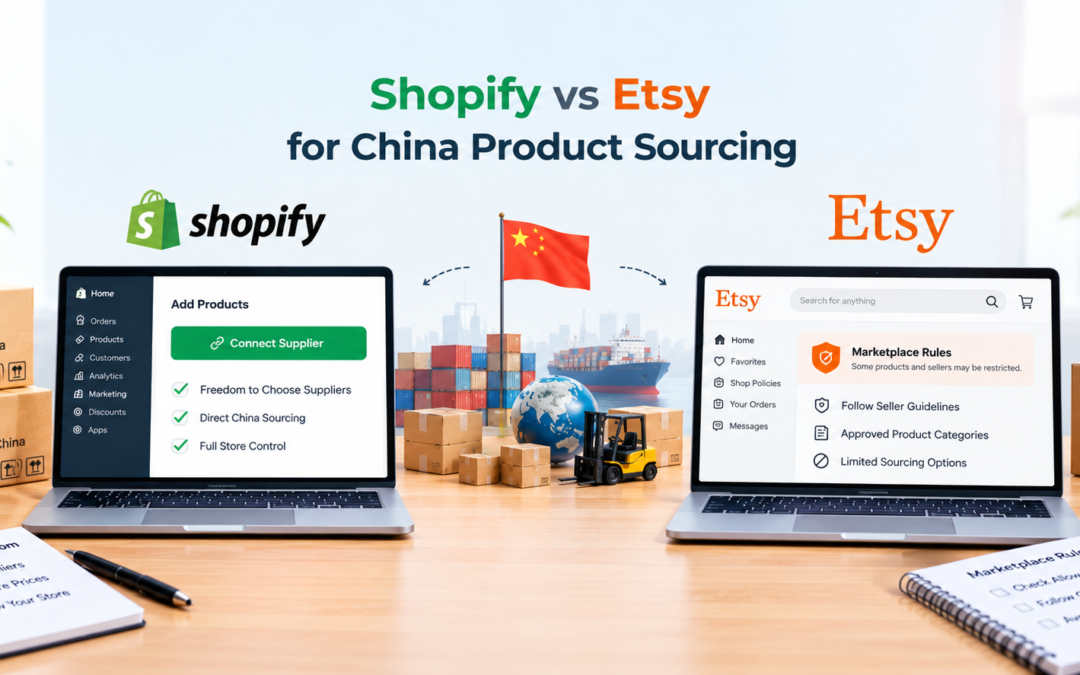
Shopify vs Etsy for China Product Sourcing
Shopify and Etsy look similar from the outside, but they treat sourcing from China very differently. Shopify is your own store and lets you connect to suppliers freely. Etsy is a marketplace with rules about who makes what you sell. Knowing that difference early can save you from building a shop on the wrong platform.
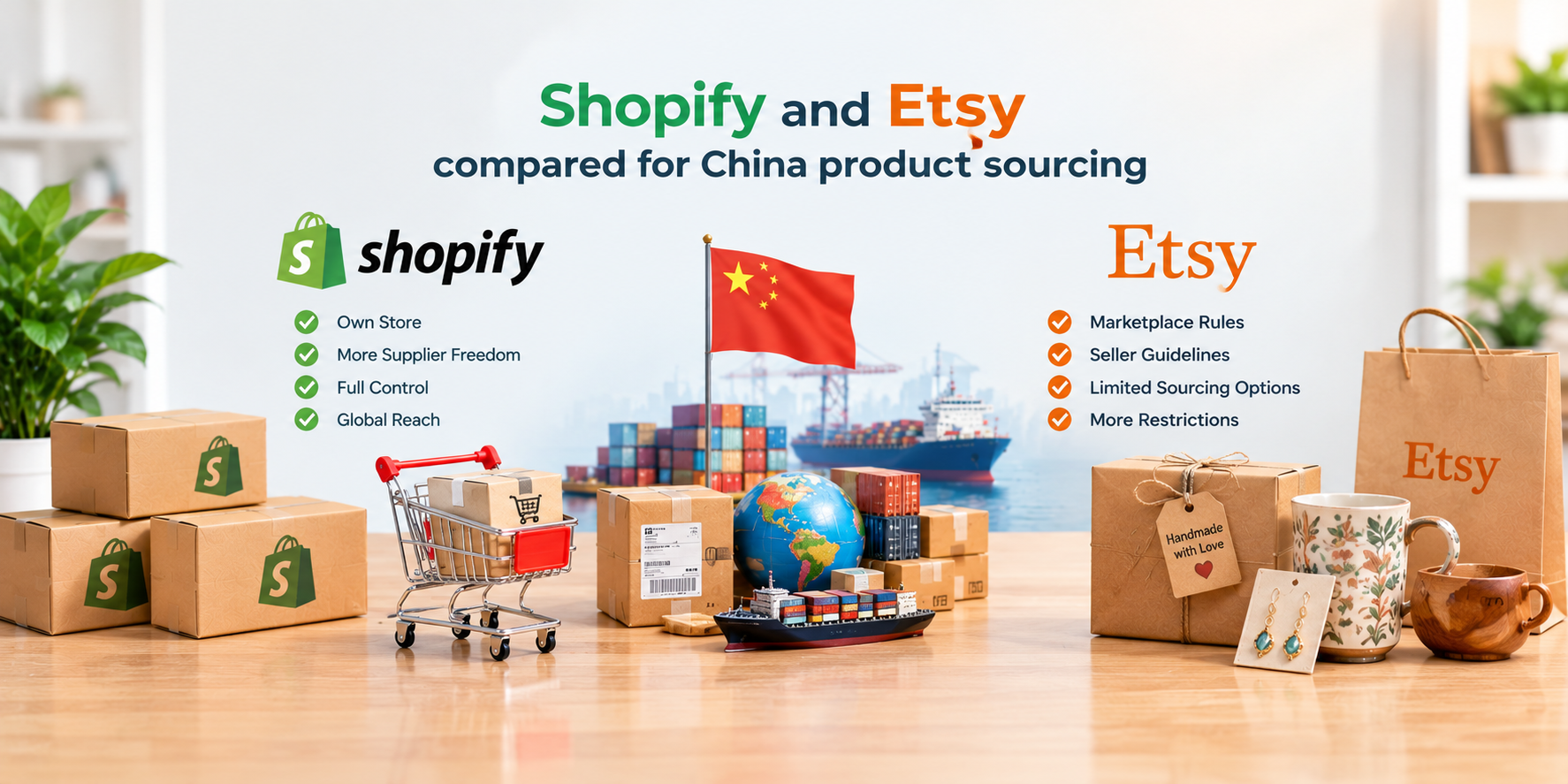
Many new sellers start on Etsy because it comes with built-in shoppers, and then wonder whether they can fill it with products sourced from China. Others start on Shopify because it gives them full control. The right choice depends less on features and more on what each platform allows you to sell.
This guide compares the two for sellers who want to source products from Chinese suppliers, covering the rules, the tools, the fees, and the practical trade-offs, so you can pick a platform before investing in inventory or a brand.
📋 Table of Contents
The Core Difference Between the Two
Shopify is a platform for running your own independent store. You choose your products, your suppliers, and your branding, and the platform stays largely out of the way. Etsy is a marketplace, which means shoppers come to Etsy first and your shop lives inside Etsy's rules and search results.
For China sourcing, that difference matters a lot. On Shopify, the question is mostly which supplier and which app to use. On Etsy, the first question is whether the products you want to sell are allowed at all.
What Etsy Allows and Doesn't
Etsy is focused on handmade items, vintage goods, and craft supplies, and it has rules about who makes, designs, or sources what you list. In general, simply reselling mass-produced finished products bought from a supplier is not what the marketplace is built for, and listings that break the rules can be removed or lead to account action.
There are legitimate ways to use outside manufacturers, such as when you create the design and a production partner makes the item for you. Even then, Etsy expects you to follow its disclosure and listing requirements. Because these policies are updated from time to time, read the current seller policy carefully before you source anything from overseas.
How Shopify Handles Sourcing
Shopify does not restrict you to handmade or vintage items, so you are free to sell products sourced from China as long as they follow the law and Shopify's general terms. Its App Store includes dropshipping apps, supplier marketplaces, and fulfillment tools that connect your store to Chinese suppliers, and many sellers also work directly with sourcing agents or private suppliers.
The trade-off is that you bring your own traffic. Shopify does not come with a marketplace of ready-made shoppers, so you will need to invest in marketing, SEO, or paid ads to get visitors to your store.
Supplier Apps
Connect to dropshipping and sourcing tools in a few clicks
Sourcing Agents
Work directly with agents and private suppliers
Your Own Brand
Full control over branding, packaging, and pricing
Your Own Traffic
You drive visitors through marketing and SEO
Pros and Cons for China Sourcing
✓ Shopify Strengths
- No handmade-only restriction on what you sell
- Large library of dropshipping and supplier apps
- Full control over branding and supplier choice
- Works with sourcing agents and private labels
✗ Shopify Limitations
- No built-in marketplace audience
- You must build your own traffic
- App subscriptions can add up over time
✓ Etsy Strengths
- Built-in audience of buyers looking for unique items
- Low barrier to open a shop
- Good fit for original designs made by a production partner
- Strong demand for custom and personalized items
✗ Etsy Limitations
- Seller rules restrict reselling mass-produced goods
- Risk of listing removal or account action if rules are broken
- Less control over branding and customer relationships
Fees and Costs to Compare
Costs work differently on each platform. Shopify charges a subscription plan plus payment processing fees, and you may add paid apps for sourcing or fulfillment. Etsy typically charges fees such as listing fees, transaction fees on sales, and payment processing fees, and it may offer paid advertising options inside the marketplace.
Neither is automatically cheaper. A marketplace fee takes a share of each sale in exchange for traffic, while a store subscription is a fixed cost but leaves marketing up to you. Work out the full cost per sale, including shipping, supplier price, and advertising, before deciding.
Side by Side
| Factor | Shopify | Etsy |
|---|---|---|
| Platform type | Independent store builder | Marketplace |
| Selling China-sourced products | Generally allowed | Restricted by seller rules |
| Dropshipping apps | Extensive | Not designed for it |
| Built-in shoppers | No, bring your own | Yes |
| Brand control | Full control | Limited by marketplace |
| Best for | Sourcing, dropshipping, private label | Original designs and handmade items |
Which One to Actually Pick
-
Define Your Product Type
Decide whether you are reselling finished goods, building a private label, or selling your own original designs made by a manufacturer.
-
Read the Platform Rules
Check Etsy's current seller policies and Shopify's terms so you know what is allowed before you invest in inventory.
-
Plan Your Traffic
If you pick Shopify, decide how you will attract visitors. If you pick Etsy, learn how marketplace search and ads work.
-
Order Samples First
Test product quality and shipping times with sample orders before committing to a supplier or listing a full catalog.
Need a Reliable China Sourcing Partner?
OneShipPros helps online sellers set up dependable sourcing and fulfillment, whatever platform their store runs on.
Get Started with OneShipPros →