
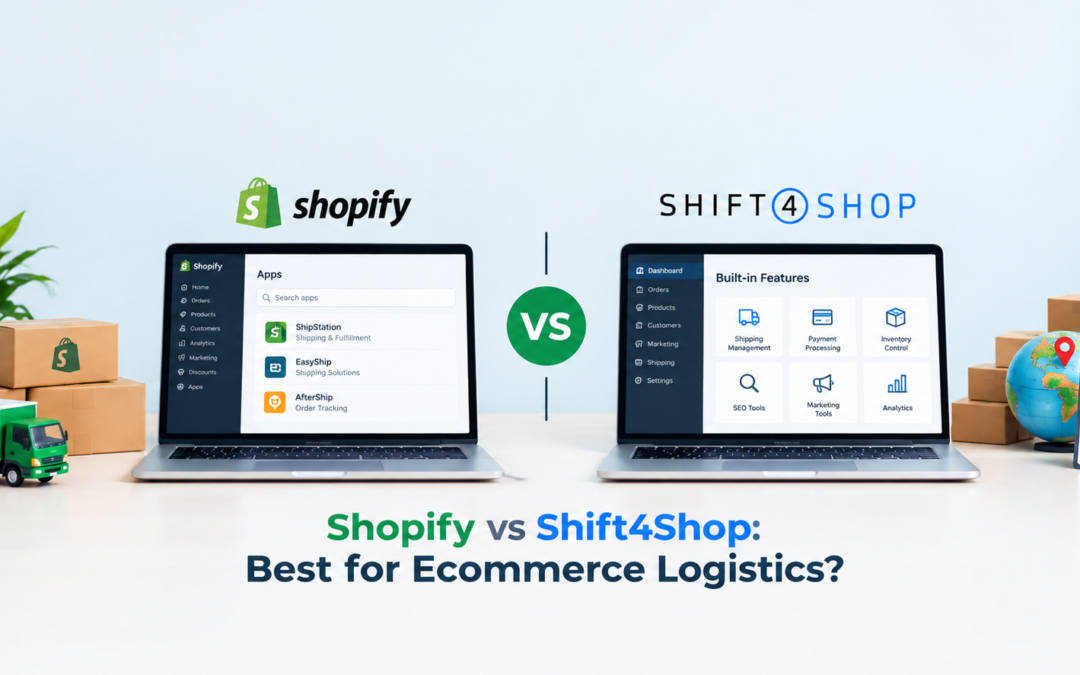
Shopify vs Shift4Shop: Best for Ecommerce Logistics?
These two platforms take opposite approaches to the same problem. Shopify keeps its core lean and lets you add logistics features through a huge App Store. Shift4Shop, which used to be called 3dcart, packs a lot of features directly into the platform so you need fewer add-ons. Which approach suits you comes down to how you like to build, and how much your logistics setup depends on specialized integrations.
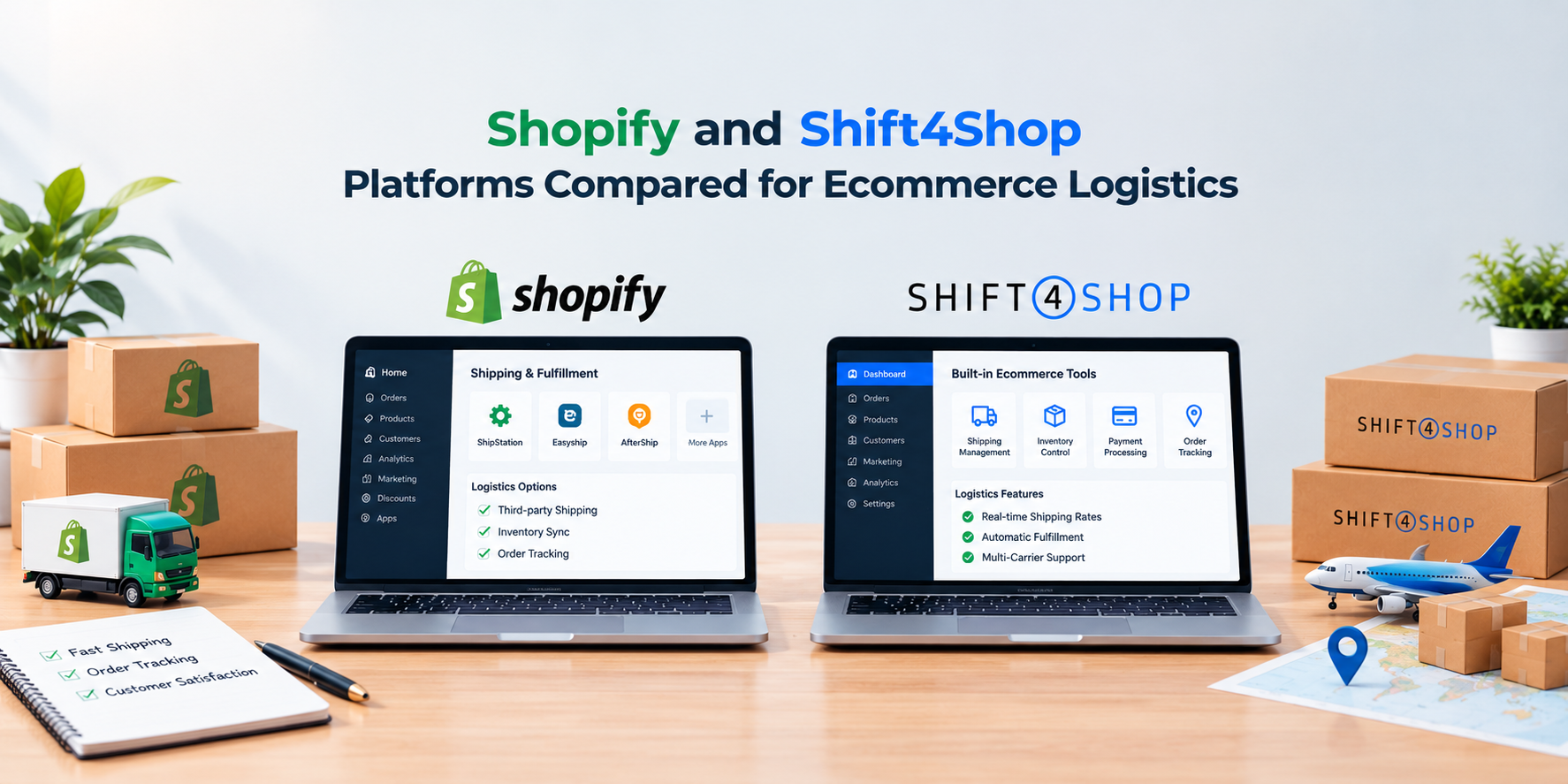
Shift4Shop tends to come up for sellers who want a lot of functionality without stacking up monthly app subscriptions. Many features that Shopify sellers add through paid apps, things like certain shipping tools, inventory options, and marketing features, are built directly into Shift4Shop. That can keep a store's moving parts down, and for some sellers it's a real draw.
The trade-off shows up in logistics specifically. A built-in feature set only goes so far when your fulfillment depends on connecting to outside suppliers and warehouses, and that's where integration library size starts to matter.
📋 Table of Contents
The Core Difference Between the Two
Both are hosted platforms, so neither makes you manage servers the way Magento or PrestaShop do. The difference is philosophy. Shopify provides a streamlined core and expects you to extend it through apps, while Shift4Shop ships with a broader built-in feature set, including shipping options, inventory management, and several marketing tools. For logistics, that means Shift4Shop can cover simple needs without add-ons, while Shopify can reach much further once you start installing specialized apps.
Shipping and Fulfillment Support
Shopify's App Store offers a wide range of fulfillment tools, from China dropshipping suppliers to 3PL warehouses and shipping label apps, mostly installable in a few clicks. Shift4Shop includes solid built-in shipping features and connects with a number of carriers, but its library of ready-made dropshipping and 3PL integrations is noticeably smaller. Sellers who rely on specific suppliers or fulfillment partners may find they need more manual setup or custom work to connect them.
Pros and Cons for Logistics
✓ Shopify Strengths
- Large library of fulfillment and dropshipping apps
- Strong China supplier and 3PL integrations
- Consistent documentation and support
- Flexible: add only the logistics tools you need
✗ Shopify Limitations
- App subscriptions can stack up over time
- Core platform has fewer built-in logistics features
- Costs rise as you add more tools
✓ Shift4Shop Strengths
- Broad built-in feature set reduces add-on needs
- Built-in shipping and inventory tools
- Fewer separate subscriptions to manage
- Hosted, so no server maintenance
✗ Shift4Shop Limitations
- Smaller library of third-party fulfillment integrations
- Fewer ready-made China dropshipping connections
- Smaller community and fewer tutorials
Built-In Features vs Apps
This is the real heart of the comparison. Built-in features mean fewer moving parts and fewer subscriptions, which is appealing, but they also mean you're limited to what the platform provides. An app-based approach costs more as you add tools, yet it lets you plug in exactly the specialized fulfillment partner your business needs. For simple logistics, built-in tends to be enough. For dropshipping or multi-partner fulfillment, the app ecosystem usually matters more.
Side by Side
| Factor | Shopify | Shift4Shop |
|---|---|---|
| Approach | Lean core, extend with apps | Feature-rich core, fewer add-ons |
| Fulfillment integrations | Extensive | Smaller selection |
| China dropshipping support | Strong | Limited |
| Built-in logistics features | Fewer | More out of the box |
| Best for | Dropshipping and multi-partner fulfillment | Simple logistics with fewer add-ons |
Which One to Actually Pick
-
List the Suppliers and Warehouses You Need
Check whether your chosen dropshipping suppliers or fulfillment partners have reliable integrations on each platform before deciding.
-
Compare Total Cost, Not Just the Plan Price
Add up the apps you'd need on Shopify against the built-in features you'd get on Shift4Shop, and confirm current pricing directly with each platform.
-
Test Before Committing
Try the shipping and fulfillment connections you rely on during a free trial, so you find any gaps before building out a full catalog.
Need Reliable Fulfillment Behind Your Store?
OneShipPros helps online sellers set up dependable sourcing and fulfillment, whatever platform their store runs on.
Get Started with OneShipPros →