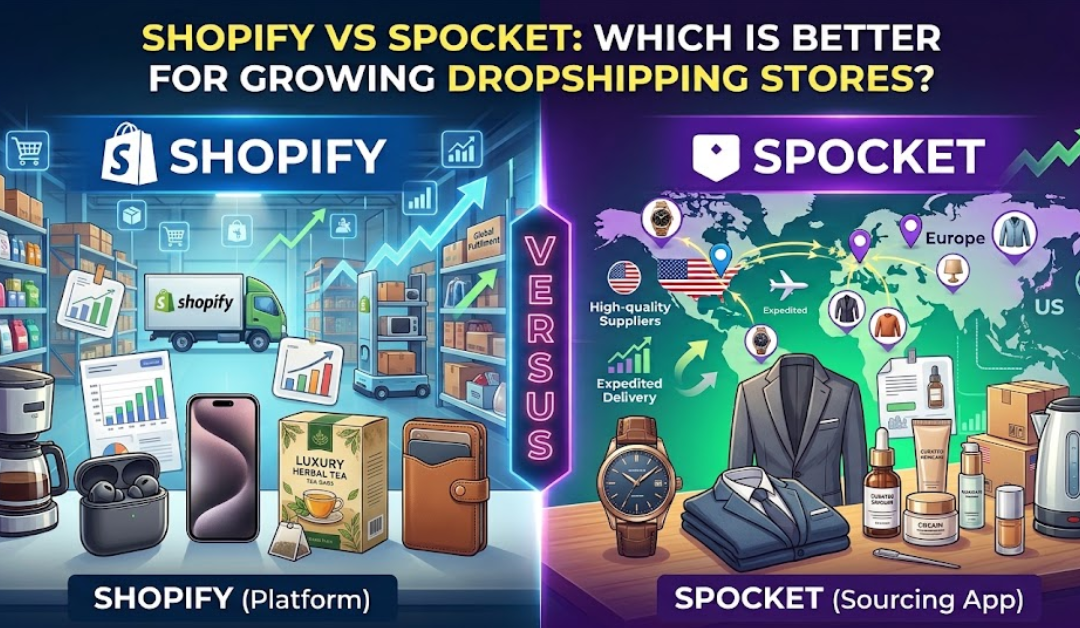
Shopify vs Spocket: Which Is Better for Growing Dropshipping Stores?
The "which is better" framing shows up a lot with Spocket, mostly because it's marketed so heavily toward stores that are already scaling. But the comparison still isn't apples to apples. Shopify is the store. Spocket is the supplier network feeding it, leaning on US and EU-based sellers to get products out faster. Here's what that actually means once your order volume starts climbing.
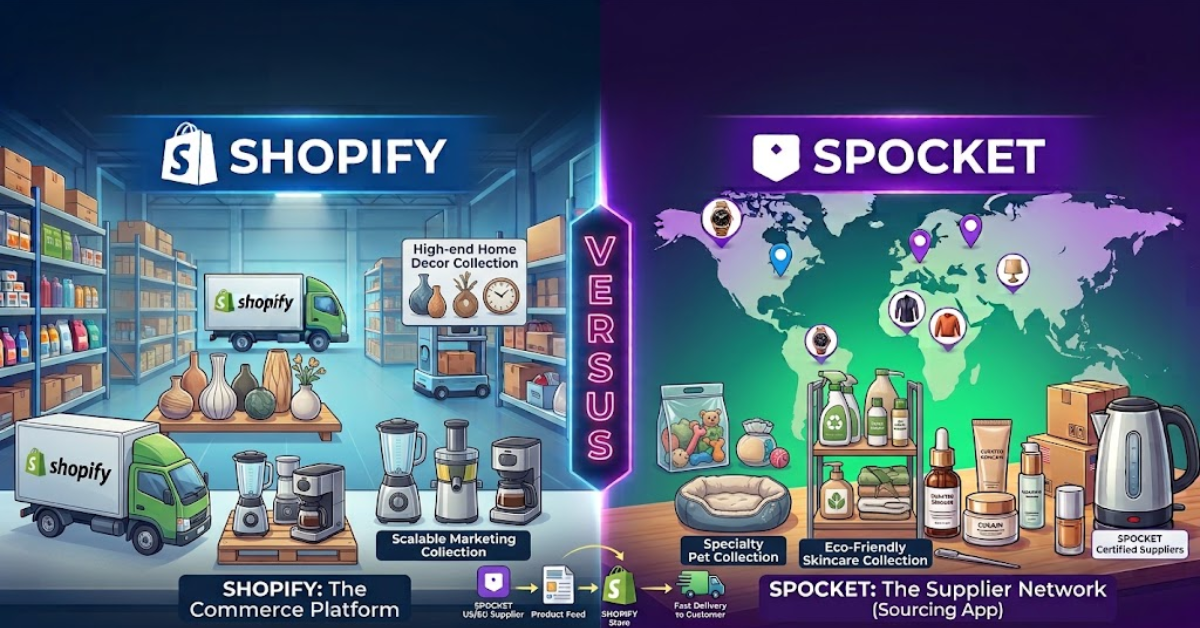
Spocket tends to come up once a store owner is past the earliest stage and starts paying closer attention to shipping speed and product quality, since Spocket's whole pitch centers on US and EU suppliers rather than long overseas shipping lanes. That's led some sellers to wonder if it's a step up from Shopify itself, as though picking Spocket somehow changes what platform their store runs on. It doesn't. Spocket plugs into Shopify, it doesn't sit alongside it as an alternative.
The better way to frame this comparison is what Spocket's supplier model adds once a Shopify store is actually trying to grow, and where it still has real limits.
📋 Table of Contents
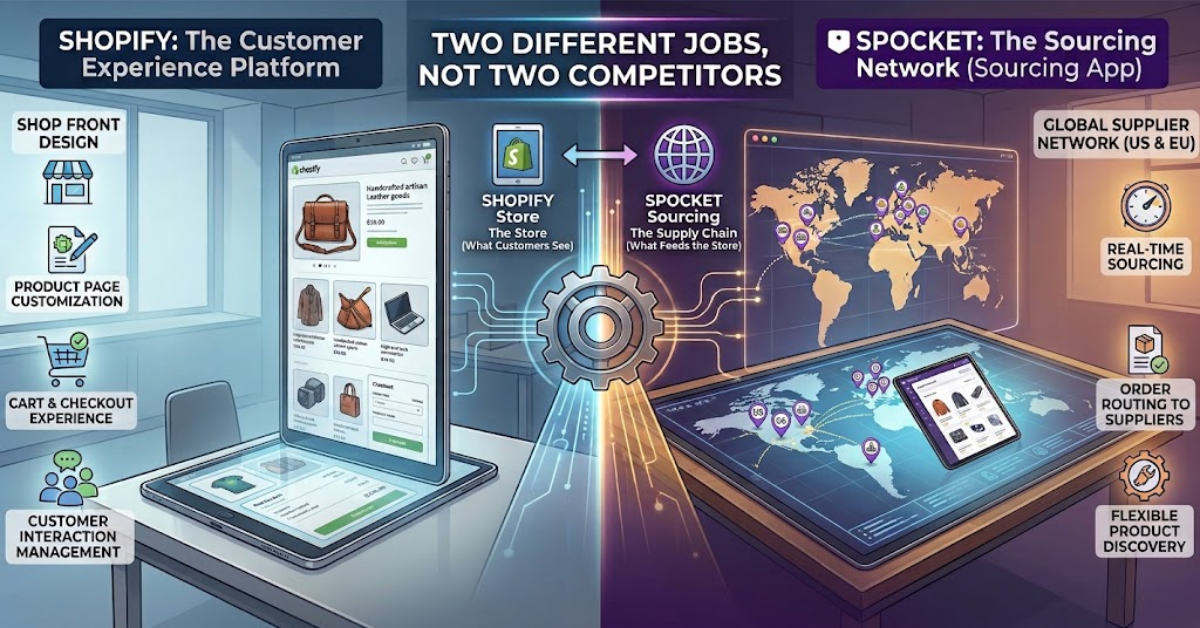
Two Different Jobs, Not Two Competitors
Shopify handles everything a customer interacts with, the storefront theme, product pages, cart, and checkout. Spocket stays entirely on the sourcing side, connecting your store to a network of suppliers, most of them based in the US or EU, and routing orders to them once a sale happens. Asking whether Shopify or Spocket is "better" is a bit like asking whether a store or its supply chain is more important. Neither works well without the other.
How the Two Actually Connect
Spocket connects to Shopify through its own app, available directly in the Shopify App Store. Once installed, products from Spocket's catalog can be imported into your store with a click, and incoming orders get pushed to the relevant supplier automatically. Inventory levels and tracking numbers sync back to Shopify, so there's no manual back-and-forth once the connection is set up.
What Spocket Adds Beyond Basic Sourcing
- US and EU supplier network — a large share of Spocket's catalog ships domestically for US and European customers, cutting delivery times well below typical overseas shipping
- Branded invoicing — invoices can be customized with your store's branding instead of the supplier's name
- Sample ordering — sellers can order a product themselves before listing it, useful for checking quality without guessing
- Real-time inventory sync — stock levels update automatically, reducing the odds of selling something that's actually out of stock
Where It Falls Short
Spocket's stronger shipping times come at a cost, both literally and in catalog size. Products from US and EU suppliers often carry higher wholesale prices than typical overseas sourcing, which narrows margins on lower-priced items. The catalog, while curated, is also smaller than what you'd find browsing a broader marketplace-style supplier. And full access to the best supplier tiers and lower per-order costs sits behind Spocket's paid subscription plans, so casual or very early-stage sellers may find the free tier limiting.
Side by Side
| Factor | Shopify | Spocket |
|---|---|---|
| What it handles | Storefront, checkout, customer experience | Sourcing, order routing, shipping via suppliers |
| Who it's for | Anyone selling online | Sellers wanting faster US/EU shipping |
| Shipping speed | N/A | Generally faster for US/EU-based products |
| Cost | Monthly subscription | Free tier + paid plans, higher product cost |
| Replaces the other? | No | No |
Setting Things Up the Right Way
-
Build and Stabilize Your Store on Shopify
Nail down branding, listings, and checkout flow before layering on a supplier network built for faster shipping.
-
Connect Spocket Through Its App
Import products and let orders route to suppliers automatically, with inventory and tracking synced back to Shopify.
-
Reassess Sourcing as Volume Grows
Once specific products are consistently selling at scale, compare Spocket's per-unit costs against a dedicated fulfillment warehouse for better margins and control.
Outgrowing Your Current Sourcing Setup?
OneShipPros helps Shopify sellers move to faster, more consistent fulfillment as order volume grows.
Get Started with OneShipPros →