
Shopify vs Zendrop: Comparing Dropshipping and Fulfillment Solutions
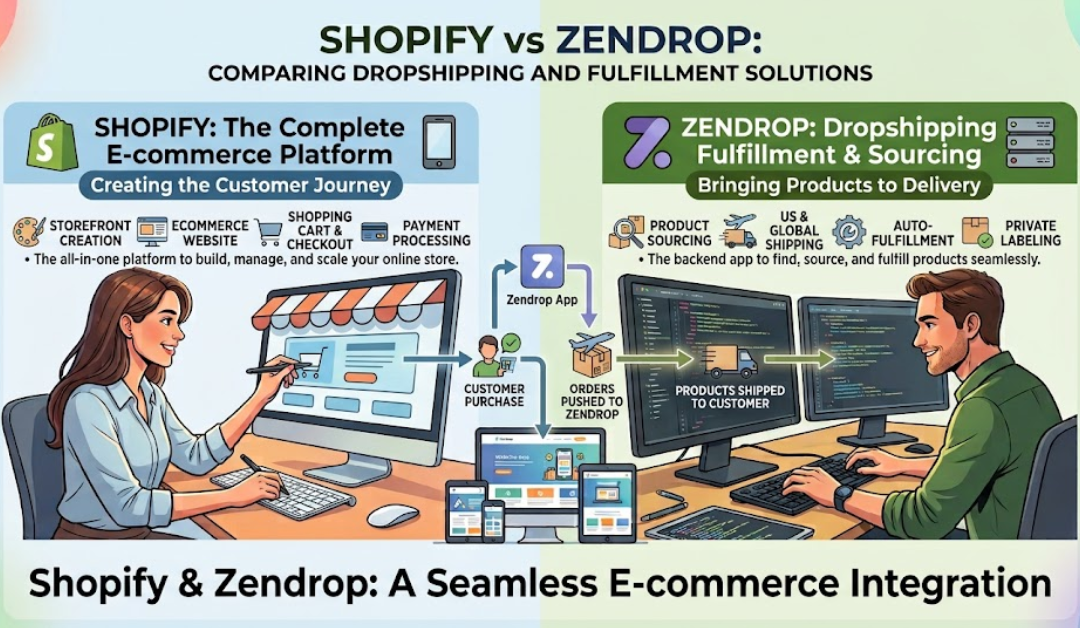
This one trips people up in a similar way. Shopify and Zendrop get mentioned together so often that it's easy to assume you're picking one over the other. You're not. Shopify is the shop itself, Zendrop is the app quietly finding products and getting them out the door once someone buys. Here's how the two actually split the work.
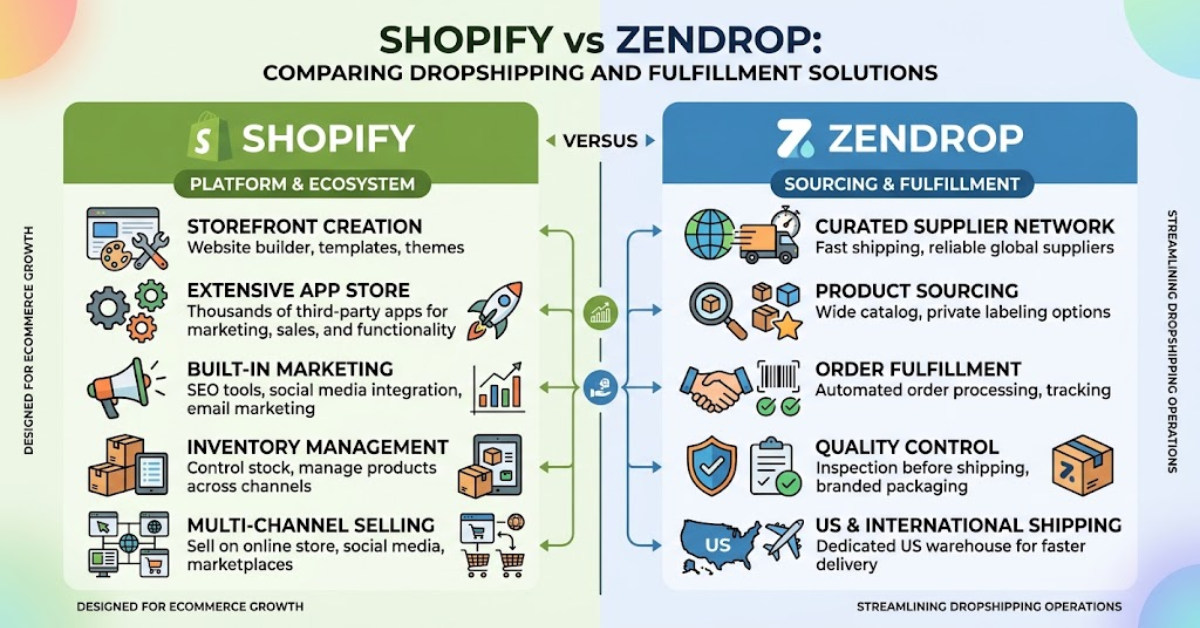
New sellers usually run into this comparison right after they hear Zendrop pitched as "the easier alternative to AliExpress dropshipping." That framing makes it sound like Zendrop might be a storefront in its own right, or at least a stand-in for one. It isn't. Zendrop is a sourcing and fulfillment app that plugs into an existing store. Shopify is where that store actually lives, your product pages, your cart, your checkout, everything a shopper touches.
So instead of asking which one to use, the more useful question is how Zendrop's faster shipping and curated catalog change what running a Shopify store actually looks like day to day.
📋 Table of Contents
Two Different Jobs, Not Two Competitors
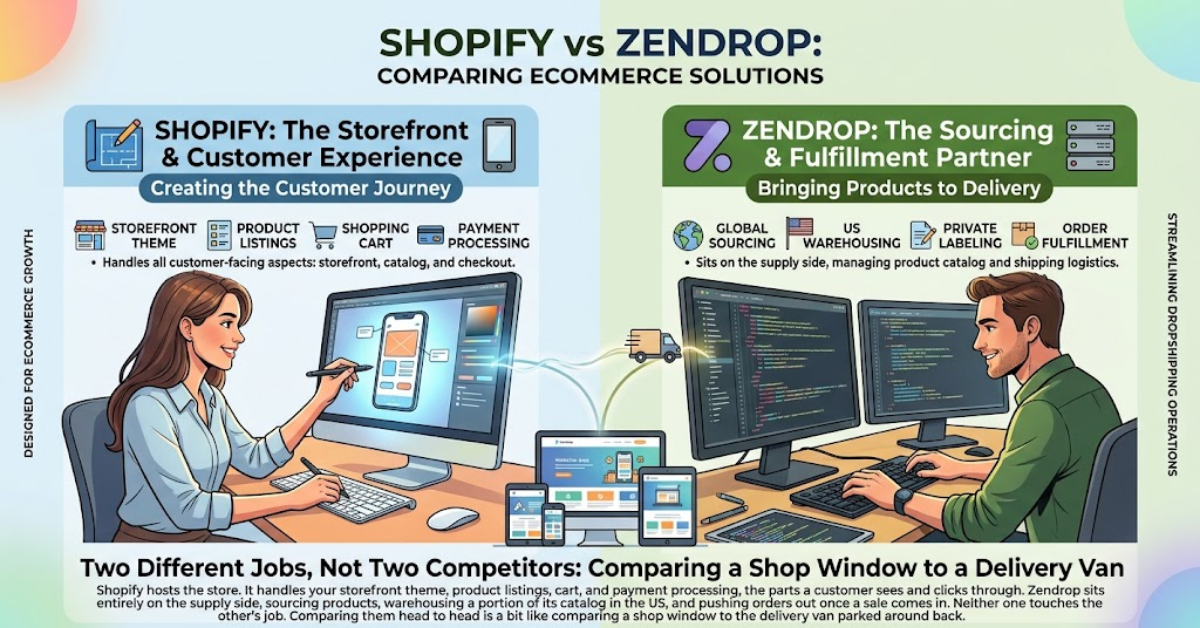
Shopify hosts the store. It handles your storefront theme, product listings, cart, and payment processing, the parts a customer sees and clicks through. Zendrop sits entirely on the supply side, sourcing products, warehousing a portion of its catalog in the US, and pushing orders out once a sale comes in. Neither one touches the other's job. Comparing them head to head is a bit like comparing a shop window to the delivery van parked around back.
How the Two Actually Connect
Sellers link the two through the official Zendrop app in the Shopify App Store. Once it's installed and connected, a customer order placed on your Shopify store gets pulled into Zendrop automatically, no exporting spreadsheets, no re-typing addresses. Zendrop sources or pulls the item from its catalog, packs it, and ships it, updating tracking back on the Shopify order so the customer sees status without you lifting a finger.
What Zendrop Adds Beyond Basic Sourcing
- Faster US-based shipping — a meaningful chunk of Zendrop's catalog ships from US warehouses, which usually beats waiting on a parcel straight from a factory overseas
- Curated "winning product" picks — Zendrop surfaces products it sees performing well across its network, useful when you're not sure what to list next
- Private labeling and custom branded packaging — available on paid tiers, letting orders arrive looking like they came from your brand rather than a random supplier
- Automated order syncing and tracking — orders, inventory, and tracking numbers all sync back to Shopify without manual updates
Where It Falls Short
It's not the fastest or cheapest route in every case. Not every product in Zendrop's catalog ships from the US, some still route through longer overseas lanes, so shipping speed can vary more than sellers expect going in. The better branding and sourcing features also sit behind paid subscription tiers, so costs climb as you want more control. And as with any shared sourcing platform, once volume grows, a lot of sellers start wanting tighter quality control and lower per-unit costs than a shared network can offer.
Side by Side
| Factor | Shopify | Zendrop |
|---|---|---|
| What it handles | Storefront, checkout, customer experience | Sourcing, warehousing, shipping |
| Who it's for | Anyone selling online | Sellers dropshipping via a curated supplier network |
| Shipping speed | N/A | Faster on US-warehoused items, varies on the rest |
| Cost | Monthly subscription | Free tier + paid plans for branding features |
| Replaces the other? | No | No |
Setting Things Up the Right Way
-
Build Your Store on Shopify
Get your listings, branding, and checkout in place before deciding exactly how fulfillment will run behind the scenes.
-
Install and Connect the Zendrop App
Link your store so orders sync automatically, sourcing and shipping handled without manual copy-pasting.
-
Reassess as Orders Climb
Once a product is consistently selling, weigh whether a dedicated fulfillment warehouse would serve you better on cost and control than staying on a shared platform.
Outgrowing Your Current Sourcing Setup?
OneShipPros helps Shopify sellers move to faster, more consistent fulfillment as order volume grows.
Get Started with OneShipPros →