
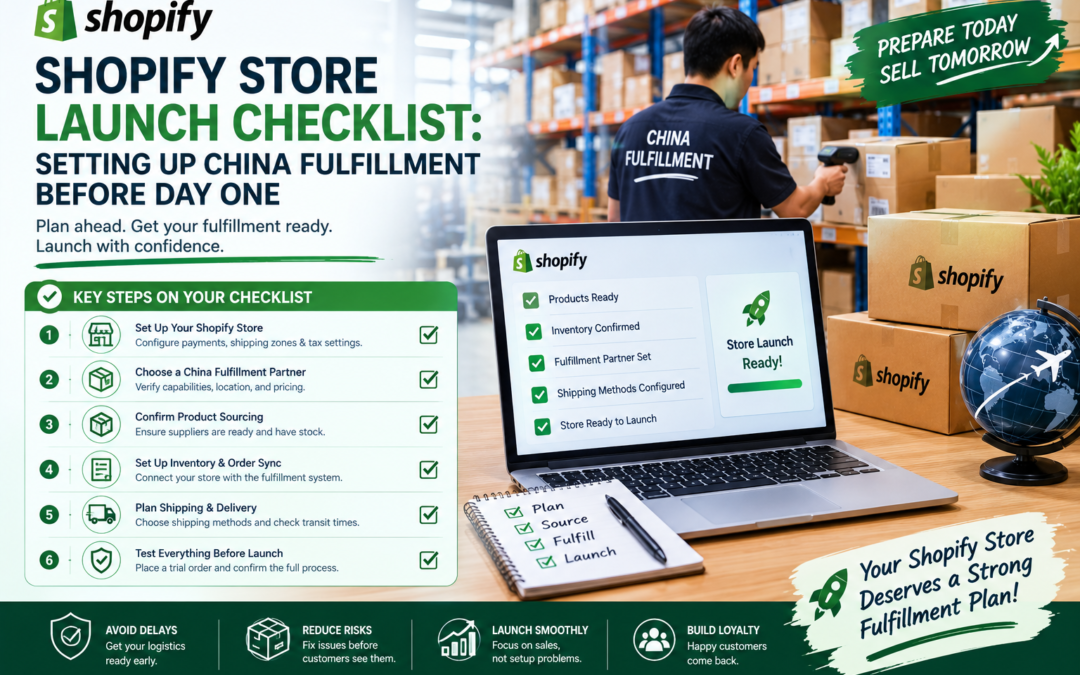
Shopify Store Launch Checklist: Setting Up China Fulfillment Before Day One
Launch day gets a lot of attention on the marketing side, the storefront design, the ad campaigns, the launch email. The fulfillment side deserves the same level of preparation, because it's the part that actually determines whether customers get their orders on time from the very first sale. Here's the checklist worth working through before going live.

A Shopify launch date is often set around marketing readiness, but fulfillment has its own timeline, production, shipping, warehouse receiving, integration testing, that doesn't compress just because a launch date has been announced. Working backward from launch day with fulfillment setup in mind, rather than treating it as an afterthought, is what actually determines whether day-one customers get a smooth experience.
Here's a practical pre-launch checklist for getting China fulfillment ready before a Shopify store goes live.
📋 Table of Contents
Why Fulfillment Deserves Its Own Launch Timeline
Marketing readiness and fulfillment readiness run on different clocks. A storefront can be built and polished in days; getting inventory produced, shipped, received, and verified through a working integration takes weeks at minimum. Treating fulfillment as something to sort out "closer to launch" risks either delaying the launch or, worse, going live before fulfillment is genuinely ready.
What Happens Without a Pre-Launch Checklist
Risks of Skipping a Structured Checklist
- Launching before inventory has actually arrived at the warehouse
- An untested integration failing on real, live customer orders
- SKU mapping errors discovered only after orders start coming in
- No buffer for the inevitable small delays in a new setup
What a Structured Checklist Provides
- Inventory confirmed in the warehouse before launch day
- A tested integration handling the first real orders reliably
- SKU mapping verified before it matters
- Built-in buffer time for unexpected setup issues
Inventory and Production Timing
Working backward from a target launch date, factor in production lead time, international shipping time, and warehouse receiving and processing time, all three, not just shipping. This total lead time determines the latest possible date to place the initial inventory order, and it's usually longer than sellers initially estimate. Building in extra buffer beyond the calculated minimum protects against a launch delay if any single stage runs behind.
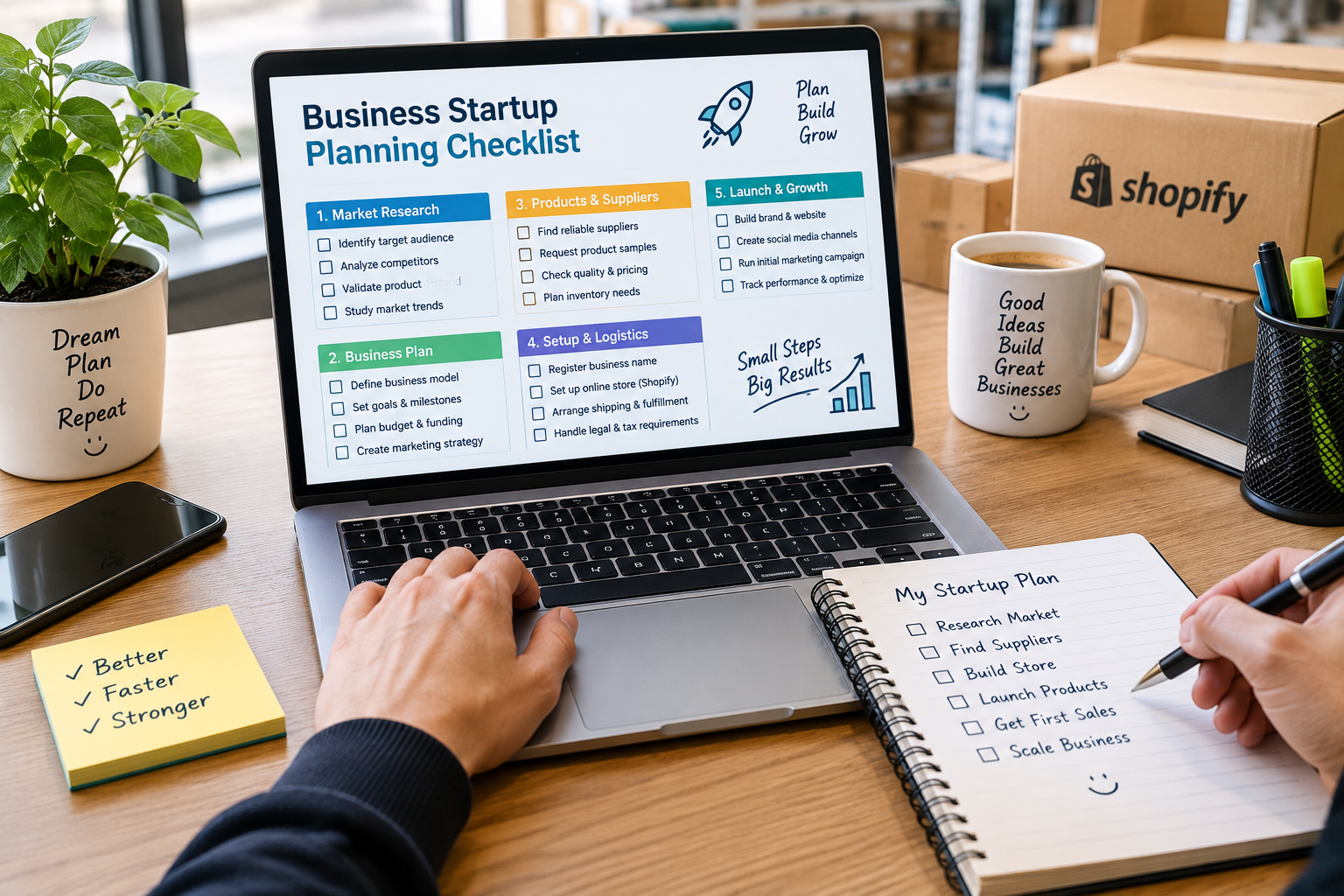
Integration Setup and Testing
- Connect the Shopify integration early — get the technical connection between Shopify and the fulfillment warehouse set up well before launch, not the week of
- Verify SKU mapping thoroughly — confirm every product's SKU maps correctly between Shopify and the warehouse system, this is one of the most common sources of early fulfillment errors
- Set up shipping rules and rates — configure which carriers and shipping options apply to which regions before customers start placing real orders
- Place a genuine test order — order from the live storefront like a real customer would, and confirm the entire flow works from checkout through delivery
Working Backward vs Forward from Launch Date
| Approach | Working Forward from Today | Working Backward from Launch Date |
|---|---|---|
| Risk of Missing Launch | Higher, timeline can slip | Lower, deadline drives planning |
| Buffer for Delays | Often insufficient | Built in deliberately |
| Testing Time | Frequently rushed or skipped | Scheduled with real time allotted |
| Overall Reliability | More prone to launch-day issues | More consistently smooth |
Final Checks Before Going Live
-
Confirm Inventory Is Physically Received and Available
Verify inventory has actually arrived at the warehouse and is reflected as available stock in Shopify, not just in transit.
-
Review the Test Order Results Closely
Check packaging quality, shipping speed, and whether tracking synced correctly, treat any issue in the test order as something to fix before, not after, launch.
-
Brief Customer Support on Fulfillment Basics
Make sure whoever handles customer inquiries knows realistic shipping timelines and how to check order status, so early customer questions get accurate answers.
Launching a New Shopify Store Soon?
OneShipPros helps sellers get fulfillment tested and ready well before launch day.
Get Started with OneShipPros →