
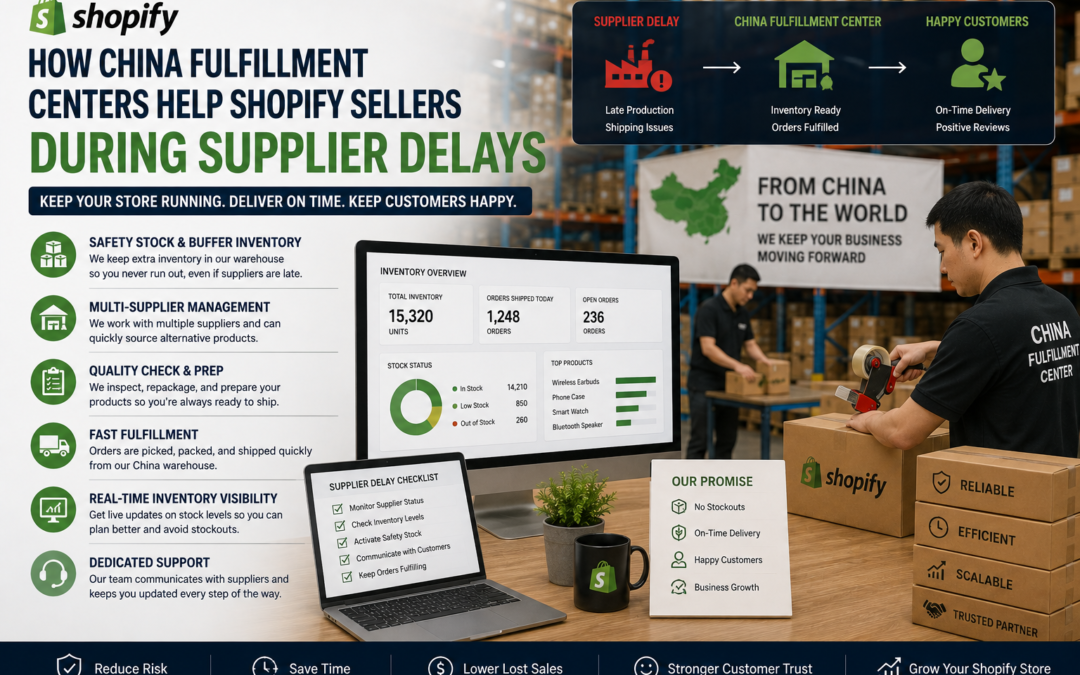
How China Fulfillment Centers Help Shopify Sellers During Supplier Delays
A supplier running behind on production is one of those problems that's mostly out of a Shopify seller's direct control, but not entirely out of their ability to manage. A good China fulfillment center can't speed up someone else's factory, but it can play a real role in visibility, prioritization, and damage control while the delay works itself out.
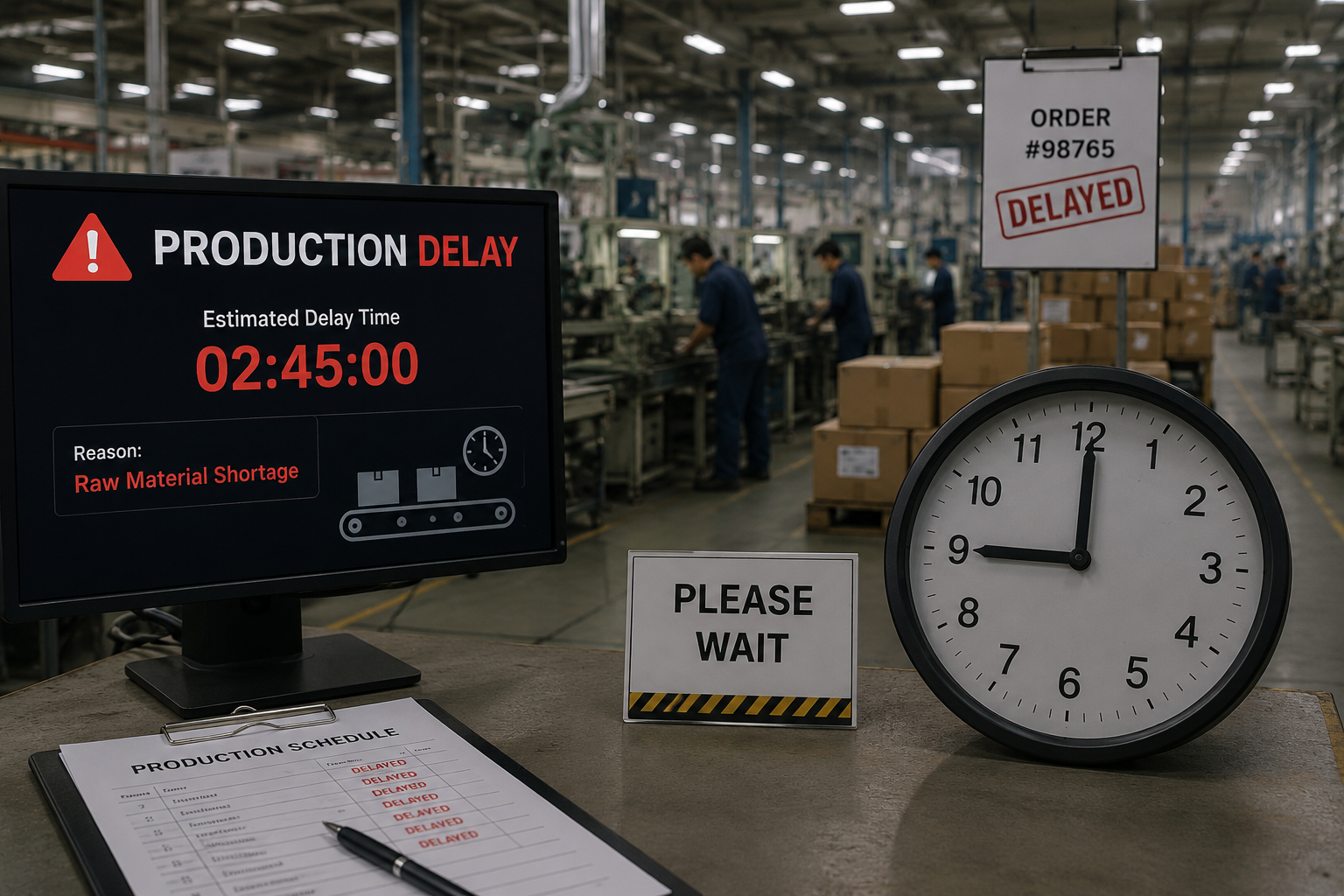
Supplier delays happen, a factory falls behind schedule, a material shortage pushes back production, a quality issue forces a rework. None of that is usually within a Shopify seller's control to fix directly. What is within reach is how well the situation is managed once it's happening, and a China fulfillment center can genuinely help with that part, even though it can't speed up someone else's production line.
Here's what a fulfillment center can and can't realistically do when a supplier delay hits, and how to make the most of the support that is available.
📋 Table of Contents
Why Supplier Delays Happen
Production delays stem from a range of causes largely outside a seller's control, material shortages, factory capacity constraints during peak seasons, quality issues requiring rework, or unexpected disruptions at the supplier's facility. Even reliable, well-established suppliers occasionally run behind schedule, which is why having a plan for managing the impact matters as much as choosing a good supplier in the first place.
What Happens Without Managing the Delay Well
Risks of Poor Delay Management
- Customers discovering a stockout only after ordering
- No prioritization of which orders get remaining stock first
- Support teams caught off guard by a wave of complaints
- Reactive, inconsistent communication that erodes trust
What Good Delay Management Provides
- Clear visibility into exactly how much inventory remains
- A fair, consistent approach to prioritizing limited stock
- Support teams prepared with accurate information in advance
- Proactive, honest communication that maintains customer trust
Where a Fulfillment Center Can Actually Help
A fulfillment center's core value during a supplier delay is accurate, real-time visibility into what inventory actually remains, and how quickly it's depleting. This lets a seller make informed decisions, whether that's pausing sales of a product before it fully stocks out, prioritizing existing orders fairly, or timing a "back in stock" announcement accurately rather than guessing. Some fulfillment centers can also help coordinate expedited shipping once new stock does arrive, to help close the gap faster.

Communicating the Delay to Customers
- Update product pages proactively — flag delayed shipping times or low stock directly on the Shopify listing rather than letting customers discover it at checkout
- Send order confirmation updates for delayed items — a brief, honest note about extended shipping time set right expectations early
- Prepare a support response template — equip customer support with consistent, accurate messaging about the delay so responses aren't improvised
- Offer a clear resolution path — whether that's a refund option, an estimated restock date, or a substitute product, give customers a concrete next step
Reactive vs Proactive Delay Management
| Factor | Reactive Management | Proactive Management |
|---|---|---|
| Customer Awareness | Learns of delay when ordering | Informed before or at checkout |
| Support Ticket Volume | Higher, more confusion | Lower, expectations already set |
| Trust Impact | More negative reviews likely | Better preserved through honesty |
| Effort Required | Lower upfront | Some upfront setup, less reactive work |
Reducing Future Delay Impact
-
Build in Buffer Stock for Critical Products
For products where a stockout would be especially costly, carrying a modest buffer beyond the calculated reorder point can absorb an unexpected delay.
-
Track Supplier Reliability Over Time
Keep a record of how often a given supplier has run late, this helps flag a pattern worth addressing before it becomes a recurring disruption.
-
Consider a Secondary Supplier for Key Products
Where feasible, having a backup supplier for your most critical products reduces total dependence on any single production source.
Navigating a Supplier Delay Right Now?
OneShipPros provides real-time inventory visibility to help you manage through delays confidently.
Get Started with OneShipPros →