

Shopify Seasonal Product Launches: Coordinating Inventory with China Warehouses
A seasonal product that arrives after its selling window has closed isn't really an asset anymore. Here's how to coordinate timing with a China fulfillment warehouse so a launch actually happens when the market is ready for it, not weeks after.

A seasonal product only has value within its selling window a swimsuit line, holiday decor, back-to-school supplies. Miss that window because inventory arrived late, and the product doesn't just underperform, it often becomes dead stock waiting for a window that's already closed. This makes seasonal launch coordination genuinely higher-stakes than reordering an evergreen bestseller, where a delay is an inconvenience rather than a lost opportunity.
Here's how to actually coordinate timing with a China fulfillment warehouse so a seasonal launch lands when it's supposed to.
📋 Table of Contents
Why Seasonal Timing Is Higher Stakes Than Standard Reordering
A late reorder for an evergreen product means a temporary stockout, annoying, but recoverable. A late arrival for a seasonal product often means the selling window has already narrowed or closed entirely by the time inventory is available. Holiday decor doesn't sell well in January. Summer apparel doesn't move in October. This asymmetry, evergreen delays being recoverable while seasonal delays can be catastrophic, is exactly why seasonal launches deserve more rigorous timeline planning than standard reorders.
What Happens When Seasonal Timing Goes Wrong
Consequences of Poor Seasonal Timing
- Inventory arrives after the selling window has already narrowed
- Product must be heavily discounted or held until next season
- Marketing spend already committed to the launch goes to waste
- Cash tied up in stock that won't generate expected revenue
What Proper Coordination Achieves
- Inventory lands with enough runway before the launch date
- Full selling window available to generate expected revenue
- Marketing spend aligned with actual product availability
- Reduced risk of unsold, out-of-season inventory
Working Backward from the Launch Date
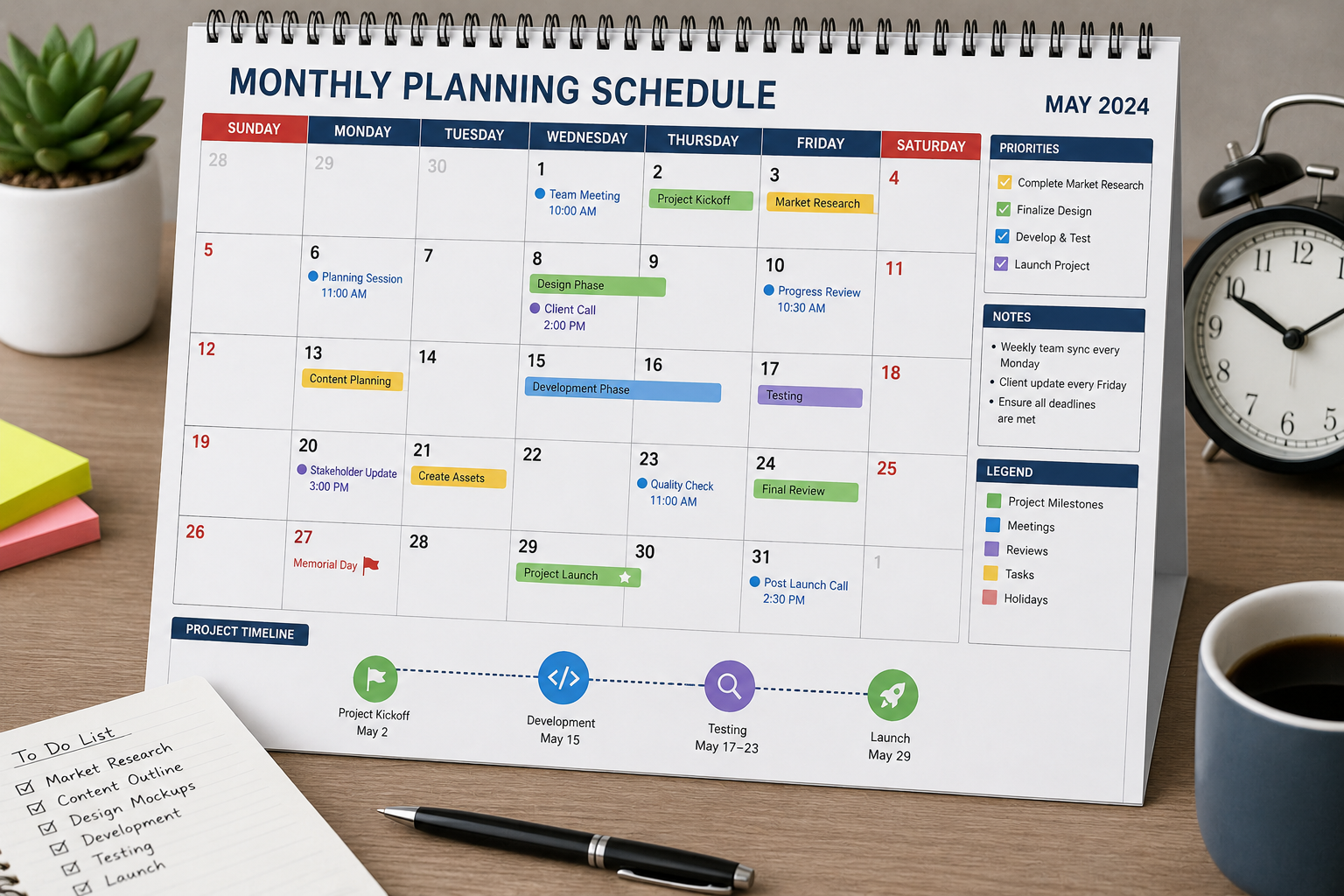
Seasonal launch planning should always work backward from the intended launch date, not forward from when a purchase order happens to get placed. Start with the date the product needs to be available for sale, subtract warehouse receiving and processing time, subtract freight transit time for the chosen shipping method, subtract any pre-shipment inspection time, and subtract production time at the factory. Whatever date remains is the latest possible date to place the purchase order and even that date deserves a buffer, since any single stage running long can cascade into a missed launch.
This calculation should tie directly into Shopify product launch scheduling and inventory forecasting, so the marketing calendar and the actual physical availability of inventory stay realistically aligned.
What to Confirm With Your Fulfillment Warehouse
- Their current receiving and processing capacity — ask if there's any seasonal backlog risk around when your inventory is expected to arrive
- Realistic freight transit estimates — get actual historical data for your specific shipping method and route, not a best-case number
- Their availability to expedite if needed — ask what options exist if the timeline starts slipping close to the launch date
- Storage readiness before the launch — confirm the warehouse has space and staffing prepared for the incoming seasonal shipment
- Post-season plan for unsold inventory — clarify in advance what happens to stock that doesn't sell through the intended window
Sample Seasonal Launch Timeline
| Timeframe Before Launch | What Should Happen |
|---|---|
| 14-16 Weeks Out | Finalize product, place factory purchase order |
| 10-12 Weeks Out | Confirm production on schedule, book freight |
| 6-8 Weeks Out | Inventory arrives, verify counts and quality |
| 2-4 Weeks Out | Buffer period, marketing prep, final checks |
| Launch Date | Full inventory available, selling window opens |
Building in the Right Amount of Buffer
-
Never Plan to the Exact Calculated Lead Time
Always add a buffer beyond the theoretical minimum lead time, since any single stage running even slightly long can push the whole timeline past the launch date.
-
Build Buffer Into Marketing Timing, Not Just Inventory
Coordinate marketing campaign launch dates with confirmed inventory availability, not the originally hoped-for date, to avoid promoting a product before it's actually ready to ship.
-
Monitor Closely as the Launch Date Approaches
Increase check-in frequency with the fulfillment warehouse in the final weeks before launch, so any slippage is caught and addressed as early as possible.
Planning a Seasonal Product Launch?
OneShipPros helps Shopify sellers coordinate production, freight, and warehouse timing so seasonal inventory lands exactly when it's needed.
Get Started with OneShipPros →